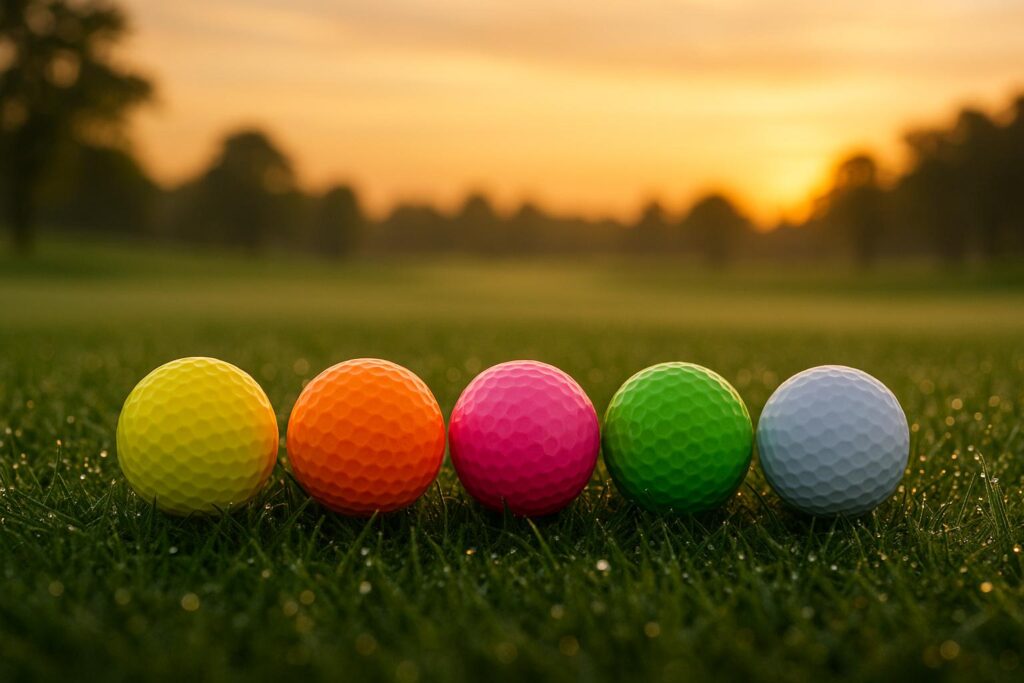
When playing golf in low light – at dawn, dusk, or on cloudy days – visibility becomes a challenge. Choosing the right golf ball color can make spotting your ball easier and improve your game. Here are the top five colors and their benefits:
- High-Visibility Yellow: The best choice for low-light conditions. Stands out against grass and sky, and works well for players with color vision deficiencies.
- Bright Orange: Highly visible in dim settings and autumn foliage. Offers strong contrast with grass and sky.
- Neon Green: Easy to track due to the human eye’s sensitivity to green. Performs well in overcast or vibrant spring/summer conditions.
- Pink: Bold and visible in snowy or overcast conditions, but less effective in autumn when leaves share similar shades.
- Red: Limited visibility in low light and grass-heavy areas. Best in autumn foliage but not ideal for most players.
Quick Comparison:
| Color | Best For | Challenges |
|---|---|---|
| Yellow | Low light, overcast, color vision issues | None |
| Orange | Twilight, autumn foliage | May blend in certain terrains |
| Neon Green | Overcast, vibrant grass | Less effective in snow |
| Pink | Snow, overcast | Harder to spot in autumn foliage |
| Red | Autumn foliage | Poor in grass-heavy or dim conditions |
For the best visibility and performance, yellow and orange are top picks for early morning or late evening rounds.
What Color Golf Balls Are Easiest To See? – The Golf Xpert
1. High-Visibility Yellow Golf Balls
When you’re out on the course at dawn or as the sun dips low, visibility can become a real challenge. That’s where high-visibility yellow golf balls come into play. Thanks to their reflective properties, these vibrant balls stand out even in dim lighting.
Visibility in Low Light
Yellow golf balls shine – literally – when the lighting gets tricky. Research shows that yellow-green hues are the easiest to spot during daylight hours. This makes them a great choice for early morning or late evening rounds when natural light is limited.
On cloudy days or when shadows stretch across the fairway, yellow golf balls maintain their visibility. While a white ball can disappear into a gray, overcast sky, neon yellow reflects ambient light, making it much easier to see. This contrast helps golfers keep track of their ball, even in less-than-ideal conditions.
Contrast with Grass and Sky
One of the biggest perks of yellow golf balls is how well they stand out against the natural backdrop of a golf course. The bright yellow color creates a sharp contrast with the green grass and blue sky, making the ball easier to locate. High-optic yellow and even bright orange tones are particularly effective for outdoor play, offering excellent visibility no matter the setting.
Performance in Specific Environments
Yellow golf balls are especially effective in environments where lighting and contrast are critical. Overcast skies, late afternoon light, and deep green fairways can make tracking other ball colors tough, but neon yellow excels in these conditions. For golfers who struggle with low-light visibility, this color offers a reliable solution.
Suitability for Color Vision Deficiencies
For players with color vision deficiencies, high-optic yellow is often the best choice. Its vibrant hue remains easy to distinguish, even for those with altered color perception. This consistent visibility makes yellow golf balls an excellent option for anyone facing lighting challenges on the course.
2. Bright Orange Golf Balls
Bright orange golf balls have carved out a niche in the world of colored golf balls, offering clear advantages, especially for rounds played in low-light conditions. Their standout visibility and success on professional courses highlight their practicality when keeping track of your ball is a priority.
Visibility in Low Light
Orange golf balls shine – literally and figuratively – in conditions where light is limited. They are easy to spot even in bright sunlight, but their real strength lies in overcast or dim settings, where muted light can make tracking a ball challenging. Opting for the right shade of orange can make all the difference, particularly during those twilight hours when visibility is at its lowest.
Contrast with Grass and Sky
One of the biggest reasons bright orange golf balls are so effective is their strong contrast against both green grass and blue skies. This natural color clash makes them easy to see on any course. Wilson, a leader in golf ball innovation, tapped into this concept early on by creating orange balls inspired by high-visibility safety gear like traffic cones and construction vests. This consistent visual contrast ensures dependable performance across different terrains and lighting conditions.
Performance in Specific Environments
Orange golf balls are particularly useful during autumn, a season when shifting grass tones and fallen leaves can make it harder to track traditional white balls. Their vibrant color cuts through the seasonal hues, offering a practical solution for golfers navigating courses surrounded by autumn foliage.
Professional Success Stories
The success of orange golf balls isn’t just theoretical – it’s been proven on professional stages. Wayne Levi made history by becoming the first PGA Tour player to win a tournament using a colored golf ball, claiming victory at the 1982 Hawaiian Open with an orange ball. Not long after, Jerry Pate followed suit, winning The Players Championship at TPC Sawgrass with one. These wins not only showcased the ball’s performance but also cemented its place in the competitive golfing world.
3. Neon Green Golf Balls
Neon green golf balls are a game-changer for golfers who struggle to track their shots in dim lighting. The human eye is especially sensitive to green hues, making these balls easier to follow during early morning or late evening rounds.
Visibility in Low Light
The neon green color stands out in low-light conditions because the human eye is most responsive to wavelengths around 555 nanometers. This means the ball’s vibrant color is easier to spot as it soars through the air. Its high visibility also ensures it contrasts well against typical course backdrops, making it less likely to get lost.
Contrast with Grass and Sky
One of the biggest advantages of neon green is its ability to pop against the lush greens of spring and summer courses. Unlike more muted ball colors, neon green creates a stark contrast with the grass, whether you’re on the fairway, in the rough, or dealing with shadows. The ball’s brightness also makes it stand out against blue skies or even under gray, overcast conditions, so you’ll have no trouble keeping an eye on it.
Performance in Specific Environments
Neon green golf balls excel in specific scenarios, especially during spring and early summer when the grass is at its most vibrant. They’re also a reliable choice in overcast or rainy weather, as the dull gray skies amplify the ball’s bright appearance. On courses with varied terrain, their consistent visibility ensures you can track your shot across different backgrounds with ease. Whether you’re playing under a cloudy sky or navigating a course with tricky terrain, neon green balls help keep your game on track.
4. Pink Golf Balls
Pink golf balls stand out with their vibrant color, making them easier to spot on the course. This bold hue isn’t just about style – it’s about practicality, especially when lighting conditions aren’t ideal. Let’s dive into how pink golf balls enhance visibility and performance across different scenarios.
Visibility in Low Light
One of the key benefits of pink golf balls is their ability to stay visible in dim lighting. Whether you’re playing during early mornings, late evenings, or under overcast skies, the bright pink color makes it easier to track your ball against a variety of backgrounds like the sky, fairways, and rough patches. This added visibility helps you stay focused, even when natural light starts to fade.

Contrast with Grass and Sky
Pink golf balls deliver strong contrast against the green of the fairways and the blue of the sky. This sharp distinction makes it simpler to follow your shots as they soar through the air or roll across the grass, reducing the chances of losing track of the ball mid-game.
Performance in Specific Environments
In snowy conditions, pink golf balls truly shine – literally and figuratively. Their bright color stands out against the stark white snow, making them easy to locate. However, they’re not perfect for every environment. During fall, when leaves and dried grass can share similar shades, pink balls might blend in, making them a bit harder to spot.
Popular Among Women Golfers
Pink golf balls are especially popular among women golfers. Their distinct color and dependable visibility make them a stylish yet functional choice on the course. While other bright colors might offer slightly better contrast in some situations, the unique appeal of pink golf balls keeps them a favorite for many players.
sbb-itb-bcd8bdd
5. Red Golf Balls
Red golf balls can be a mixed bag when it comes to visibility, especially in low-light conditions. While they’re sometimes labeled as high-visibility options, their performance largely depends on the course layout and lighting.
Visibility in Low Light
The bold red color might seem helpful for low-light rounds, but it doesn’t hold up as well as yellow or orange balls. Studies show that red golf balls are particularly problematic for color blind golfers, making them one of the least effective choices for this group.
Contrast with Grass and Sky
Red golf balls struggle to stand out against natural backgrounds. While they might offer some contrast on green fairways, they often fall short on typical grass and sky backdrops. Glossy finishes can improve visibility slightly, but matte finishes tend to make tracking even harder. These challenges make red balls less practical for general play.
Performance in Specific Environments
Interestingly, red balls can shine during autumn rounds. The contrast against colorful foliage makes them easier to spot. However, they can blend into red dirt or dry leaves, which limits their usefulness in certain areas.
Suitability for Color Vision Deficiencies
For golfers with color vision deficiencies, red balls are far from ideal. They tend to blend into backgrounds like grass or fallen leaves, making them difficult to track. High-visibility yellow or bright orange balls are much better alternatives, offering stronger contrast and easier tracking throughout the game.
Golf Ball Color Comparison Chart
Here’s a breakdown of how different golf ball colors perform in low-light conditions, helping you pick the best option for your game:
| Golf Ball Color | Visibility in Low Light | Contrast with Grass/Sky | Performance in Specific Environments | Suitability for Color Vision Deficiencies |
|---|---|---|---|---|
| High-Visibility Yellow | Excellent – highly visible during twilight and early mornings | Outstanding | Perfect for overcast days and late afternoons | Ideal for all players, including those with color vision deficiencies |
| Bright Orange | Very good – easy to spot in various lighting conditions | Excellent | Works great in bright sunlight and thick rough | Good – better visibility than white balls |
| Neon Green | Very good – reflective and noticeable in low light and cloudy skies | Excellent – stands out against multiple backgrounds | Performs well in shadows, rough, and changing light | Good – bright wavelength aids tracking |
| Pink | Good – suitable for specific low-light scenarios | Good – provides moderate contrast against natural backgrounds | Excellent for overcast or snowy conditions | Fair – less reliable compared to yellow or orange |
| Red | Fair – visibility drops in low light | Poor – struggles to stand out against grass and sky | Inconsistent – visibility varies across conditions | Poor – blends into backgrounds, challenging for tracking |
This chart captures how different colors stack up in terms of visibility and usability across various conditions.
Golf pro Britt Olizarowicz highlights that bright, high-wavelength colors are the easiest to see. Research also points to yellow-green as the most visible color in daylight.
Bill Irwin from GolfNow.com notes that high-optic yellow is particularly effective for those with color vision deficiencies, while red and white balls are the hardest to spot for color-blind players.
If you’re playing in low light, high-visibility yellow and bright orange are your top picks, offering dependable visibility in early mornings or late evenings. To further sharpen your game, check out resources at How To Break 80 for tips and strategies to improve your performance, no matter the lighting conditions.
Conclusion
Playing golf in low-light conditions can be challenging, but choosing the right golf ball color can make all the difference. It helps you spot the ball more easily, keeps the pace of play smooth, and even gives you a confidence boost. Studies highlight that yellow-green is the easiest color for the human eye to detect during daylight hours, while high-visibility yellow and bright orange stand out best against green grass and blue skies.
If you have color vision deficiencies, high-optic yellow is especially effective for better visibility. Considering the comparisons above, high-visibility yellow and bright orange are top picks for those early morning or late evening rounds.
FAQs
Why are yellow golf balls a great choice for players with color vision challenges?
Yellow golf balls are a great choice for golfers who face challenges with color vision. Their bright, high-contrast color makes them much easier to see against different backgrounds. This can be especially useful during low-light times, like early mornings or late evenings, when visibility is naturally limited. The vibrant yellow hue helps players keep track of the ball more easily, letting them concentrate better on their game.
Are neon green golf balls easier to spot in snowy conditions?
Why Choose Neon Green Golf Balls for Snowy Conditions?
Neon green golf balls stand out brilliantly against snow, making them much easier to spot during winter rounds. Their vibrant color creates a sharp contrast with the white landscape, which is especially helpful when visibility is low.
Although there isn’t a lot of performance data specifically for neon green balls in snow, their standout color can make a big difference in tracking your shots. This is particularly useful on overcast days or when the light is dim. If you often find yourself playing in snowy or low-light conditions, switching to neon green balls could help you keep better track of your game.
What are the best golf ball colors for better visibility in low-light conditions?
When playing in low-light conditions, consider using bright, high-visibility colors like neon yellow, bright orange, or fluorescent green for your golf balls. These colors stand out sharply against the grass and sky, making it much easier to spot your ball during early morning, late evening, or cloudy rounds.
Using brightly colored balls doesn’t just make them easier to see – it can also help you save time by reducing the effort spent searching for them. Picking the right color keeps your attention on the game, even when lighting conditions are less than perfect.

Related posts
- Best Budget Golf Rangefinders: Top 5 Picks for 2025
- How to Prepare for Golf in Extreme Heat
- Wind vs. Rain: Playing in Tough Conditions
- 5 Swing Adjustments for Hot Weather Golf