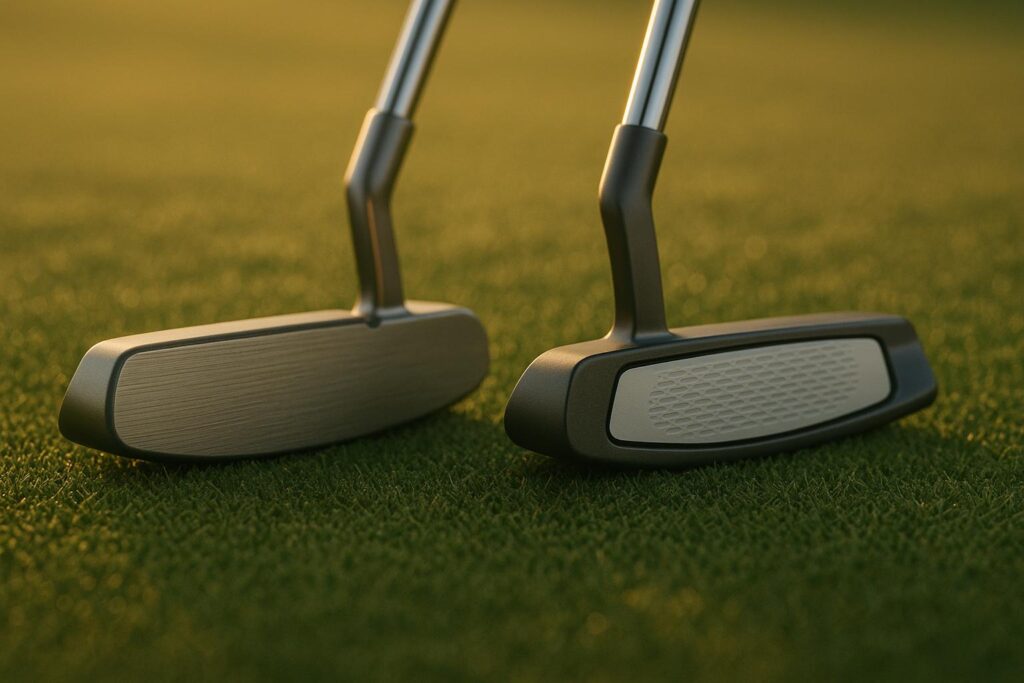
When choosing a putter, the decision often comes down to milled vs. insert designs. Here’s a quick breakdown:
- Milled Putters: Made from a single block of metal, they offer a firm feel, a sharp "click" sound, and precise feedback. Ideal for players with consistent strokes and those who prioritize control on fast greens.
- Insert Putters: Feature a soft face insert, providing a softer feel, a muted sound, and more forgiveness on off-center hits. Great for players who value consistency and calmness, especially on slower greens.
Quick Comparison
| Feature | Milled Putters | Insert Putters |
|---|---|---|
| Feel | Firm, tactile | Soft, cushioned |
| Sound | Sharp metallic "click" | Muted, softer "thud" |
| Feedback | High precision | Moderate, forgiving |
| Forgiveness | Lower | Higher |
| Best For | Consistent strokes | Smoother, relaxed strokes |
| Price | Higher | More affordable |
The best way to decide? Test both types on real greens. Your stroke style, the greens you play on, and personal preference will guide you to the right choice.
Milled vs Insert Putters: What’s The Difference and Which Is Better?
Putter Face Technology Basics
The core difference between milled and insert putters lies in how they’re made. This distinction in construction plays a key role in shaping their performance and feel on the greens.
What Are Milled Putters?
Milled putters are crafted from a single block of metal through CNC milling, creating a one-piece head with exceptional precision. This process uses advanced machinery to maintain tight tolerances, resulting in consistent quality. However, these putters are typically produced in smaller batches, which contributes to their higher price.
The use of high-grade steel ensures the material’s integrity, delivering a solid and consistent connection between the putter and the ball.
"When you mill a putter from a billet of steel, the integrity of the material stays intact – you might compare the resulting feel to that of a forged iron (versus one that’s cast)." – Golf.com
Some well-known examples of milled putters include Scotty Cameron models, famous for their deep milling and billet steel construction; PXG putters, which often feature 100% milled faces enhanced with pyramid patterns to improve feel and ball speed; and Cleveland‘s HB Series, which combines casting with precision milling on the tops and faces for added accuracy.
This meticulous construction directly influences the putter’s feel and the feedback it provides during play.
What Are Insert Putters?
Insert putters, on the other hand, feature a softer face insert that’s bonded to the main putter head. These inserts are made from materials like urethane, polymer, aluminum, rubber, or other synthetics and are either molded or adhered to the striking surface.
The manufacturing process for insert putters is simpler and more suited for mass production, making them a more budget-friendly option. With this two-material design, the softer insert interacts with the ball, while the sturdier body provides structural support, offering a unique balance of feel and performance.
Notable examples of insert putters include the Odyssey White Hot series, which introduced face insert technology over two decades ago, and TaylorMade’s Spider Series, such as the Spider GTX, which incorporates a PureRoll² insert. This insert combines black TPU urethane with silver aluminum beams set at a 45° angle to improve topspin and roll consistency.
These construction methods significantly affect how the putter feels and performs on the greens. In the next section, we’ll delve deeper into how these differences influence material choices and overall performance.
Materials and Manufacturing
The materials and manufacturing techniques used in milled and insert putters play a big role in their cost, durability, and performance on the course. Let’s break down how each type is made and what sets them apart.
Milled Putter Materials and Construction
Milled putters are crafted from premium metals like stainless steel or carbon steel. Stainless steel is popular for its durability and resistance to corrosion, while carbon steel offers a softer feel, though it requires more upkeep to prevent wear.
The manufacturing process involves CNC milling, where computer-guided machines carve the putter from a single block of metal. This precise method ensures a uniform striking surface and balanced weight distribution. To elevate both performance and appearance, manufacturers often add detailed milling patterns, hand-polished finishes, and even PVD (Physical Vapor Deposition) coatings for extra durability and a sleek look.
Because milling is time-intensive, production runs are usually smaller. Many high-end milled putters also offer customization options, like adjustable weights or interchangeable sole plates, allowing golfers to fine-tune the putter’s balance and feel to match their preferences. This attention to detail results in a putter that feels consistent and responsive during play.
Insert Putter Materials and Construction
Insert putters are built using a combination of materials designed to optimize performance and keep costs down. The main body is typically made from cast metals like stainless steel or aluminum, which provide structural strength and are well-suited for mass production.
The key feature of these putters is the face insert, made from materials chosen for their unique feedback properties. Softer polymers create a cushioned feel, while firmer materials offer a sharper, more immediate response. This versatility allows designers to fine-tune the putter’s sound and performance.
To attach the insert to the main body, manufacturers use strong adhesives and mechanical retention methods. This ensures the insert stays securely in place while supporting high-volume production. By combining cast metal bodies with carefully bonded inserts, manufacturers achieve reliable alignment and adhesion while keeping costs manageable.
Insert putters also offer more design flexibility, giving golfers a broader range of aesthetic options without the higher price tag of fully milled putters. This variety makes them an appealing choice for players looking for both performance and affordability.
Feel, Feedback, and Sound Differences
The way a putter feels and sounds at impact plays a big role in shaping your putting stroke and controlling distance. These sensory elements guide your mechanics and help you judge ball speed. Let’s take a closer look at how these differences play out and what they mean for your game.

How Each Type Feels
Milled putters are known for their firm, tactile connection at impact. Golfers often describe the experience as a "crisp sensation" – you can immediately tell if you’ve hit the sweet spot or missed it slightly. This direct feedback is invaluable for experienced players who rely on subtle adjustments to their stroke during a round.
On the other hand, insert putters are designed to deliver a softer feel. The polymer or composite insert acts like a cushion between the clubface and the ball, softening the impact. This gentler sensation is particularly appealing to golfers who dislike the sharp feedback from milled putters. The cushioned response encourages a smoother, more rhythmic putting stroke, which is especially helpful for players who feel tense during critical putts. The softer feel also promotes a more relaxed grip and fluid motion through the ball.
Feedback and Sound at Impact
The sound a putter makes at impact is just as important as how it feels. Milled putters produce a sharp, metallic "click" that immediately signals solid contact. This sound reinforces timing and helps players fine-tune their stroke for distance control.
In contrast, insert putters generate a muted, softer "thud" that many golfers find calming. The dampened sound can help ease nerves, especially in high-pressure situations, by reducing distractions and keeping your focus steady. It’s a small detail, but for nervous putters, the quieter impact can make a big difference.
The feedback precision also varies between the two. Milled putters excel at providing detailed feedback, making it easier to gauge how much force you’re applying. However, this precision comes with less forgiveness – mis-hits are more noticeable. Insert putters, while less precise, offer more forgiveness on off-center strikes, helping maintain consistent ball speed even when your stroke isn’t perfect.
| Characteristic | Milled Putters | Insert Putters |
|---|---|---|
| Feel at Impact | Firm, crisp, tactile | Soft, cushioned, gentle |
| Sound Signature | Sharp metallic "click" | Muted, softer "thud" |
| Feedback Precision | High – detailed response | Moderate – dampened feedback |
| Forgiveness | Lower – sensitive to mis-hits | Higher – softens mis-hits |
| Distance Control | Precise but skill-dependent | Consistent across the face |
| Best for Nervous Putters | May increase tension | Encourages calm, relaxed play |
These sensory differences not only shape your immediate feedback but also influence your overall consistency and distance control. If you prefer precision and don’t mind feeling every detail of your stroke, milled putters might be your go-to. But if you value forgiveness and a more relaxed putting experience, insert putters could be the better choice.
sbb-itb-bcd8bdd
Performance and Which Type Fits Your Game
Understanding how different putters perform can help you find the one that matches your playing style and skill level. Beyond the differences in material and feel, their performance on the green sets them apart even further.
Forgiveness and Distance Control
Insert putters are known for their forgiving nature. The softer insert creates a larger effective sweet spot, which helps maintain consistent ball speed – even when your strike isn’t perfectly centered. On the other hand, milled putters are all about precision. They rely on clean contact to provide clear feedback, making them a great choice for players with a steady, consistent stroke.
These unique characteristics can significantly impact which putter suits your game best.
Player Types and Putting Styles
Milled putters tend to be a better fit for golfers who:
- Have consistent stroke mechanics.
- Appreciate precise, tactile feedback to refine their technique and perform well in competitive play.
Insert putters, however, are ideal for players who:
- Need more forgiveness and prefer a softer feel.
- Struggle with controlling distance on longer putts.
If your stroke is smooth and rhythmic, you might gravitate toward insert putters for their forgiving and calming response. On the flip side, golfers with firmer strokes often prefer the immediate feedback that milled putters provide. Additionally, course conditions can play a role: faster, firmer greens may favor the precision of milled putters, while slower greens are better suited to the consistent roll of insert putters.
Ultimately, selecting the right putter comes down to aligning it with your stroke style and the types of greens you typically play on.
How to Choose the Right Putter
Picking between a milled and an insert putter comes down to your stroke style, the greens you play on, and your budget. The right putter can make a noticeable difference in your performance and overall enjoyment of the game. To narrow down your options, test these factors during a fitting session to find the putter that works best for you.
Key Factors to Consider
When choosing a putter, focus on three main areas: how it matches your stroke, how it performs on the greens you play, and how it fits within your budget.
- Stroke Style: If you have a steady, consistent stroke, a milled putter might suit you better because it provides precise feedback. On the other hand, if you’re still refining your stroke, an insert putter offers more forgiveness, which can help smooth out inconsistencies.
- Green Conditions: The type of greens you play on can also influence your decision. Milled putters are ideal for faster, firmer greens, where their precision and immediate feedback shine. Insert putters, with their smooth and consistent roll, often perform better on slower greens.
- Budget: Milled putters are typically crafted with high precision, which can make them more expensive. Insert putters, while often more affordable, still offer excellent performance and a forgiving design.
Finally, there’s the question of feel, which is highly personal. Some golfers prefer the crisp, solid feedback of a milled putter’s metal-on-ball contact, while others enjoy the softer, muted sensation of an insert. The best way to decide? Test them out and see which one gives you the most confidence when standing over the ball.
Testing and Custom Fitting
Custom fitting is a game-changer when it comes to putter selection. It fine-tunes key elements like feedback, balance, and alignment, ensuring the putter complements your unique stroke and physical characteristics. Surprisingly, many golfers overlook this step, even though it can significantly improve performance by helping you strike the ball more consistently and control speed more effectively.
During a fitting session, you’ll have the chance to test both milled and insert putters. This process can uncover specific details about your stroke – like face angle at impact, path, or tempo – and determine whether adjustments in equipment or technique are needed. A proper fitting will also optimize factors such as length, loft, lie angle, and grip size to match your posture and stroke mechanics.
Most golf retailers and courses host demo days where you can try out various putter styles on real greens. These events are a great opportunity to experiment with different designs, lengths, and grip options. Pay attention to how each putter feels during your stroke and how well you can control distance on putts of varying lengths. Even the way a putter looks can affect your confidence and enjoyment on the course.
Resources for Putting Improvement
Once you’ve chosen and fitted your putter, the next step is refining your technique. A well-fitted putter is only as good as the stroke behind it. Platforms like How To Break 80 offer resources to help you improve, including their Precision Putting Video Course for $49.00. This course provides practical drills and techniques to help you develop consistent, accurate putting.

The training materials cater to both milled and insert putters, focusing on the fundamentals needed for stroke consistency and distance control. By combining the right equipment with sound technique, you’ll be well on your way to lowering your scores and enjoying better performance on the greens.
Final Thoughts
Deciding between milled and insert putters comes down to your stroke style, skill level, and what feels right for you. Milled putters are known for their firm feel and sharp feedback at impact – qualities that help seasoned golfers fine-tune their strokes with precision and sound cues.
On the other hand, insert putters are more forgiving and offer a softer, muted feel. Many players find this design more confidence-inspiring, especially if they prefer a smooth, fluid stroke or struggle with consistency.
It’s worth noting that milled putters often come with a higher price tag due to their detailed craftsmanship, while insert putters tend to be more budget-friendly without compromising on forgiveness and performance.
Ultimately, the question isn’t which putter is "better" overall – it’s about which one gives you the confidence to make your best stroke. Take the time to test both types during a custom fitting session on real greens so you can experience their feel firsthand. A putter that suits your stroke and feels right in your hands can make all the difference in your performance on the greens.
FAQs
How can I decide if a milled or insert putter is right for me?
When deciding between a milled putter and an insert putter, it all comes down to how you like your putter to feel and perform.
Milled putters are made from a single piece of metal, giving them a firmer feel and precise feedback. They’re perfect for golfers who value control and want a consistent, solid impact with every stroke. If you’re someone who enjoys fine-tuning your technique, a milled putter could be a great fit.
In contrast, insert putters have a softer face material, which delivers a cushioned feel. They also offer more forgiveness, especially on off-center hits. This makes them a go-to choice for players who prefer a smoother sensation and want more consistency, even when their stroke isn’t perfect.
Ultimately, think about what’s most important for your game. Do you lean toward control and crisp feedback, or do you prefer softness and forgiveness? Testing both types can help you figure out which one aligns with your playing style.
What should I consider when choosing a putter for the greens I play on?
When choosing a putter, it’s important to factor in the speed and surface of the greens you usually play on. If you’re dealing with slower greens, a heavier putter with a firmer face can give you better control and help with distance. On the other hand, for faster greens, a lighter putter with a softer face can make managing speed much easier.
Your putting stroke also plays a key role. If you have a straight stroke, a face-balanced putter is a great match. For those with an arced stroke, a toe-hang putter tends to perform better. Don’t forget to take the green’s slopes and undulations into account – these details can guide you toward a putter that complements your game.
Does getting a custom putter fitting really improve my putting, and what happens during the session?
Yes, getting a custom putter fitting can make a noticeable difference in your putting game. By tailoring the putter to match your stroke, stance, and personal preferences, you can achieve greater consistency, improved accuracy, and more confidence when you’re on the greens.
The process involves a professional analyzing your putting stroke, discussing your goals, and experimenting with different putter designs, weights, and lie angles. Often, advanced tools are used to measure your performance and pinpoint the best specifications for your putter. The end result? A putter that feels like a natural extension of your game, helping you play at your peak.
Related Blog Posts
- 7 Common Putting Mistakes Beginners Make (And How to Fix Them)
- Blade vs. Cavity-Back for Shot Shaping
- Lie Angle Basics for Putters
- Putter Grip Styles: Pros and Cons
