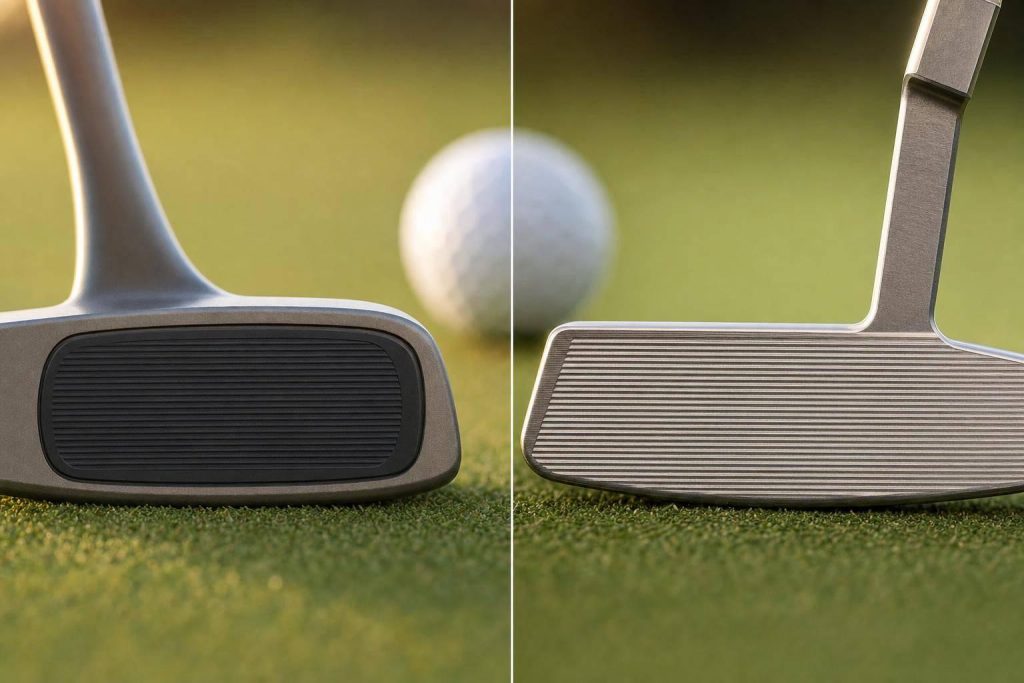
If you want a softer feel, more help on slight mishits, and a lower price, an insert putter may fit you better. If you want sharper feedback and longer-lasting face material, a milled putter is often the better pick.
Here’s the short version:
- Insert putters usually feel softer and sound quieter.
- They can help on heel and toe strikes by keeping speed more even across the face.
- Many good models cost about $120 to $250.
- The trade-off is less feedback at impact and, over time, possible wear in the insert or bonding.
- Milled putters tend to feel firmer, sound crisper, and tell you more about where you struck the ball.
- Premium milled models often cost about $350 to $550+.
If I were choosing, I’d look at four things first:
- Feel: soft and muted vs. firm and crisp
- Forgiveness: help on slight misses vs. more strike awareness
- Durability: insert wear risk vs. solid metal face
- Price: lower entry cost vs. higher long-term cost
Quick comparison:
| Type | Feel | Mishit Help | Feedback | Durability | Price |
|---|---|---|---|---|---|
| Insert putter | Soft, damped | Higher | Lower | Can wear over time | $120–$250 |
| Milled putter | Firm, crisp | Lower | Higher | Usually holds up well | $350–$550+ |
For most golfers, the choice is simple: do you want comfort and help, or sharper response and more strike detail? Once you choose, you can sharpen your short game with targeted practice.
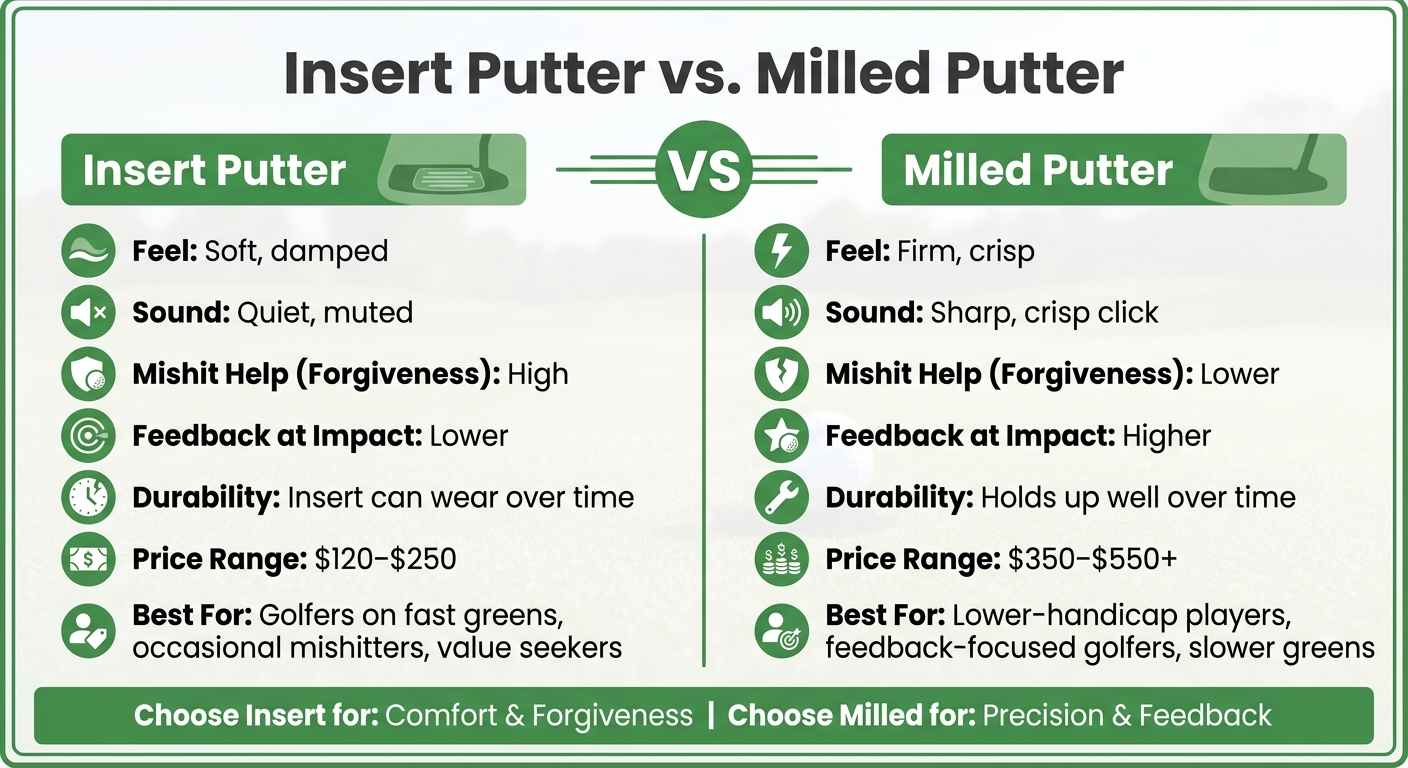
Insert Putter vs. Milled Putter: Side-by-Side Comparison
Milled vs Insert Putters: What’s The Difference and Which Is Better?
sbb-itb-bcd8bdd
Pros of Insert Putters
Insert putters have three big upsides: a softer feel, more help on mishits, and a lower buy-in. For most golfers, that’s the draw in plain English – feel, forgiveness, and value.
Softer Feel and Quieter Sound on Fast Greens
A muted face can make distance control easier on fast greens because the ball doesn’t feel as springy at impact. Instead of a sharp “click,” you get a quieter, more damped response. Insert materials soak up vibration, which helps keep the ball from feeling jumpy or hot off the face. Odyssey White Hot is a well-known example of that controlled feel.
That softer response also tends to work nicely with off-center-hit protection.
More Forgiveness on Heel and Toe Strikes
Inserts, paired with perimeter weighting, help steady the head on mishits. The face material can keep ball speed more even across the strike area, so a putt hit a bit off the heel or toe still rolls close to the planned distance. Many inserts also use grooves or channel patterns to cut skid and help the ball start rolling sooner.
Accessible Pricing and Tuning Options
Most good insert putters sit in the $120–$250 range, which makes this part of the market a strong value play. You’re usually getting stable head shapes, useful alignment aids, and face tech built for repeatable roll. Some models also come with replaceable inserts or adjustable weights, which gives you a bit more room to dial in feel.
Those strengths stand out most for golfers who want comfort and stability more than detailed feedback on every strike.
Cons of Insert Putters
The soft feel and forgiveness that make insert putters popular come with trade-offs. They won’t matter to every golfer, but they do matter enough to think through before you buy.
Less Feedback at Impact
The same damping that makes an insert feel softer can also make impact feel less clear. Heel, toe, and center strikes become harder to tell apart because the face filters out some of that contact information.
That matters more than it may seem at first. When an insert smooths out ball speed across the face, it can also hide the small twisting sensation you’d usually notice on a mishit. A milled face usually gives you a more direct response, so you can tell right away when contact wasn’t clean.
Durability Concerns and How Feel Can Change Over Time
Polymer, urethane, and elastomer inserts are softer than steel on purpose. Over years of regular play, that softer material can show wear. You may notice scratches, surface marks, cosmetic chips, or slow compression in the insert itself.
The bigger issue isn’t just looks. If the bonding agent between the insert and the putter head starts to weaken, or if the insert becomes permanently compressed after repeated impact, performance can change. In plain English: the putter may not feel or respond the way it did when it was new.
What Marketing Claims Often Get Wrong
A lot of insert putter marketing leans on lines like "automatic distance control" or "better feel." That sounds great, but the truth is more complicated.
Inserts don’t magically fix distance control on centered putts. That mostly comes down to stroke consistency and proper fit, including length, lie angle, and toe hang. And while feel is personal, distance control has more to do with fit and stroke than face type.
Ball choice also changes the picture. A firm tour ball can make a soft insert sound and feel more clicky, while a low-compression ball can make that same insert feel even more muted.
Those trade-offs lead straight into the insert-vs.-milled choice in the next section.

Insert Putters vs. Milled Putters: Which Golfers Benefit Most
The right pick comes down to three things: how you strike putts, how fast your greens are, and how much feedback you want at impact.
Golfers Who Should Consider an Insert Putter
Insert putters are a good fit for golfers who want a softer feel, a bit more help on slight misses, and a lower price point. If you miss the center now and then, an insert face can help limit speed loss on those slight off-center strikes. That can be a big deal, because a putt that comes up a foot short often feels a lot worse than one that misses on line.
They also make sense if you play fast greens on a regular basis. The softer, quieter contact can make pace control feel easier, especially on longer putts. Some golfers like that muted feel because it takes a little of the “jump” out of impact.
There’s also the price factor. Many insert models sit in the $180–$250 range.
If you care more about feedback than softness, though, the argument starts to swing the other way.
Golfers Who May Prefer a Milled Face
Lower-handicap players often lean toward milled faces because they use tactile feedback to dial in distance. A milled steel face gives a direct, crisp response at impact, so it’s easier to tell if you caught the center or drifted toward the heel or toe.
That sharper response can also help on slower or heavier greens. A firmer milled face gives firmer feedback for distance control, which some players prefer when they need to hit putts with a bit more intent. If you tend to hit putts too hard, that immediate response can help you rein in power.
Premium milled putters often land in the $450–$550 range, and they tend to hold value well.
How to Test Both Styles Before You Buy
The best way to sort this out is simple: test both styles on a practice green with your gamer ball. Don’t just roll a few short straight putts and call it a day. Hit center strikes, heel and toe misses, and a handful of long putts.
A few things to watch:
- If long putts keep finishing well past the hole, a softer insert may fit your tempo better.
- If you want to feel exactly where the ball met the face, a milled putter may suit you more.
- If the head feels good but results are mixed, the issue may be fit, not face type.
That last point matters. A putter fitting can help separate face feel from specs like lie, loft, length, and grip size. In the end, the goal is to figure out what matters most to you: feel, help on misses, or feedback.
Conclusion: How to Decide if an Insert Putter Fits Your Game
Insert putters give you a softer feel and a bit more help on off-center strikes, but they also give you less feedback at impact. For a lot of golfers, that’s a fair trade. It tends to suit players on fast greens, golfers who don’t always catch the middle of the face, or anyone looking for a forgiving putter in the $120–$250 range.
If you depend on a crisp, direct feel to spot mishits and fine-tune distance control, a milled face will probably suit you better.
The best way to decide is simple: test both on actual greens, not just in a store. Use your gamer ball. Roll short putts to check alignment and see which one gives you more confidence. Then hit lag putts from 20 and 35 feet and watch how the ball rolls out, even when contact isn’t perfect.
Go with an insert putter if you want a softer feel and a little help on slight misses. Pick a milled face if you want sharper feedback and tighter strike awareness.
FAQs
Do insert putters help high-handicap golfers more?
Yes. Insert putters are often a good fit for higher-handicap golfers.
Here’s why: they usually have a softer feel and a bit more forgiveness on off-center hits. That can make distance control easier, which is a big deal on the greens.
Inserts can also help make ball speed more consistent across the face. So if a player doesn’t hit the center every time yet, the putter can be a little more forgiving and help smooth out those misses.
Can an insert putter improve distance control?
Yes, many golfers feel that insert putters help with distance control. The softer feel can make impact seem less jumpy, which is often helpful on fast greens.
Inserts can also help produce a more even roll across the face. That can cut down on skidding or bouncing, making pace a bit easier to judge.
How long does a putter insert usually last?
Putter inserts are made to last. Under normal playing conditions, they rarely need to be replaced.
In fact, many golfers use the same insert putter for 10 to 15 years or longer and still get steady performance.
Over time, you might notice cosmetic wear or a few light scratches. That’s normal, and in most cases, it doesn’t change how the putter performs. If you take good care of it, a putter can last for decades.
Related Blog Posts
- Putter Grip Styles: Pros and Cons
- Milled vs Insert Putters: Key Differences
- How to Improve Putting: Beginner’s Guide
- How Putter Loft Affects Ball Roll
