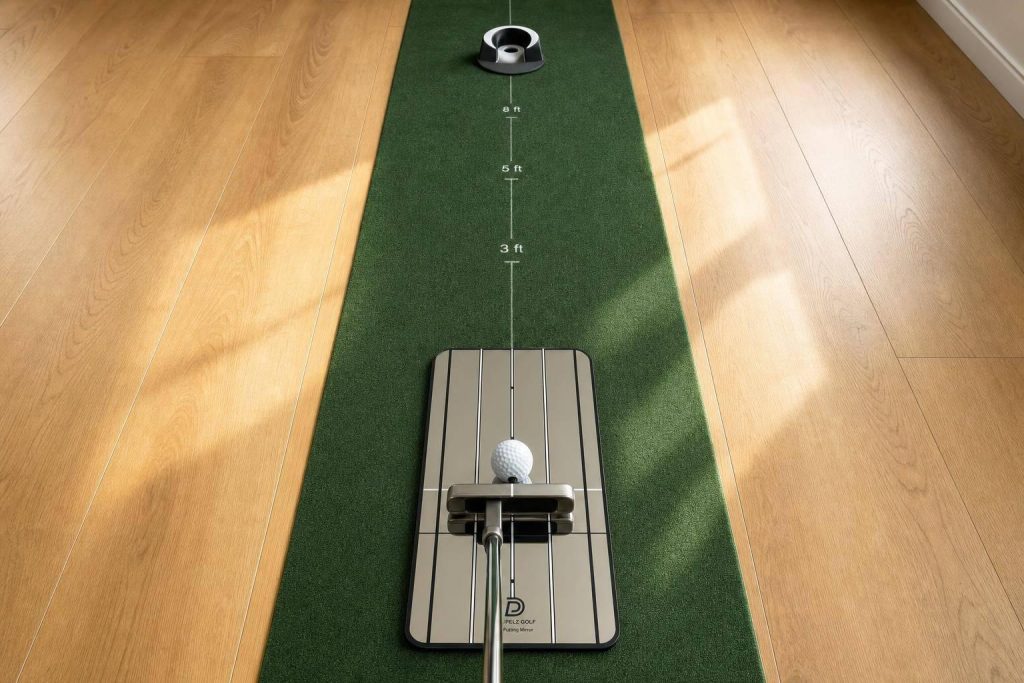
Most short putts are missed for 3 reasons: bad setup, a face that twists at impact, or poor pace. If I had to match one tool to each problem, I’d do it like this:
- EyeLine Golf Putting Alignment Mirror for setup and start line
- PuttOUT Pressure Putt Trainer for pace and speed control
- Wellputt 10 ft Putting Mat for at-home reps that blend line and pace
From 3 to 8 feet, small errors matter a lot. The article points to one stat that stands out: a 2:1 backstroke-to-downstroke ratio can help keep tempo steady. And on short putts, even a slightly open or closed face can send the ball off line.
So if you miss short putts, I’d use proven putting drills and keep the fix simple:
- Check your aim at address
- Watch your face angle through impact
- Train your tempo and speed
The 60-Second Putting Setup That Makes Short Putts Feel Automatic | Dana DeSarle, PGA
sbb-itb-bcd8bdd
Quick Comparison
| Training Aid | Best Use | Main Feedback | Best Place to Use It | Main Drawback |
|---|---|---|---|---|
| EyeLine Golf Putting Alignment Mirror | Setup errors | Eye position, face aim, start line | Indoors or outdoors | No speed feedback |
| PuttOUT Pressure Putt Trainer | Pace issues | Return and speed on short putts | Indoors or outdoors | Can feel tough at first |
| Wellputt 10 ft Putting Mat | Home practice | Line, stroke length, pace | Indoors | Needs flat floor space |
Bottom line: I’d pick the mirror for aim, the PuttOUT for speed, and the mat if you want one home station for daily work. The rest of the article explains which one fits the miss you see most often.
Why Short Putts Get Missed
Most missed short putts come down to three simple mechanics.
The first is alignment at setup. If the putter face isn’t square at address, the ball usually won’t start on the line you want. That’s the first hurdle. The hard part is that golfers often can’t feel tiny errors in face angle or alignment.
The second problem is face control through impact. When the wrists rotate the face too much, the putter can arrive open or closed at impact, and the ball starts left or right. This is one of those mistakes that can hide in plain sight. It doesn’t always feel wrong, so it tends to show up again and again.
The third is pace. If tempo changes from putt to putt, short putts can come up short or run too far past the hole. Research points to a 2:1 backstroke-to-downstroke ratio as an ideal rhythm for steady putting tempo. When that rhythm gets jerky or rushed, pace becomes hard to control.
These three faults – alignment, face control, and pace – line up with the three aids in this list, forming a core part of your golf strategy. The first aid focuses on setup and alignment.
1. EyeLine Golf Putting Alignment Mirror
The first fix starts with setup. That’s where short-putt control begins, before you even make the stroke.
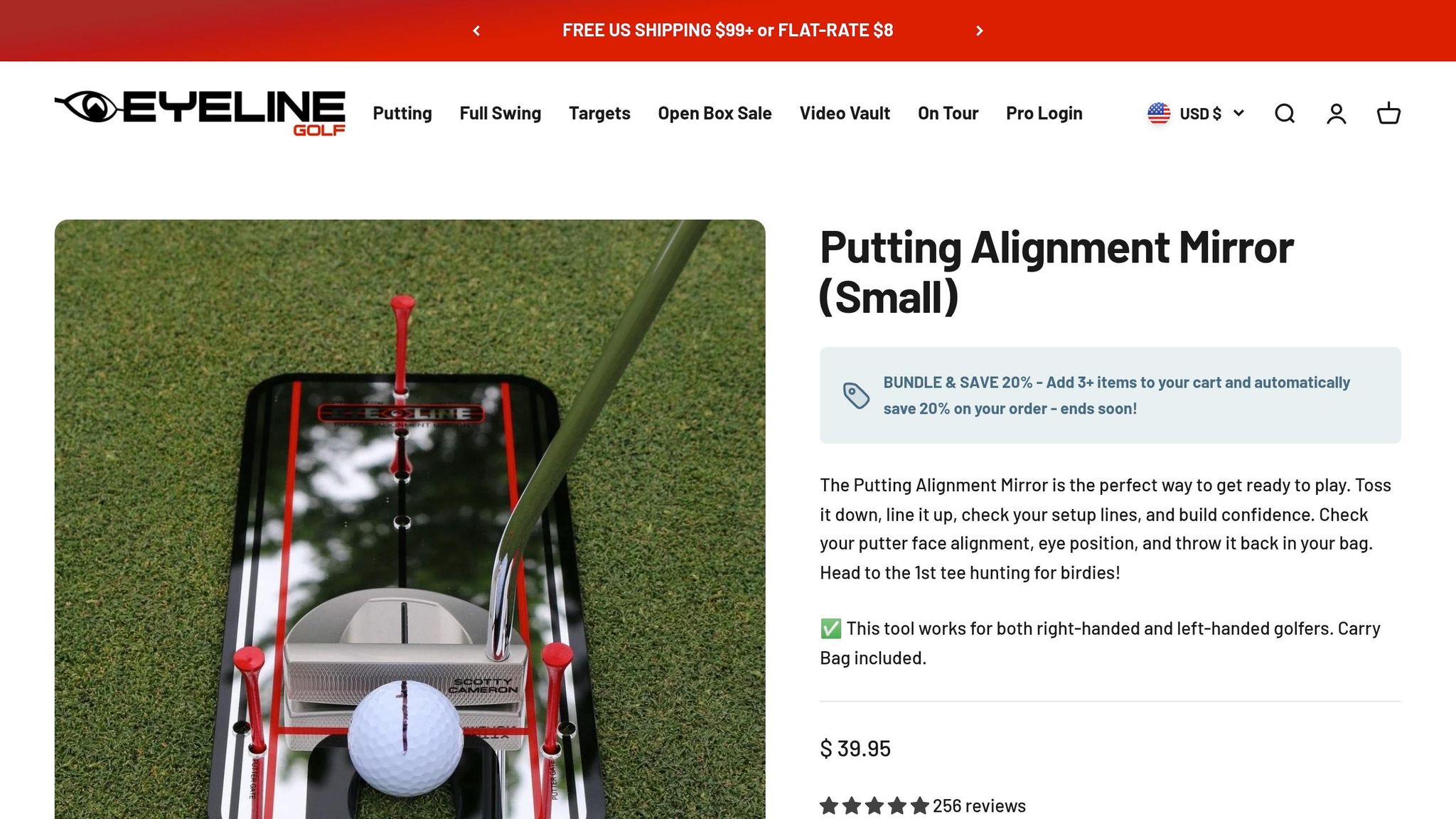
The EyeLine Golf Putting Alignment Mirror is a flat mirror that sits on the ground at address. It gives you instant visual feedback on setup and alignment, so you’re not guessing.
Start-Line Feedback
The mirror’s alignment lines show whether the putter face is square and whether the ball is starting on your intended line. That kind of visual feedback makes setup mistakes easy to catch.
Face/Path Correction
It also helps with more than setup. The mirror shows whether your stroke stays square through impact. If your face is misaligned or your stroke path pulls the putter off line, you can spot it right away and work on improving your golf game by keeping face rotation under control.
Best Practice Setting
Use it on any flat surface for 5 to 10 minutes a day. Keep those reps focused on setup and start line.
Once setup is dialed in, the next aid helps turn good starts into putts that finish with the right speed.
2. PuttOUT Pressure Putt Trainer
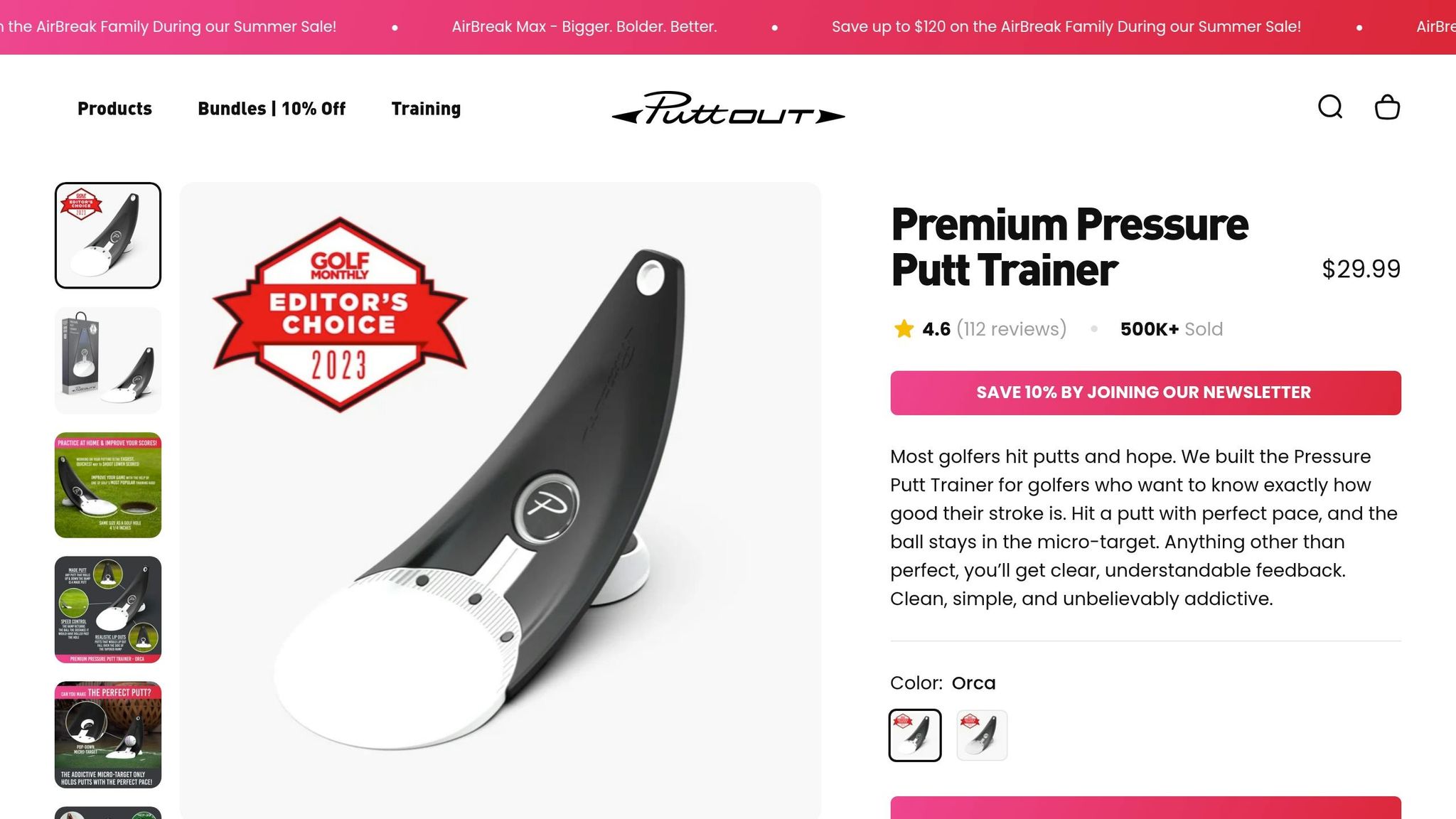
For short putts, pace matters just as much as line. That’s where the PuttOUT trainer helps. It gives you instant feedback on speed, so you can work on one thing at a time instead of trying to fix everything at once.
Pace-Control Training
The main upside here is a master your swing tempo. Use a steady 2:1 backstroke-to-downstroke rhythm, and bring in a metronome if you need help keeping the stroke even.
Best Practice Setting
Use the trainer to dial in pace, not just direction, so the ball finishes at the right speed.
Once your pace starts to feel repeatable, the next tool builds on that feedback and helps you groove a longer, steadier stroke.
3. Wellputt 10 ft Putting Mat
Once you’ve worked on setup and pace on their own, the Wellputt 10 ft Putting Mat lets you bring both together on one surface. You get a 10-foot practice area that gives you plenty of room for short-putt reps without eating up much space at home. It turns setup, start line, and pace into one short-putt routine you can repeat day after day.

Start-Line Feedback
If a putt misses left or right, you’ll see it right away. A square face at impact keeps the ball on line.
Face/Path Correction
The printed lines make it easier to spot what’s going on. If you’re missing putts, you can check whether the issue comes from face angle or stroke path during full putting reps.
Pace-Control Training
At 10 feet, the mat gives you enough space to work on a smooth, repeatable tempo and get your pace under control.
Best Practice Setting
This mat works best at home, where fast feedback can help you build feel and consistency. Short daily reps on the mat can help lock in a repeatable tempo without turning practice into a whole production.
It’s the best pick if you want one drill station instead of a bunch of separate tools.
Side-by-Side Comparison
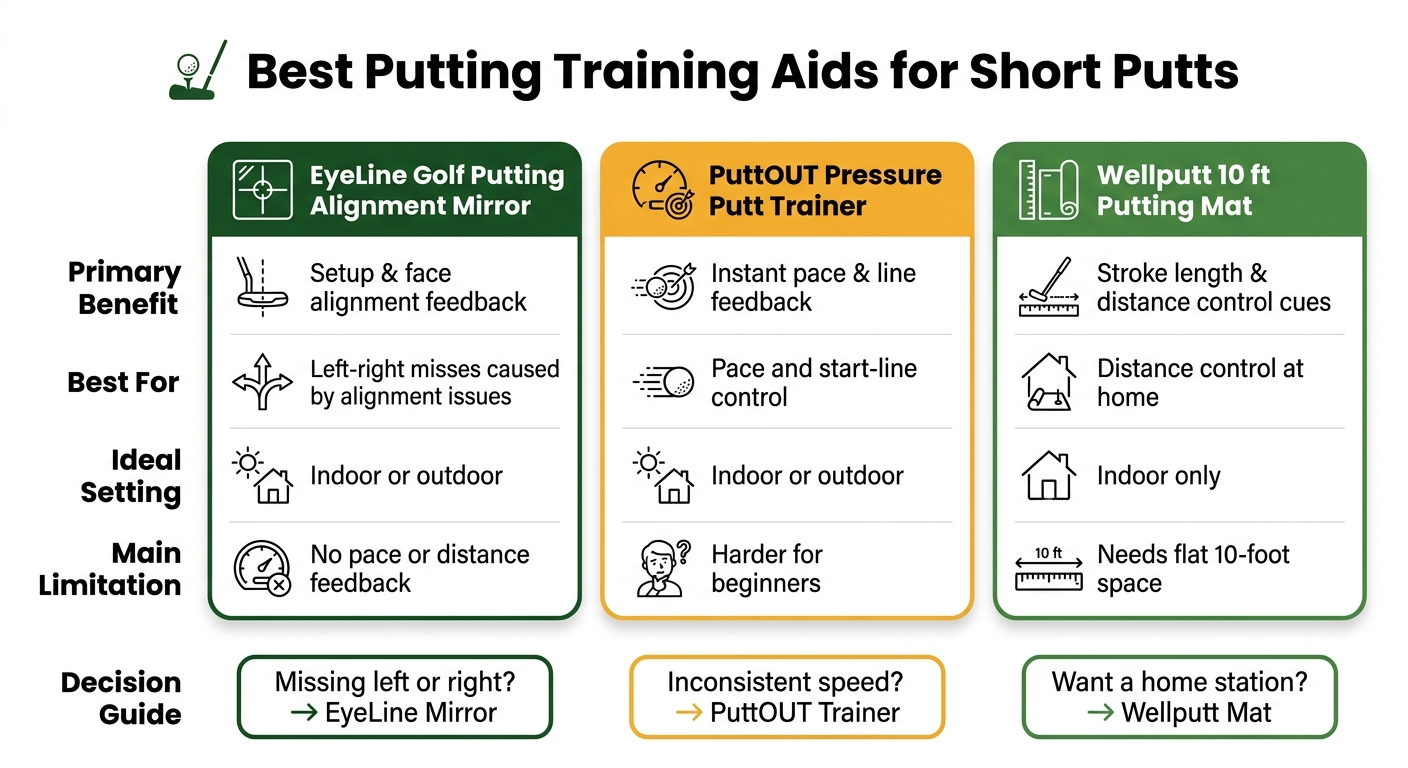
Best Putting Training Aids for Short Putts: Side-by-Side Comparison
Use this table to line up each aid with the short-putting issue that bugs you most. If you want the quickest path to a good pick, start here.
| Training Aid | Primary Benefit | Best For | Ideal Practice Setting | Main Limitation |
|---|---|---|---|---|
| EyeLine Golf Putting Alignment Mirror | Setup and face alignment feedback | Left-right misses caused by alignment issues | Indoor or outdoor | Does not provide pace or distance feedback |
| PuttOUT Pressure Putt Trainer | Instant pace and line feedback | Pace and start-line control | Indoor or outdoor | Harder for beginners |
| Wellputt 10 ft Putting Mat | Stroke length and distance control cues | Distance control | Indoor | Needs a flat 10-foot space |
If your misses usually begin at setup, or your putter face tends to sit closed or open, go with EyeLine Golf Putting Alignment Mirror.
If your speed changes from one putt to the next, PuttOUT Pressure Putt Trainer is the better fit.
If you want an easy at-home option to dial in distance control, choose Wellputt 10 ft Putting Mat.
If you want more ways to build that skill, the next section covers additional putting drills.
More Practice Resources for Better Putting
If you want to turn training-aid feedback into a repeatable routine, it helps to pair that feedback with structured instruction. Training aids show what went wrong. Instruction shows you how to fix it.
How To Break 80 offers guides, eBooks, and video courses for golfers who want to get better on their own. For putting, the Precision Putting Video Course teaches drills and techniques built around consistency and accuracy – the same skills training aids test.
The course also covers stroke balance and face-angle errors, which can help you spot pulls and pushes faster. On top of that, it includes a 5-week practice plan and a Short Game Masterclass eBook. Put those pieces together, and you get both parts of the puzzle: feedback on what happened and a clear way to work on it.
Conclusion
Each aid fixes a different short-putt issue, so the best choice comes down to the common putting mistakes you make most often.
Here’s the quick way to line things up.
- Choose the EyeLine mirror if your setup is off and those setup mistakes keep costing you short putts.
- Go with the PuttOUT Pressure Putt Trainer if your main issue is pace, not line.
- Pick the Wellputt mat if you want a simple home setup for steady practice.
Match the tool to the flaw, and short putts get a lot easier in a hurry.
FAQs
Which aid should I start with?
Start with the aid that matches your goal and skill level. If you’re new to putting or just play for fun, a simple low-cost tool can be a smart pick. A more guided option can work well too, like the Precision Putting Video Course from How To Break 80 for $49.00.
If you want feedback based on data, pick an aid that lines up with your main problem. For example, use a tempo-focused tool if distance control is the issue, or an alignment aid if you miss short putts. Then pair that aid with structured drills so the motion starts to feel natural instead of forced.
How often should I practice short putts?
Practice short putts in short, structured sessions about 3–5 days per week for 5–10 minutes at a time.
If you use putting aids or feedback tools, fold them into your routine as occasional check-ins instead of relying on them all the time. That way, they can help you make small tweaks while you still build feel and repeatability.

Can I use these aids at home?
Yes. A lot of these training aids work well at home.
Sensor-based tools can be used indoors on a mat or even carpet. Projector-based or AR-style systems usually need a dedicated indoor area with enough room to set everything up. Virtual or video tools are often the simplest option. In many cases, all you need is a putter, a few balls, and a flat surface.
Related Blog Posts
- Best Putting Drills Taught at High Handicapper Clinics
- How to Improve Putting: Beginner’s Guide
- How to Use Putter Alignment Aids Effectively
- Ultimate Guide to Choosing Putting Alignment Tools
