
You don’t have to feel calm to follow a calm golf routine. Walk at a steady pace, loosen your hands, and choose your target 2–3 yards behind the ball. At address, use one shot cue – such as a landing spot – and swing. If a distraction breaks the routine, step away and restart.
Keep the plan simple:
- Before the shot: Exhale, settle your golf stance, and decide what shot to play.
- Over the ball: Avoid extra checks, hazard staring, and last-second swing changes.
- After contact: Release tension and reset instead of replaying the mistake.
Practice for 10 minutes, then test the routine with five consecutive 3-foot putts. Track routine completion separately from made putts, and choose one body-language habit to follow each round. This consistency is key when learning how to quickly improve your golf game.
Body Language Before, During, and After Shots
Before the Shot: Relax Your Posture and Hands
Keep the same calm pace through every shot sequence. Stay balanced and keep your body moving lightly. A few waggles and a small foot shuffle can help you stay loose. After your final look at the target, exhale deliberately to release tension.
At Address: Set Your Gaze and Commit
Pick your target, picture the ball flight, and set the clubhead first. Step in with your back foot, then your front foot. Once you’ve grounded the club, use a small waggle to relax your hands and arms. When your eyes return to the ball, commit and swing.
After the Shot: Walk, Release, Reset
Watch the ball finish, then let the tension go from your hands and shoulders. Use the walk to your next shot to reset your golf strategy and pace – not replay the last shot.
sbb-itb-bcd8bdd
Build a Routine for Pressure Shots
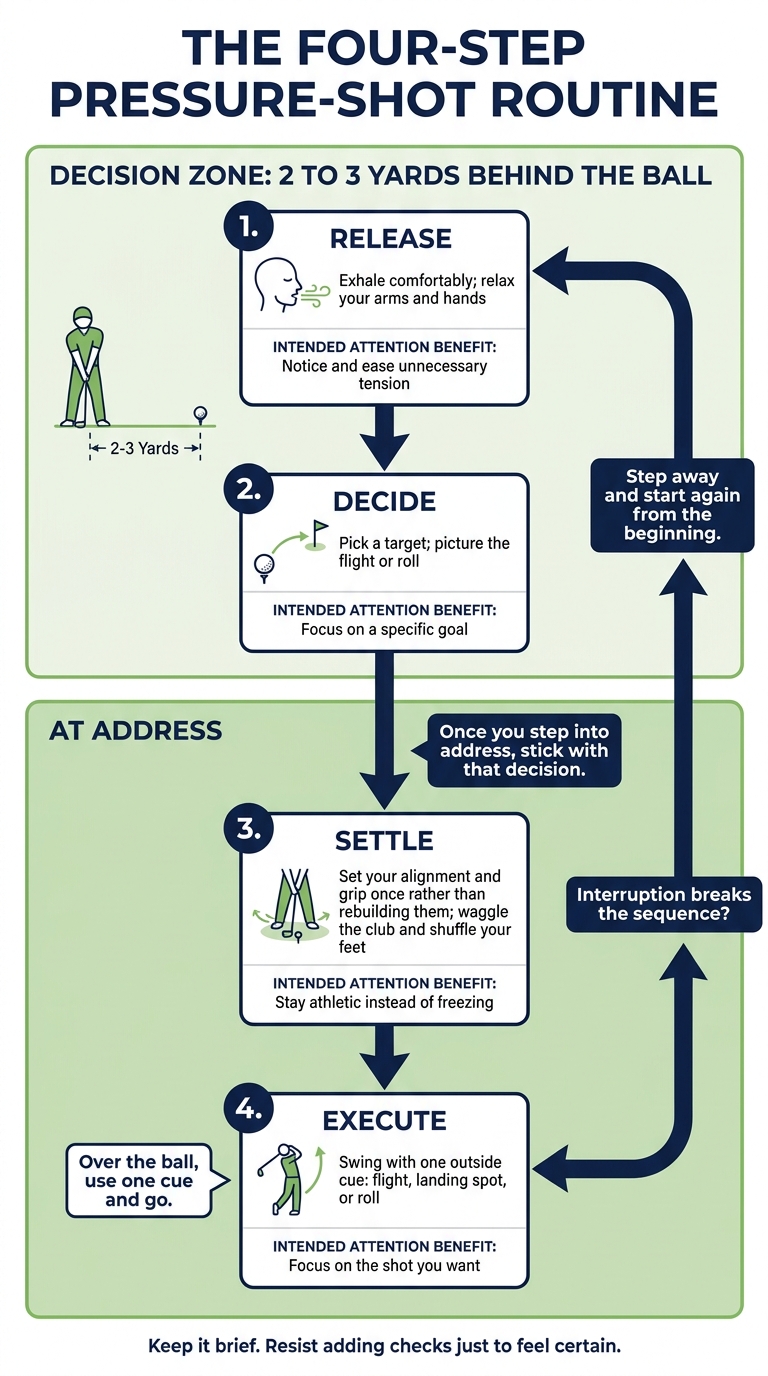
Calm Golf Routine: Release, Decide, Settle, Execute
Behind the Ball: Release, Decide, and Visualize
Bring the relaxed posture and hands from the last section into this shorter pressure routine. The aim is to keep your body quiet but athletic, with movement that keeps you from getting stuck.
Under pressure, make the area 2 to 3 yards behind the ball your decision zone. Pick your target and intended shot, then picture the flight or roll. Decide here so you don’t bring several options into address.
| Step | Observable action | Intended attention benefit |
|---|---|---|
| Release | Exhale comfortably; relax your arms and hands | Notice and ease unnecessary tension |
| Decide | Pick a target; picture the flight or roll | Focus on a specific goal |
| Settle | Set your alignment and grip once rather than rebuilding them; waggle the club and shuffle your feet | Stay athletic instead of freezing |
| Execute | Swing with one outside cue: flight, landing spot, or roll | Focus on the shot you want |
Once you step into address, stick with that decision.
Over the Ball: Commit, Settle, and Execute
Over the ball, use one cue and go. Commit to the shot while keeping your hands, shoulders, and feet loose. This is the time to swing – not to start weighing your options again.
Keep It Brief and Know When to Restart
Practice the same short sequence until it feels automatic. Resist adding checks just to feel certain. If an interruption breaks the sequence, step away and start again from the beginning.
Common Body-Language Mistakes and Fixes
Pressure can creep into your body language. These fixes help you reset fast.
Rushing, Freezing, and Extra Checks
Pressure often shows up first in your pace, posture, or repeated checks. You might rush through your setup or strike too soon after a distraction. Or you might freeze, standing over the ball too long.
If a distraction or setup error breaks your routine, step away and start again.
Overdone Confidence, Tension, and Frustration
Trying too hard to look confident can make your posture rigid, while frustration can tighten your hands. Settle into a relaxed, stable posture and ease your grip to release the tension.
Hazard Staring and Too Many Swing Thoughts
Staring at a hazard puts your attention in the wrong place. Bring your eyes back to your intended target.
If swing mechanics crowd your thoughts at address, step away. Return with one external cue, such as your intended ball flight or landing spot. Practice this same quick reset with driving tips for beginners on the range and use it during play.
Practice Calm Movement on the Range and Course
Practice Your Routine for 10 Minutes
Practice calm movements until you can maintain them under pressure. Rehearse your routine with and without a ball for 10 minutes. Keep your pace steady, your hands relaxed, and your movements small and steady rather than freezing. Swing smoothly, not hard. If something interrupts you, step away and restart the routine from the beginning.
Next, test that calm pace with putting drills that take less than 10 minutes.
Add Pressure With a 3-Foot Putting Drill
Try to make five consecutive 3-foot putts while keeping the same calm pace and relaxed hands. If you lose focus, step away and restart your routine. Track completed routines and resets separately from made putts.

Choose One Body-Language Goal per Round
After the drill, focus on one visible habit you can repeat during play: use the same number of waggles before each putt. Mark each successful repetition with a simple tally on your scorecard.
Conclusion: Your On-Course Composure Checklist
Use this checklist whenever you face a shot under pressure:
- Between shots: Walk at a steady pace, let go of the last shot, and keep your posture tall but relaxed.
- Behind the ball: Stand a few yards back, choose a specific target, picture the ball’s flight, then step in and commit.
- At address: Settle into your stance and swing without technical thoughts. If your routine breaks, step away and start again.
- After contact: Watch the ball’s flight, note one takeaway, and reset for the next shot.
Aim for repeatable attention and behavior by following the same routine every time.
FAQs
Can calm body language help even when I feel nervous?
Yes. Standing tall with your head up can help you feel more grounded, even when you’re nervous. A small waggle or gentle foot shuffle can keep you moving freely and ease the tension that builds when you stand perfectly still over the ball.
Calm body language won’t erase nerves. But it can help keep anxiety from taking over, making it easier to focus on your process goals.
How can I spot tension before it affects my swing?
Watch for signs of tension: shallow breathing, gripping the club too tightly, sweaty palms, or tight shoulders and neck. Negative thoughts or feeling “stuck” or frozen over the ball can also mean tension is building.
If you notice any of these signs, step away from the ball right away. Take deep breaths from your diaphragm to ease the tension, then reset your pre-shot routine.
How do I keep my routine from slowing play?
Keep your pre-shot process clear – not long. In the Think Box behind the ball, check distance, wind, and hazards. Then step into the Execution Box at the ball and commit to your target without hesitation.
Use the 3-second rule: start your swing within three seconds of your final look at the target. That leaves less time for doubt and overthinking.
For more ways to fine-tune your game, visit How To Break 80.
Related Blog Posts
- How Pre-Shot Routines Improve Mental Game
- Pre-Round Mental Checklist for Golfers
- 5 Steps for a Confident Pre-Shot Routine
- 5 Tips To Stay Calm During Golf Tournaments
