
Most tee box problems come from 3 things: not being ready, making noise, and hitting when it isn’t safe. If I fix those first, I help the group play faster, stay safer, and improve my golf game by avoiding awkward moments on the first shot of every hole.
Here’s the short version of what matters on the tee:
- I know who hits first: honors in formal play, ready golf in casual rounds
- I stay quiet and still during another player’s swing
- I stand to the side, not in the player’s view or swing path
- I tee the ball between the markers, never in front of them
- I get my club, glove, and plan ready early
- I don’t take extra time with practice swings
- I wait until the group ahead is fully out of range
- I watch tee shots so the group can find the ball faster
- I keep my phone, music, and frustration under control
- I clean up, clear the tee, and move on right away
One small delay doesn’t seem like much. But if a foursome saves just 3 seconds per shot, that can cut about 20 minutes from the round. That’s why tee box etiquette matters: it sets the pace for the whole day.
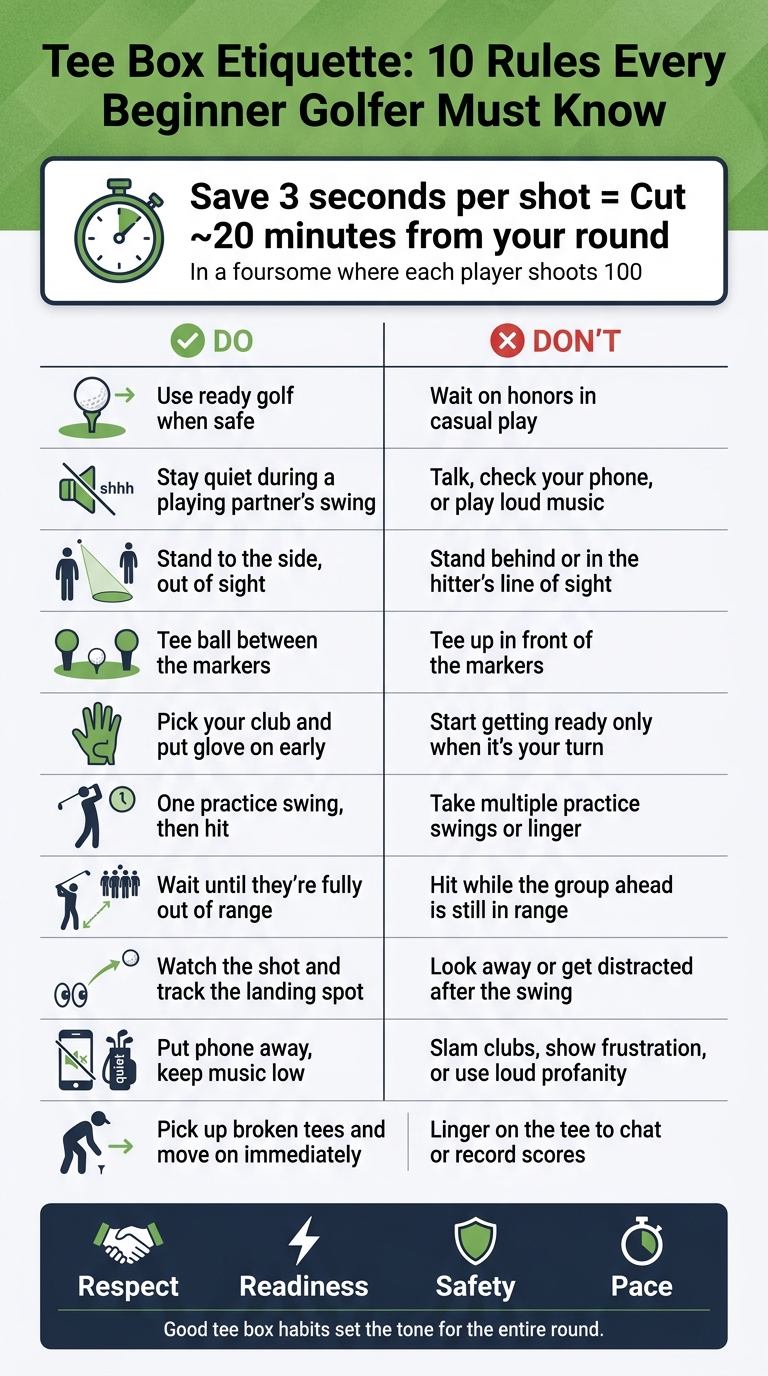
Tee Box Etiquette: 10 Rules Every Beginner Golfer Must Know
Tee Box Etiquette, What you need to know before you play golf!
sbb-itb-bcd8bdd
Quick Comparison
| Rule | What I do | Why it matters |
|---|---|---|
| Tee order | Use honors or ready golf strategy | Cuts confusion |
| Silence | Stop talking and moving | Helps focus |
| Position | Stand off to the side | Helps focus and safety |
| Teeing area | Tee up between markers | Follows the rules |
| Preparation | Choose club before my turn | Keeps play moving |
| Pace | Limit practice swings and hit | Prevents backups |
| Group ahead | Wait until they’re out of range | Keeps people safe |
| Ball tracking | Watch the shot from the side | Speeds up ball finding |
| Distractions | Put away phone, lower music | Keeps the tee calm |
| Exit | Pick up broken tees and leave | Keeps the area clean and open |
If I can build these habits, I look more prepared, avoid slowing people down, and make the round better for everyone. For more ways to improve your game, check out our essential golf tips.
What Beginners Should Know Before Stepping Onto the Tee
What the Teeing Area Is
The teeing area is where each hole starts. You’ll see it marked by two tee markers. Your ball needs to be teed up between those markers and not ahead of them, meaning no closer to the hole than the markers sit.
What Tee Markers Mean
Most golf courses have a few sets of tee markers. They’re often color-coded, and each set stands for a different course length and level of difficulty. The farther back you play, the longer the hole gets and the tougher it tends to feel.
That’s why it helps to pick tees that fit your distance and skill level. If you play from tees that are too far back, the hole gets harder than it needs to be, and the group can start to drag.
Honors vs. Ready Golf
Honors is the old-school way to handle tee order: the player with the lowest score on the last hole goes first. That’s the formal setup used in tournaments and match play.
In casual rounds, though, ready golf is more common. That simply means the player who’s ready hits first, as long as it’s safe. It keeps the tee box orderly, safe, and moving without a lot of waiting around.
Why Etiquette Starts Before the First Swing
Before you even step onto the tee, take a second to check the yardage, pick your club, and know who’s up. That little bit of prep helps the group keep pace.
With that in mind, the rules below explain what to do once you’re on the tee.
1. Know Who Tees Off First
Once you’ve got the basics down from beginner golf books, the first tee-box habit is pretty simple: know the order and be ready.
Before anyone hits, confirm the teeing order with your group. In casual rounds, ready golf is common. In formal play, honors applies, which means the player with the lowest score on the last hole tees off first.
Rules Awareness
If your group hasn’t agreed on a format, ask on the first tee: "Are we playing honors or ready golf?"
That quick check clears things up right away and helps avoid awkward pauses.
Pace of Play
Figure out the wind, yardage, and club choice before you step onto the tee. That way, when it’s your turn, you can just set up and swing.
A slow tee box can back up the whole hole. A little prep goes a long way.
Safety and Spacing
Stay clear of the teeing area until the hitter is done.
That means giving them room to swing and keeping out of their line. It’s a small thing, but it keeps everyone safe and the tee box calm.
2. Stay Quiet During the Pre-Shot Routine
Once the tee order is set, the next step is simple: stay quiet.

A golfer’s pre-shot routine needs silence. Talking, shuffling around, or making small movements on the tee can throw off concentration fast.
Player Focus
The pre-shot routine is personal, and it works best when everyone gives the player space to focus. Avoid talking or moving while the golfer is over the ball. Even movement at the edge of someone’s vision can be distracting. Stay still and quiet until the ball is in the air.
If your music carries onto the tee, turn it down.
Safety and Spacing
Players on nearby holes need to hear a loud “Fore!” right away. Music that’s too loud or nonstop chatter can drown that out, which is a problem.
Pace of Play
While another player is going through their routine, use that time well. Check your yardage, pick your club, and put your glove on so you’re ready when it’s your turn. That way, the tee stays quiet and play keeps moving.
Once the ball is struck, clear the tee so the next player can step in.
3. Stand Out of the Golfer’s Line of Sight
Stand to the side and a little behind the golfer. Never stand in front of the target line. Even if you’re quiet, movement in the wrong spot can pull a golfer’s attention at the worst moment.
Player Focus
Give the golfer enough space so you’re out of their sight line and well away from the swing path. Think of it like staying out of a camera frame: if you’re in view, you’re part of the distraction.
Safety and Spacing
Good positioning helps with focus and safety at the same time. Stay clear of the swing arc so a club – or even a chunk of turf – can’t reach you.
Pace of Play
When you’re out of the line, go ahead and move to your ball and get set for your shot. After the shot is hit, step aside so the tee remains open for the next player.
4. Tee the Ball Inside the Marked Area
Once you’re clear of the line, tee the ball inside the marked area. Place it between the tee markers so everyone plays from the same teeing ground.
Pick tees that fit your driving distance so you can step in with confidence. It also keeps the game moving. If players spend too much time figuring out where to tee up, the whole group slows down.
When it’s your turn, tee off without dragging it out, then move along. After you set the ball, step back and get ready to play.
5. Be Ready When It’s Your Turn
Player Focus
Once the order is set, start getting ready before you step up. While others hit, read the wind, check your yardage, and choose your club. Put your glove on and have that club in hand before it’s your turn. Then, when the previous player finishes, you can step in and play without slowing the group.
Pace of Play and Rules Awareness
A little preparation keeps the tee moving. Being ready before the tee clears is one of the simplest ways to keep the round on pace. Under Ready Golf, play when it’s safe and you’re prepared. Rule 1.2 asks players to be considerate and avoid distracting others.
Step in only when you’re ready and the tee is clear.
6. Keep the Round Moving
Once you know when it’s your turn and which club you’re hitting, the next part of golf etiquette is simple: keep things moving.
Use the walk to the tee box to finish your club decision. That way, when the area is clear, you can step up and hit without standing around. One practice swing is plenty. Then take your shot and go.
It may not seem like much, but little pauses stack up over 18 holes.
Pace of Play
If the hole is out of reach, pick up and head to the next one.

Your job is to stay with the group in front, not just the group behind you. After you finish the hole, move away from the green area and write down scores at the next tee.
7. Respect the Group Ahead
Respect the group ahead by waiting until they are fully out of range before you tee off.
"Your place on the golf course is immediately behind the group in front of you, not immediately in front of the group behind you."
Safety and Spacing
Pace matters, but safety comes first, much like the fundamentals taught in golf lessons. Never tee off until the group ahead is fully out of range. Use your longest shot as the standard, not your average one. On par-3 holes, wait until the green is clear. If the group ahead is still in range, stay on the tee and give them space instead of creeping forward.
Rules Awareness
Rule 1.2 backs this up. Be considerate, and do not hit toward a group that has not cleared the area ahead.
8. Watch Tee Shots Without Crowding the Hitter
After the swing, switch from being still to paying attention: watch the ball, then move on. When it’s safe, follow the shot from the side and clear the tee fast.
Stay well off the hitter’s target line, and don’t move ahead until the ball is struck and you’re clear. Step away from the cart before the swing so noise or motion doesn’t mess with the shot. Stay still so the hitter can focus.
Track the ball’s flight and landing spot so the group can find it faster. Those little delays add up, so use proven golf strategy tips to track where it lands and clear the tee quickly. Once the shot is away, remove distractions and make room for the next player.
9. Drop Distracting Habits on the Tee
Once you know the order and where everyone should stand, the next step is simple: cut out the stuff that pulls attention away. Good tee-box etiquette means staying quiet, steady, and prepared so the group can keep things moving.
Player Focus
Phones, loud music, and visible frustration can throw off the whole group. When a player is standing over the ball, stay still and keep quiet.
Rules Awareness
Music can be a problem if other players hear it. It’s fine only when it stays separate from play. If it helps your tempo or blocks out distractions, it turns into a rules issue in stroke play. If people on the tee can hear it, turn it down.
Anger causes problems too. Don’t slam clubs, throw gear, or use loud profanity.
Pace of Play
While other players are hitting, take care of your own setup. Put your phone away, limit yourself to one practice swing, and be ready before your turn comes up. Those little pauses stack up fast.
10. Leave the Tee Box Tidy and Move On
Once the last tee shot is hit, clean up the area and keep moving.
Pace of Play
After you hit, step away from the teeing area. Talk on the way to your balls, not while the next player is getting set.
Player Focus
Before you leave, grab any broken tees or trash around the box. It takes a few seconds, and it keeps the area clear for the next group.
Safety and Spacing
Park your cart or place your bag on the exit side of the tee. That way, you can head out right away without getting in anyone’s way.
Tee Box Etiquette: Do vs. Don’t
Use this quick checklist for the tee-box moments that trip people up most.
| Situation | Do ✅ | Don’t ❌ |
|---|---|---|
| Turn order | Use ready golf when it’s safe. | Wait on honors in casual play. |
| Noise | Stay quiet during a playing partner’s swing. | Talk, check your phone, or play music loud enough to distract. |
| Where you stand | Stand to the side, out of sight. | Stand behind the hitter or in their line of sight. |
| Teeing area | Tee your ball between the markers, not in front of them. | Tee up in front of the markers. |
| After the shot | Move toward your ball as soon as it’s safe. | Linger on the tee box to chat or record scores. |
| Preparation | Pick your club and put on your glove early. | Start getting ready only when it’s your turn. |
If you have specific golf questions about other rules, check our archives. Next, let’s look at the mistakes that slow tee boxes down the most.
Common Tee Box Mistakes That Slow Down a Round
These are the habits that take a normal tee box and turn it into a traffic jam. The delays seem tiny in the moment, but they stack up fast. In a foursome where each player shoots 100, saving just 3 seconds per shot trims about 20 minutes from the round.
Getting Unprepared at the Last Second
Do the prep work before you get to the tee. Check the yardage, feel the wind, and pick your club early. Then, when it’s your turn, you can step up and hit instead of starting your whole process from scratch.

Taking Too Many Practice Swings
One practice swing is plenty. Then pull the trigger.
Using a Phone at the Wrong Time
Looking at texts while your playing partner is in the middle of their routine can throw them off. If you play music, keep the speaker close to your cart. If other groups can hear it, it’s too loud.
Hitting Before It Is Safe
Don’t hit until the group in front is clearly out of range. On par 3s, wait until they have left the green.
Staying on the Tee Too Long After the Shot
Once the last tee shot is done, move on. Clear the tee box and record scores at the next tee instead.
Conclusion
Good tee box etiquette comes down to four things: respect, readiness, safety, and pace. And it starts earlier than most golfers think. The tee box sets the tone for the rest of the round.
A simple way to get better is to start small and turn a few actions into habits. Focus first on the three that matter most: order, silence, and pace.
That matters for a plain reason: tee-box delays don’t stay on one hole. They ripple through the whole round. Slow play drags everyone down, and tee-box habits are one of the easiest places to fix it.
When your tee-box habits are solid, you look prepared, play safer, and help keep things moving. And if you want to improve past etiquette and work on your scores, structured practice can help with the rest of your game. For more drills and guides, How To Break 80 can help you improve the rest of your game.
FAQs
When should I use ready golf?
Use ready golf when you’re at your ball and set to play, as long as it’s safe. That means you don’t have to wait for honors or for other players if you’re ready to tee off or hit.
It’s a simple way to keep play moving at a steady pace. Just put safety first and stay out of another player’s line of play.
What if I accidentally distract someone?
Offer a quick, sincere apology, then stay still and quiet while they refocus.
Golf etiquette comes down to consideration for other players. Keeping disruptions to a minimum helps maintain a respectful atmosphere on the tee box.
How do I know if the group ahead is out of range?
Make sure the group ahead has fully cleared the landing area or green before you hit. If there’s any doubt, wait until they’ve moved to the next hole or are well past your max driving distance.
During busy rounds or shotgun starts, waiting on the tee box is normal until the space ahead is clear. To keep things moving, be set and ready when it’s your turn.
Related Blog Posts
- 8 Tips to Improve Golf Pace of Play
- What Is Ready Golf? Rules and Tips
- Golf Etiquette: Do’s and Don’ts for Group Play
- Mastering Ready Golf for Faster Rounds
