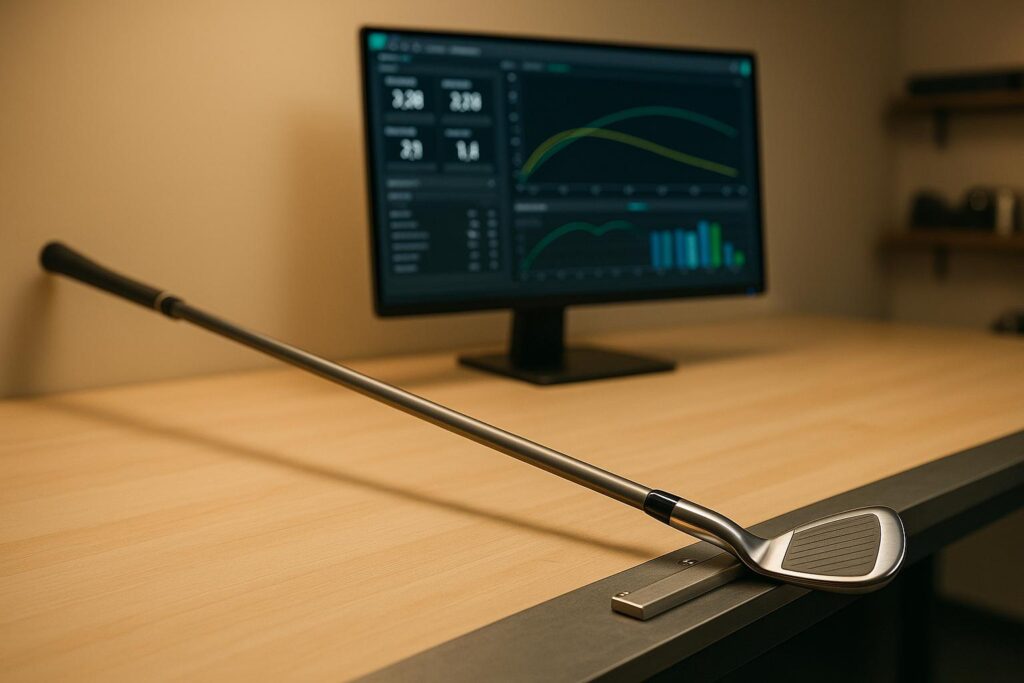
Golf shaft optimization software is a tool designed to help golfers improve their game by analyzing swing data and recommending the best shaft for their clubs. Here’s what you need to know:
- What It Does: Evaluates swing metrics like speed, tempo, and impact to suggest shafts tailored to your swing.
- Key Benefits: Improves consistency, accuracy, and distance while saving money by reducing trial-and-error purchases.
- How It Works: Uses sensors or manual data input to analyze your swing and matches it with shafts based on flex, weight, and torque.
- Who It’s For: Useful for beginners seeking simple recommendations or experienced players needing detailed analysis.
- Why It Matters: The right shaft enhances energy transfer, ball flight, and overall performance, while the wrong one can hinder your game.
This software integrates with tools like launch monitors and apps to provide real-time feedback and track your progress over time. Pairing it with a professional fitter can further refine your setup for optimal results. Regular updates ensure your equipment evolves with your game.
Mizuno Shaft DNA Optimizer 3D Software Review

How Golf Shaft Optimization Software Works
Golf shaft optimization software combines swing data analysis with cutting-edge golf technology to deliver tailored recommendations for players. Here’s a closer look at how it all comes together.
Data Collection and Measurement
The process begins with capturing detailed swing data to create a personalized profile. This data includes critical metrics like clubhead speed, tempo, transition timing, release patterns, acceleration, swing arc, and downswing timing. These measurements are typically gathered using sensor systems, but manual entry is also an option for those without specialized equipment.
Beyond swing mechanics, some systems also analyze biomechanical factors – like wrist release timing, swing plane, and lag during the downswing. They may even account for external factors such as wind or temperature, which can influence shaft performance. This comprehensive approach ensures the software has all the information needed to make precise recommendations.
Analysis and Shaft Recommendations
Once the data is collected, the software uses advanced algorithms to match your unique swing characteristics with specific shaft features like flex, torque, weight, and material. Instead of sticking to broad categories (like "stiff" or "regular" flex), the software dives into the finer details of how a shaft flexes, aiming to maximize energy transfer and improve your impact consistency.
It doesn’t stop there. The system also factors in your swing speed, tempo, and ball flight tendencies to suggest shafts that enhance your timing, distance, and launch conditions. Whether you need a higher launch or a more penetrating ball flight, the recommendations are designed to align with your goals.
Integration with Other Golf Technologies
Modern golf shaft optimization software doesn’t work in isolation – it seamlessly connects with other tools like launch monitors, simulators, and mobile apps. This integration provides real-time feedback, allowing you to test shaft recommendations immediately and see how they perform under actual conditions.
Additionally, the software can sync with club-building tools to generate precise specifications for club assembly, such as length, lie angle, and grip. Mobile app connectivity takes it a step further by tracking your performance on the course, refining recommendations as your game evolves. This dynamic system ensures that your equipment adapts alongside your skills, giving you an edge every time you play.
Key Features to Look for in Golf Shaft Optimization Software
Complete Swing Data Analysis
A strong golf shaft optimization tool starts with its ability to provide a thorough analysis of your swing. It factors in key metrics like head speed, club speed, and tempo to determine essential shaft characteristics such as flex, weight, and loft. Tempo, which measures the time it takes to transition from backswing to downswing, is particularly important. Even golfers with similar swing speeds can require different shaft specifications depending on their tempo.
Beyond the basics, advanced tools dive deeper into your swing mechanics. For example, they track toe down transition data, which measures how much the shaft bends downward during your swing, and kick angle, which evaluates the forward bend during the downswing. Another critical factor is the release point. Golfers with a late release (rated between 1 and 3) often benefit from a shaft with a firmer tip, while those with an early release (rated 7 to 9) may perform better with a softer tip. Some high-end systems even integrate ground reaction force data, offering insights into how you apply pressure to the ground during your swing. This adds an extra layer of precision to the shaft recommendations.
These detailed metrics create a solid foundation for assessing other important features in the software.
sbb-itb-bcd8bdd
Choosing the Right Golf Shaft Optimization Software
Selecting the right golf shaft optimization software is just as important as perfecting your swing. The right tool can help you fine-tune your equipment to match your playing style and budget, giving you an edge on the course.
Assessing Your Individual Needs
Your choice of software should reflect your playing level and goals. If you’re a beginner or play casually, look for tools that focus on the basics – like key swing metrics – and offer simple, actionable recommendations. On the other hand, seasoned or competitive golfers might benefit from more advanced features, such as detailed data analysis and customization options. Think about how comfortable you are with golf-specific terms and technical details. If you’re new to this, a user-friendly tool with clear guidance might be best. If you’re more experienced, you may prefer software that delivers precise, data-rich insights.
Comparing Available Software Options
There’s no shortage of golf shaft optimization tools, and each brings something different to the table. Some focus on providing in-depth swing analysis, packed with technical insights. Others integrate with launch monitors to give you a complete picture of your ball flight and overall performance. Some even combine digital analysis with in-person fittings for more tailored recommendations. When comparing your options, pay attention to how the data is presented. Is it easy to understand, or does it require a technical background? Also, look at the level of support available – whether through tutorials, customer service, or professional consultations. Once you’ve narrowed down your options, think about how the software’s features and benefits stack up against the cost.
Budget Considerations
Your budget plays a big role in your decision. Professional fittings that use advanced optimization tools can be a significant investment, but they often deliver long-term benefits in terms of improved performance. Many software providers offer free or low-cost basic features, with premium options available for more comprehensive insights. If you’re trying to keep costs down, starting with an affordable digital tool can be a smart way to gain valuable insights and gradually improve your game without breaking the bank.
Using Shaft Optimization for Better Performance
Once you’ve selected your software, the next step is to combine its insights with hands-on testing and expert fitting to improve your game. While the software provides data-driven recommendations, putting them into practice on the course is what truly makes the difference.
Working with a Professional Fitter
Although shaft optimization software offers valuable insights, partnering with a certified club fitter takes things to the next level. These professionals bring years of experience in analyzing swing data and turning software suggestions into real results on the course.
A skilled fitter can identify nuances in your swing that software alone might overlook. They understand how details like grip pressure, stance, and tempo influence shaft performance. Using tools like launch monitors and diagnostic equipment, fitters can fine-tune your setup in real time to maximize results.
Working with a fitter also saves you time and effort. Instead of testing dozens of shafts, they use the software’s data to narrow down the best options for your swing. This targeted approach ensures you spend less time experimenting and more time improving.

After collaborating with a fitter, the next step is to test the recommended shafts to find the perfect match.
Testing and Adjusting Shaft Recommendations
Start by testing the top two or three shaft options, either on a launch monitor or at the driving range.
Focus on more than just the numbers. A shaft might produce excellent ball speed or launch angles, but if it doesn’t feel comfortable or natural in your hands, it won’t improve your game. Look for a combination of consistent ball striking, better accuracy, and a smooth, confident feel during your swing.
It’s also important to test the shafts across your entire set of clubs. Consistency throughout your set builds confidence and helps you perform better overall.
Take your time during testing. Hit 20–30 shots with each shaft, targeting different distances and speeds. This gives you a clear picture of how each option performs under various conditions, much like what you’ll experience on the course.
Once you’ve identified the best-performing shaft, tracking your progress ensures the benefits last.
Tracking Progress Over Time
Your swing isn’t static, and your equipment shouldn’t be either. Regular monitoring helps ensure your shafts continue to match your evolving skills and swing.
Create a simple system to track key metrics every few months. Record stats like average driving distance, accuracy, and scoring trends. You might see some improvements within weeks, but the full impact will become clear over an entire season.
Revisit your optimization software periodically to reassess your shaft setup. As your swing speed changes or your technique improves, the original recommendations might no longer be the best fit. Annual evaluations are especially helpful for golfers who practice frequently or work with instructors.
Also, consider how your shafts perform under different weather and course conditions. A shaft that excels on calm, sunny days might not deliver the same results in windy or wet conditions. Tracking these variations helps you make informed adjustments or prepare backup options.
If you live in an area with distinct seasons, seasonal reassessments can be useful. Swing characteristics often shift between summer and winter due to changes in clothing, flexibility, and course conditions. Keeping an eye on these factors ensures your shafts are always working for you.
Conclusion: Optimizing Your Golf Game with the Right Tools
Golf shaft optimization software makes club fitting simpler by eliminating the guesswork from choosing the right equipment. This guide has shown how these advanced tools analyze swing data, recommend tailored shaft specifications, and ultimately help you perform more consistently on the course.
Success in this area comes from understanding that shaft optimization is not a one-time fix. It’s a continuous process that blends modern technology with professional expertise and regular updates. Whether you’re using launch monitor data to pinpoint your swing characteristics or working with a certified fitter to refine your setup, the right software lays the groundwork for smarter equipment choices.
When selecting software, focus on tools that align with your specific needs. Features like detailed swing analysis, user-friendly interfaces, and compatibility with your equipment are key. Golfers on a budget can still achieve great results with simpler tools, while advanced players might gain more from professional-grade analytics. Remember, the software is just the starting point – testing your setup on the course is where the real benefits shine through.
As your swing evolves, regular evaluations are crucial. Tracking your progress and making adjustments ensures your equipment keeps pace with your game.
By combining insights from optimization software with expert advice, you can take your game to the next level. If you’re striving to break through scoring plateaus, platforms like How To Break 80 offer practical drills and strategies that enhance your overall approach. Their guidance on swing mechanics and game strategy complements the technical precision of shaft fitting, creating a well-rounded path to improvement.
The right shafts can significantly boost your accuracy, power, and confidence. When your equipment works in harmony with your swing, the results speak for themselves. With the help of optimization tools and regular reassessments, you’ll see noticeable improvements in your distance, consistency, and overall performance.
FAQs
How can beginners use golf shaft optimization software to enhance their performance?
Beginners can benefit greatly from golf shaft optimization software, which uses swing analysis to recommend the best shaft for their game. These tools evaluate important factors such as swing speed, tempo, and release point, offering tailored advice to help players choose the right shaft flex and material.
Most of these programs are easy to use, providing straightforward insights that can enhance a player’s consistency and performance. By starting with these tools, newcomers can gain confidence and focus on improving their skills with equipment that suits their unique playing style.
What should I look for in golf shaft optimization software to match my skill level and goals?
When picking golf shaft optimization software, focus on tools that deliver precise swing analysis and tailored recommendations that match your skill level. If you’re just starting out, look for software that highlights essentials like swing speed and shaft flex. For more experienced players, tools offering deeper insights – like load patterns and spin rates – can be incredibly helpful.
It’s also important to check that the software works seamlessly with your current gear and can grow with you as your skills improve. Opt for user-friendly options with features that support your specific goals to get the most out of it.
How does using golf shaft optimization software with a professional fitter improve the club fitting process?
Combining golf shaft optimization software with the expertise of a professional fitter takes the club fitting experience to a whole new level. This cutting-edge technology dives deep into your swing by analyzing critical data points like speed, angle, and tempo. Armed with this information, the fitter can recommend shafts that perfectly match your needs in terms of flex, weight, and balance.
The process doesn’t stop there. With real-time adjustments and in-depth analysis, this partnership ensures your clubs are fine-tuned to complement your unique swing mechanics. The result? Better performance, improved comfort, and less strain – helping you step onto the course with confidence.
Related Blog Posts
- How Online Golf Club Fitting Works for New Golfers
- How to Shorten a Driver Shaft at Home
- Shaft Flex Types: Beginner vs. Advanced
- Top AI Tools for Custom Golf Club Fitting
