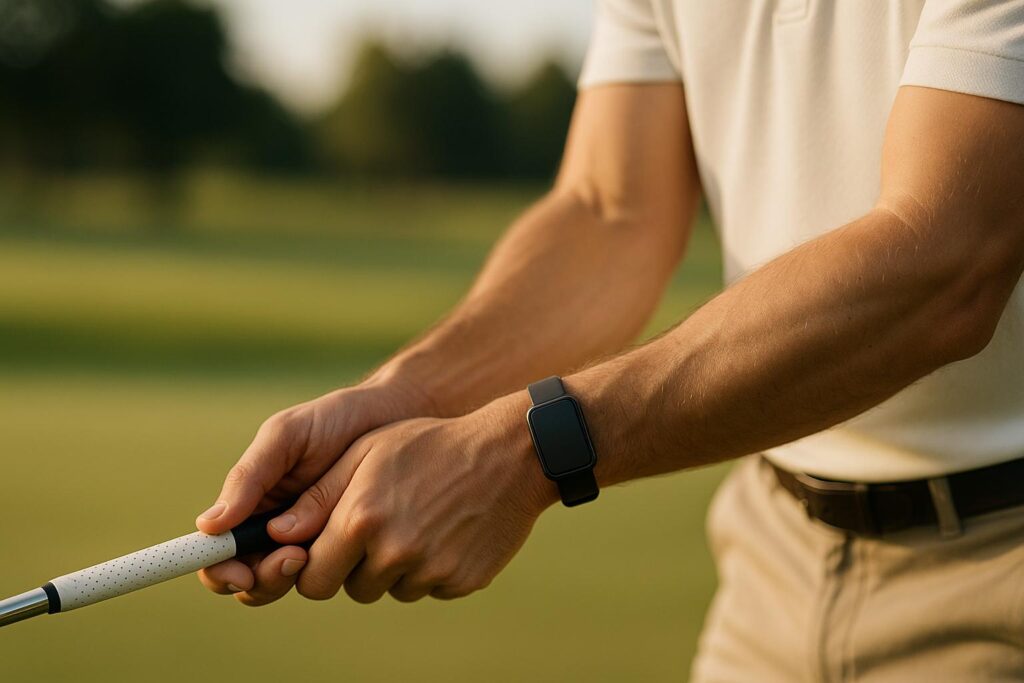
Wearable swing analyzers are small devices that track your golf swing mechanics, offering data like tempo, wrist angles, and swing speed. They connect to your phone for instant feedback and cost between $100 and $1,000. These tools can help golfers improve by providing measurable insights, but their value depends on your goals, skill level, and how often you practice. Key models include:
- HackMotion: Focuses on wrist mechanics; priced $400–$1,000.
- Blast Motion: Tracks tempo and putting metrics; costs $179–$200.
- Zepp Golf: Affordable option at $100–$150; tracks swing basics.
- deWiz: Offers haptic feedback for quick corrections; priced $500–$600.
If you’re serious about improving, these analyzers can be helpful, but they’re not a replacement for lessons or consistent practice.
1. HackMotion Swing Analyzer
Price
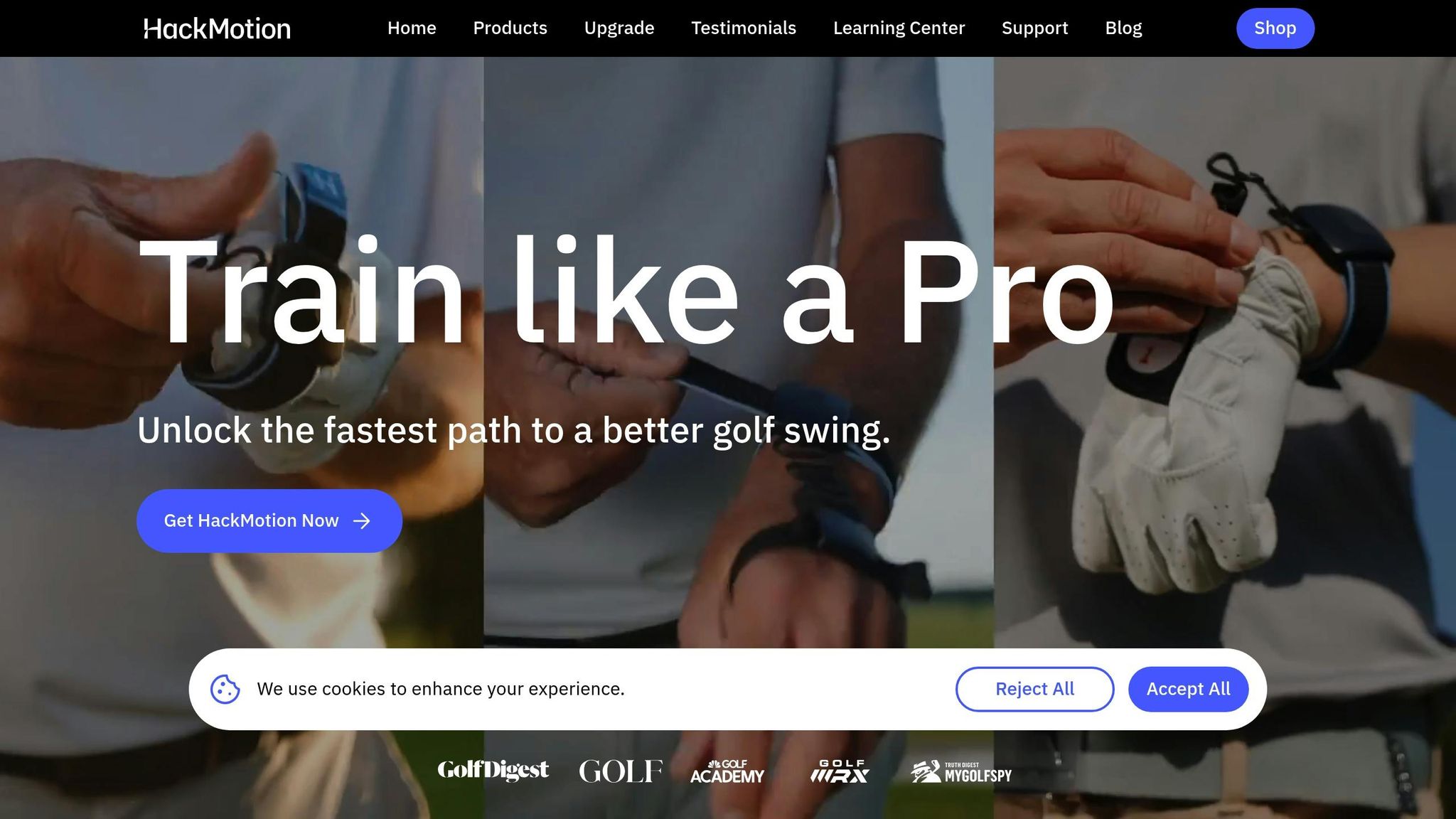
HackMotion offers two main packages: Core and Pro. The Core version is priced in the upper $300–$400 range, while the Pro version costs several hundred dollars more, nearing $1,000. This places HackMotion alongside budget-friendly launch monitors and premium training aids. When deciding if it’s worth the investment, think about the balance between cost and performance. Keep an eye out for U.S. promotions that could bring the price down. Now, let’s explore how HackMotion’s focus on wrist mechanics translates into actionable insights.
Tracked Metrics
HackMotion zeroes in on wrist mechanics and clubface control. The sensor captures lead wrist flexion/extension, radial/ulnar deviation, and wrist rotation (pronation/supination) throughout the swing. Why does this matter? Because wrist angles play a massive role in controlling the clubface at impact. In fact, research shows wrist mechanics influence over 80% of ball trajectory. If you’re battling slices, hooks, or inconsistent strikes, HackMotion pinpoints what your wrists are doing at critical points: address, takeaway, top of the backswing, transition, impact, and follow-through.
Accuracy
Independent reviews consistently praise HackMotion for its reliable accuracy. Golf Monthly even named it a top pick for 2025, highlighting its simple calibration process and instant feedback. While it doesn’t rival the precision of full-scale motion-capture labs, HackMotion provides more than enough accuracy for solo practice and coaching. It’s sensitive enough to detect small changes in wrist angles, making it great for tracking progress and refining your swing.
App Features
The HackMotion app enhances the experience with real-time feedback through numerical readouts, color-coded cues, and target ranges for wrist angles. You can customize tolerances – like setting a specific flexion range for your backswing – and the app will let you know if your swing meets those targets. It also logs your data over time, helping you spot trends and progress. Plus, it suggests drills tailored to your needs and allows you to share session summaries with a coach. For instructors, advanced licenses unlock tools to manage multiple students and compare swings to professional benchmarks.
2. Blast Motion Golf Swing Analyzer
Price
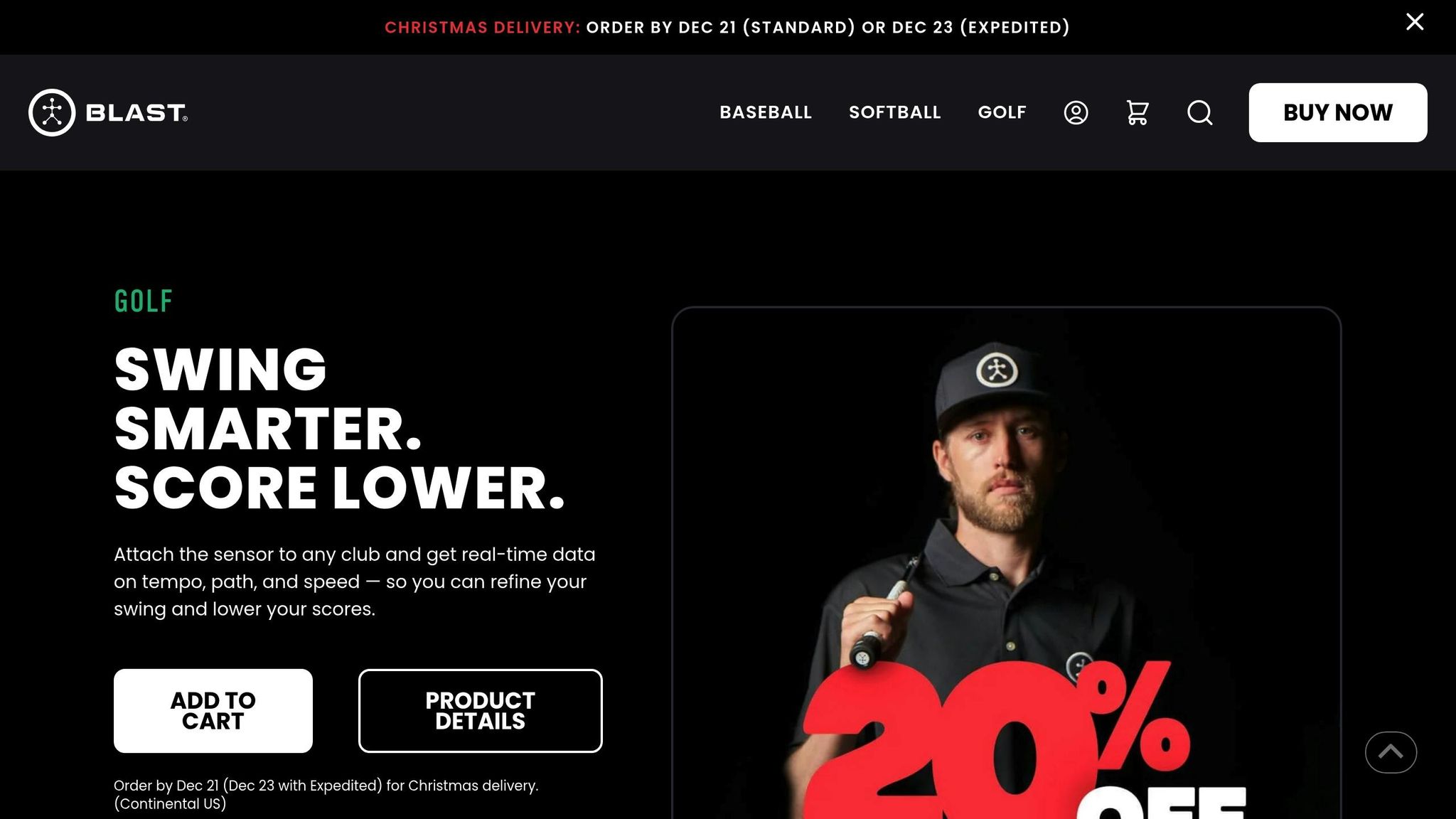
The Blast Motion Golf Swing Analyzer is priced between $179 and $200 in the U.S. This cost includes the sensor and access to the core features of the Blast Golf app. With this purchase, you’ll get swing and stroke metrics, smart video capture, and essential training tools – no extra subscription fees required for the basics. While premium coaching content might come with additional costs, the included features are more than enough for the average golfer. Plus, retail discounts and bundle deals can make it even more appealing. Now, let’s dive into the specific metrics this tool tracks.
Tracked Metrics
Blast Motion covers a wide range of metrics, helping you analyze every aspect of your game – from full swings to putting. For tee shots and iron play, it tracks swing tempo ratios, speed, peak hand speed, face rotation, angle of attack, and the timing between backswing and impact. When it comes to putting, the device captures data like stroke tempo, backstroke and forward stroke times, face angle rotation, and impact timing. This detailed feedback is a game-changer for golfers aiming to refine their performance.
Accuracy
Equipped with high-frequency inertial sensors, Blast Motion provides precise measurements of tempo, timing, and rotational metrics. According to expert reviews, swing-to-swing numbers for club and hand speed are consistent, making the tempo data reliable for focused practice. It’s trusted by over 200 Tour professionals and coaches, which speaks volumes about its credibility. However, keep in mind that Blast doesn’t measure ball-flight data – such as carry distance or spin – for that, you’ll need a launch monitor. Also, accuracy can drop if the sensor isn’t securely attached or faces hard impacts.
App Features
The Blast Golf app is packed with features designed to enhance your practice. Available on both iOS and Android, the app provides real-time feedback, smart video capture, and trend tracking. It uses your smartphone’s camera to automatically record swings, overlays metrics on slow-motion videos, and stores these clips for easy comparisons. This feature is perfect for reinforcing the swing insights discussed earlier.
The app also includes tips and drills from coaches and Tour players, along with benchmarks and progress charts to help you set and track goals for tempo or stroke improvement. For golfers following structured practice plans – like those from How To Break 80 – Blast’s seamless data integration makes it simple to see if your drills are delivering results. By combining data and video feedback, this tool offers actionable insights to help you refine your swing and elevate your game.
BEST GOLF SWING ANALYZERS [2023] TOP 6 GOLF SWING ANALYZERS FOR PRECISE SWING ANALYSIS
3. Zepp Golf Swing Analyzer

The Zepp Golf Swing Analyzer stands out as an affordable option for golfers looking to refine their swing without spending a fortune.
Price
The Zepp Golf 2 swing analyzer is priced between $100 and $150 in the U.S., making it one of the most wallet-friendly choices available. During sales, the price may drop even further. This positions Zepp in the affordable to mid-range category, especially compared to high-end devices that can cost several hundred dollars. For casual golfers who want reliable swing insights without overspending, Zepp offers excellent bang for the buck.
Tracked Metrics
Using its built-in accelerometer and gyroscope, Zepp captures a range of swing metrics, including tempo, rhythm, backswing position, transition time, attack angle, hip turn, shoulder turn, and swing plane data. These insights are invaluable for golfers looking to fine-tune their mechanics, whether it’s achieving a smoother tempo or improving ball contact by adjusting their attack angle.
Accuracy
Zepp provides consistent and dependable data, performing well when compared to advanced systems like TrackMan for basic swing measurements. While it doesn’t match the precision of premium launch monitors for more complex metrics or unusual strike patterns, it’s more than capable of helping golfers focus on core swing fundamentals. For most players aiming to improve their mechanics, Zepp’s accuracy is sufficient to spot trends and make meaningful adjustments.
App Features
The Zepp Golf app, which connects via Bluetooth, enhances the experience with features like 3D swing replays, video capture with metric overlays, and a library of training drills. You can record your swing using your phone’s camera, then review it in slow motion with key data displayed on the screen. The app also stores your swing history, allowing you to track progress over time. With dedicated training modes for full swings, short game, and putting, it’s a versatile tool for all aspects of your game. You can even share your swings with friends or coaches for feedback. While the app doesn’t receive updates as frequently as some newer competitors, its core functionality remains strong for golfers focused on improving tempo and swing plane basics. Up next, we’ll see how these features stack up in terms of overall performance and user experience.
sbb-itb-bcd8bdd
4. deWiz Golf Swing Analyzer
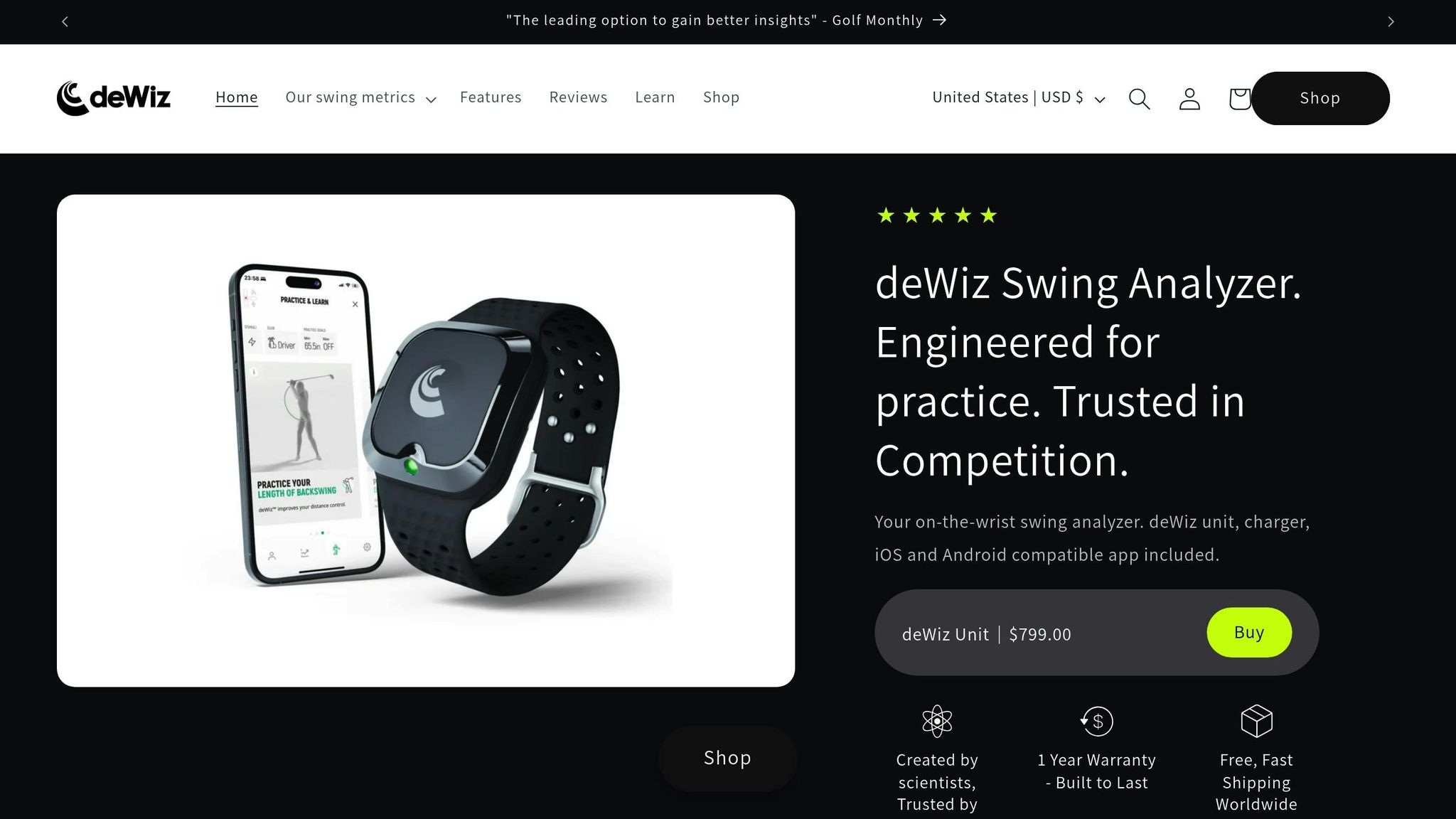
The deWiz Golf Swing Analyzer stands out by honing in on body mechanics and real-time feedback, offering a unique angle compared to many other devices.
Price
With a price tag ranging from $500 to $600, deWiz is clearly positioned as a premium option. However, it comes with no subscription fees and includes a free companion app, making it a worthwhile choice for golfers committed to refining their swing mechanics.
Tracked Metrics
This wrist-worn device focuses on capturing your body’s motion, tracking key metrics like tempo, rhythm, transition plane, wrist path, and overall 3D movement. Instead of concentrating on data like launch angles or spin rates, deWiz zeroes in on the mechanics of your swing. By emphasizing feel and movement patterns, it’s particularly helpful for golfers looking to build consistency during practice.
Accuracy
The deWiz Golf Swing Analyzer has earned high marks for its precision in measuring body motion. During tests, it reliably detected even small deviations from preset parameters such as tempo and transition, thanks to its advanced 3D measurement system. The sensor attaches securely, ensuring consistent and reliable readings. While it won’t provide stats like carry distance or ball speed, its ability to analyze movement rivals some of the most advanced tools designed for swing mechanics.

App Features
The deWiz app enhances the experience by offering instant haptic feedback whenever your swing strays from set targets. This feature encourages immediate adjustments, helping you develop better habits. The app also includes user-friendly 3D visuals and recording options, allowing you to monitor your progress. Once the feedback pulses stop, you’ll know you’ve hit the sweet spot for optimal form.
Pros and Cons
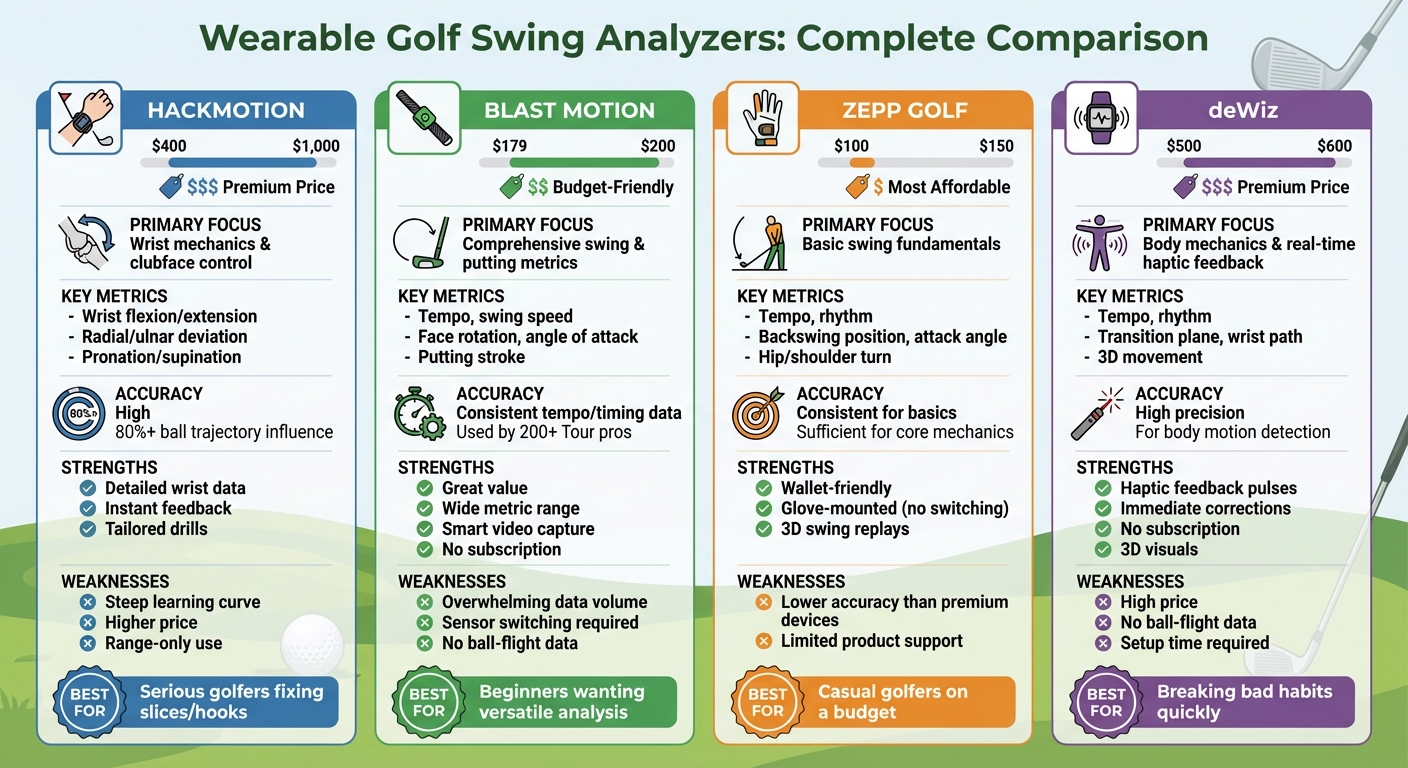
Wearable Golf Swing Analyzers Comparison: Price, Features, and Performance
Each swing analyzer comes with its own set of strengths and challenges. Here’s a side-by-side look at how four popular devices measure up on the factors that matter most to golfers:
| Device | Price Range | Key Strengths | Main Weaknesses |
|---|---|---|---|
| HackMotion | Several hundred dollars (premium tier) | Provides detailed wrist data (flexion, extension, deviation) directly linked to clubface control; instant feedback after calibration; app suggests drills tailored to individual goals | Steep learning curve due to technical data; higher price; designed more for practice range use than on-course tracking |
| Blast Motion | Starting at $179.95 | Great value; tracks swing speed, tempo, rotation, angle of attack, and putting metrics; real-time feedback; easy club-mounted setup | Overwhelming amount of metrics without proper guidance; sensor needs to be switched between clubs; lacks in-depth wrist mechanics analysis compared to HackMotion |
| Zepp | Mid-range pricing | Glove-mounted design avoids the hassle of moving sensors between clubs; user-friendly interface for casual golfers | Less accurate than higher-end systems; limited product support in recent years |
| deWiz | $500-$600 (similar to entry-level launch monitors) | Offers haptic feedback via electronic pulses to speed up motor learning; captures 3D motion of tempo, transition, and swing plane; app presents data in an easy-to-understand format | High price; focuses only on swing motion without ball-flight data; requires time to set up drills for optimal use |
This table provides a quick breakdown of what each device excels at and where it falls short.
To summarize, each analyzer caters to different needs and skill levels. HackMotion focuses on delivering precise wrist mechanics data, making it a go-to for serious golfers aiming to fine-tune their clubface control. However, its technical nature and premium cost may not suit everyone. Blast Motion strikes a balance between affordability and functionality, offering a wide range of metrics across your game, though its sheer volume of data might feel overwhelming for those seeking simplicity.
deWiz sets itself apart with its unique haptic feedback system, which physically alerts you when your swing deviates from set parameters. This feature is particularly useful for players determined to break bad habits quickly, though its lack of ball-flight tracking and premium price tag could be a drawback for some. On the other hand, Zepp appeals to casual golfers with its easy-to-use glove-mounted design, though it lags behind in accuracy and ongoing support compared to its competitors.
Choosing the right device depends on your specific goals. If you’re battling slices or hooks, HackMotion’s clubface insights could be invaluable. For those focused on tempo and transition, deWiz’s feedback system might be the answer. Meanwhile, Blast Motion offers a versatile, budget-friendly entry point into swing analysis, making it a great option for beginners exploring this technology.
Conclusion
Are wearable swing analyzers a good investment for golfers who practice regularly and use data to improve? Absolutely. These devices offer objective insights that can help you improve faster than relying solely on trial and error. Plus, many entry- to mid-level options cost less than a new driver, making them a smart long-term addition to your training routine.
Of course, their value depends on your goals and skill level. Mid-handicappers (8–20) often see the biggest benefits – they have enough experience to interpret the data but still have areas to improve. If you’re struggling with a slice or hook, HackMotion’s wrist mechanics feedback can be a game-changer. For those focused on tempo and consistency, Blast Motion or deWiz provide real-time feedback to help you fine-tune your swing.
That said, these tools aren’t a magic fix. They work best when paired with clear goals, regular practice, and solid fundamentals. If you’re not someone who practices often, dislikes using apps at the range, or isn’t ready to adapt based on the data, you might find lessons or simpler training aids more effective.
Prefer instruction over gadgets? Start with affordable coaching resources. For example, How To Break 80 offers tools like the Fix Your Slice video course, which focuses on core fundamentals and practical drills. These resources can help you address common swing issues, like slicing, without breaking the bank. Plus, they can lay the groundwork for understanding and applying the data from a swing analyzer if you decide to get one later.
For the best results, set a couple of specific goals, stick to a 10–15 minute practice routine at the range, and monitor your progress over time. When used this way, a swing analyzer becomes more than just a gadget – it’s like having a personal training partner that helps you make steady, measurable improvements toward breaking 80.
FAQs
Are wearable swing analyzers a good alternative to traditional golf lessons?
Wearable swing analyzers provide real-time insights into your swing mechanics, offering details like swing speed, tempo, and club path. They’re a handy way to understand your performance and monitor your progress over time.
That said, while these devices excel at delivering precise metrics, they can’t replace the personalized feedback and tailored instruction you’d get from a professional coach. For most golfers, the ideal strategy is to pair swing analyzers with expert lessons, blending technology with human expertise to achieve the best results.
What should I look for when picking a swing analyzer?
When picking a swing analyzer, focus on accuracy to get dependable feedback that truly reflects your performance. Make sure it’s compatible with your smartphone or other devices for seamless use. Take a close look at the features – whether it’s swing path analysis, tempo tracking, or club data – so they align with what you’re aiming to improve.
It’s also smart to read user reviews for firsthand experiences, and ensure the device is simple to operate. Finally, consider the cost and weigh it against the value it brings to your game to make sure it’s a worthwhile investment.
Can a swing analyzer help beginners improve their golf game?
Swing analyzers are a fantastic resource for beginners aiming to establish a strong start in golf. These tools offer instant feedback on critical elements like swing speed, tempo, and angle, making it easier for new players to grasp and improve their technique.
By highlighting areas that need work early in the learning process, beginners can build consistent swings and steer clear of bad habits. On top of that, the detailed data these devices provide makes practice sessions more targeted and effective, helping players progress faster.
Related Blog Posts
- How Tech Enhances Junior Golf Swing Analysis
- Top 5 Real-Time Putting Stroke Analyzers 2025
- How Grip Pressure Sensors Improve Golf Swings
- Top 5 Shot Tracking Devices 2025
