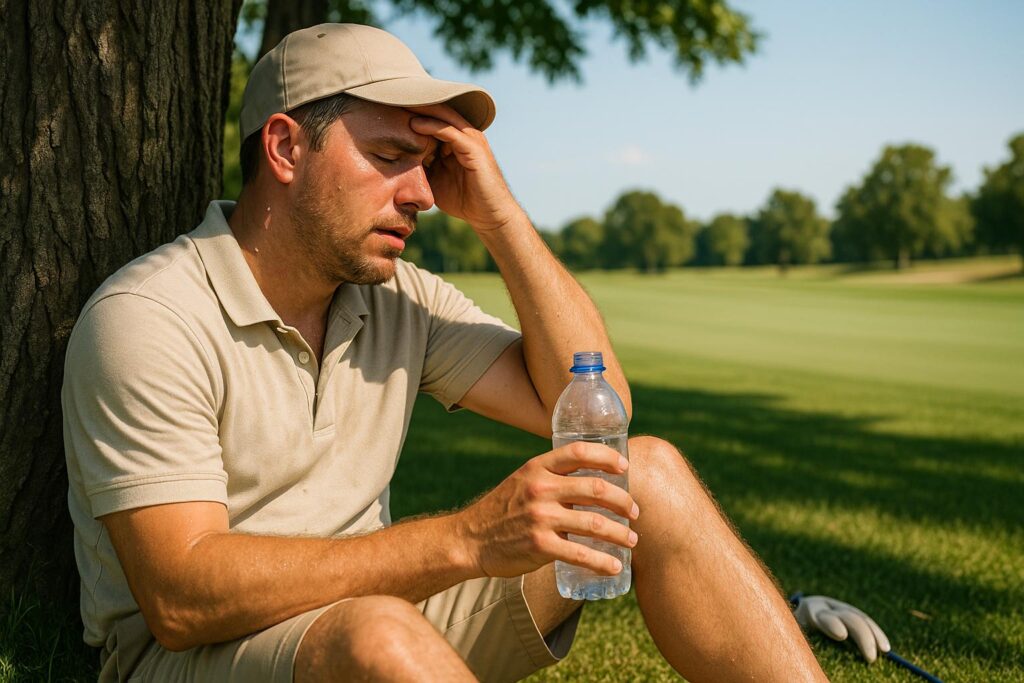
Golfing in the summer heat can be risky. Heat illnesses – ranging from cramps to life-threatening heatstroke – can escalate quickly if early signs are missed. Key warning signs include:
- Excessive sweating: Soaked clothes and persistent sweating even at rest.
- Muscle cramps: Painful spasms in calves, thighs, or shoulders.
- Fatigue or weakness: Sudden, disproportionate exhaustion.
- Nausea or vomiting: Indicators of dehydration and heat exhaustion.
- Headache: Often dull and linked to dehydration or electrolyte imbalance.
- Dizziness or lightheadedness: May occur when standing or moving suddenly.
- Rapid or weak pulse: A sign of your body struggling to cool itself.
- Cool, clammy, or pale skin: Indicates heat exhaustion, not heatstroke.
- Excessive thirst: A late sign of dehydration.
- Fainting: A serious symptom requiring immediate action.
Quick Tips to Stay Safe:
Hydrate consistently, take shade breaks, wear light-colored, breathable clothing, and know when to stop. Recognizing symptoms early can prevent serious health risks.
Golf gone wrong: How I got Heat Exhaustion…
1. Heavy Sweating
Sweating is your body’s natural way of keeping cool, especially when temperatures on the golf course rise. However, when sweating becomes excessive – beyond what’s typical for you – it can be a red flag.
While it’s normal to sweat during physical activity, too much of it might mean your body is struggling to regulate its temperature. On hot, humid days, sweat doesn’t evaporate as efficiently, which reduces its cooling effect. This can lead to your body producing even more sweat, causing faster fluid loss and increasing the risks of dehydration and heat exhaustion.
Signs of excessive sweating to watch out for include clothes soaked with sweat or sweating that continues even when you’re at rest. If it’s accompanied by dizziness or muscle cramps, it’s time to take action.
"Hydration isn’t just about drinking when you’re thirsty. It’s about preparing your body before, during, and after activity." – Dr. Casablanca, Physician at Middlesex Health Family Medicine
If you notice you’re sweating more than usual, take steps to cool down right away. Sip ice water regularly to stay hydrated and lower your body temperature. Keep your grips dry to avoid slips. Having ice packs in your golf bag can be a game-changer – apply them to your neck, wrists, or forehead during breaks to help bring your core temperature down.
Pay attention to excessive sweating and any other symptoms that might point to heat-related issues. Being aware of this early warning sign can help you avoid more serious problems while out on the course.
2. Muscle cramps
Muscle cramps on the golf course are often a red flag for heat-related stress. These painful, involuntary muscle spasms – commonly affecting the calves, thighs, and shoulders – stem from a combination of high body temperature and a loss of electrolytes.
E. Randy Eichner, M.D., professor emeritus of medicine at the University of Oklahoma Medical Center, explains:
"Severe football heat cramping comes from the trio of salt loss, fluid loss and muscle fatigue. The same applies to similar cramping in other sports in summer, especially when going hard in the heat."
This highlights that muscle cramps are not just random discomfort – they’re an early warning sign of heat illness. These spasms, though brief, can be intense and may occur in various muscles, including the abdomen, arms, and legs. They serve as your body’s way of signaling that it’s struggling to cope with the heat.
If you experience cramps, act quickly. Find shade or head indoors, gently massage and stretch the affected muscle, and apply an ice pack to ease the pain. Rehydrate with a sports drink to restore lost electrolytes, or snack on something salty like pretzels, granola bars, bananas, or even beef jerky.
Don’t brush off these cramps – they’re your body’s SOS, urging you to take action before the heat causes more serious harm.
3. Fatigue or Weakness
As the temperature climbs, experiencing unusual fatigue can be a warning sign of heat illness. Heat-related fatigue isn’t your typical tiredness – it’s your body struggling to keep its internal temperature in check. Here’s how it works:
Dr. John Hick, an emergency physician at Hennepin Healthcare, breaks down the science behind this type of exhaustion:
"It’s really kind of balance of a number of different factors. One is that blood gets shunted to the surface of the skin to try and encourage sweating and get that heat conducted off of your body. And that takes blood away from other organs, like your muscles, your GI tract, and even your brain."
This redistribution of blood means less oxygen reaches your muscles and brain, making physical tasks like swinging a golf club feel much harder. Dehydration only worsens the situation, reducing blood flow and oxygen delivery even further. The result? A snowball effect where fatigue grows, and each hole feels tougher than the last.
Spotting heat-related fatigue early is essential. Unlike the usual tiredness that builds gradually during a round of golf, heat exhaustion can come on suddenly and feel out of proportion to how much effort you’ve put in. You might notice your swing slowing down, your legs feeling unusually heavy, or an unexpected need to rest between shots.
To counteract this, make sure to drink 4–6 oz of water every 15–20 minutes, take breaks in the shade, and ease up on your swing intensity when needed.
4. Nausea or vomiting
Feeling your stomach churn during a round of golf isn’t just unpleasant – it can be a red flag. Nausea and vomiting are often signs of heat exhaustion, a condition caused by losing essential water and sodium through heavy sweating under the blazing sun. When your body works overtime to stay cool, it can sometimes trigger these symptoms.
What makes heat-related nausea tricky is how it can strike without much warning. As Domenic W. Casablanca, MD, from Middlesex Health Family Medicine, points out:
"Many people think they’ll feel heat illness coming on, but it can sneak up on even experienced golfers."
This unpredictability highlights the importance of acting quickly. If you start feeling nauseous on the course, find some shade, sit down, and elevate your legs to improve circulation. Slowly sip cold fluids to replenish lost electrolytes and use cold, wet towels on your neck, wrists, and forehead to help cool down.

If vomiting begins, stop drinking fluids and get medical help immediately. Vomiting prevents your body from retaining fluids, increasing the risk of heat exhaustion progressing to heatstroke – a serious condition where the core body temperature exceeds 104°F.
Ana M. Garcia, DO, from Middlesex Health Family Medicine, emphasizes:
"If you start feeling lightheaded or overly fatigued, don’t try to push through. Stop, rest in the shade, hydrate, and seek medical help if symptoms persist or worsen."
5. Headache
For golfers, headaches triggered by heat are a common sign that your body is struggling to handle the stress of high temperatures. These headaches aren’t just about the heat itself – they result from dehydration and an imbalance of electrolytes. When you’re sweating heavily under the blazing sun, your body loses vital fluids and minerals that need to be replenished. As Michael Snyder, MD, puts it:
"Changes in air pressure, humidity, temperature, and dehydration can give you a heat headache."
Heat-related headaches often feel like a dull, pounding ache, typically concentrated around your temples or at the back of your head. Unlike standard tension headaches, these are usually paired with other signs of heat stress, such as heavy sweating, fatigue, or lightheadedness. Paying attention to the intensity of your headache can act as an early warning to cool down and rehydrate, helping you avoid more severe heat-related issues.
To keep these headaches at bay, prioritize staying hydrated. Sip water or low-sugar electrolyte drinks consistently – every 15 to 20 minutes is a good rule of thumb – to replace the fluids and minerals lost through sweat. Scheduling your tee times for early mornings, when it’s cooler, and taking breaks in shaded areas between holes can also make a big difference.
If a headache does hit, you can find quick relief by placing a cold towel on the back of your neck. This simple trick helps bring down your core temperature and may ease the pain. Keep in mind, a heat headache isn’t just discomfort – it’s your body’s way of signaling that it’s time to act. Address it promptly to avoid more serious heat-related health problems.
6. Dizziness or Lightheadedness
Feeling dizzy or lightheaded can catch you off guard, especially on hot days. For instance, you might notice it when you stand up too quickly from a golf cart. This happens because dehydration reduces blood volume and lowers blood pressure, and when combined with heat exhaustion in humid conditions, it can hit even harder. Spotting these early signs is key to preventing more serious issues.
If you’re feeling lightheaded but still alert and clear-headed, it might be heat exhaustion. But if dizziness comes with confusion, disorientation, or a body temperature exceeding 104°F, it could signal heatstroke – a serious medical emergency requiring immediate care. Other warning signs to watch for include slurred speech, seizures, and skin that feels hot and appears red.
If you experience dizziness, take action right away. Sit or lie down in a shaded area, sip cool water every 15–20 minutes, and focus on slow, steady breathing to help ease the sensation.
To stay safe, make hydration a priority and take regular breaks in the shade. These simple steps can help you manage dizziness and keep enjoying your time outdoors.
sbb-itb-bcd8bdd
7. Rapid or Weak Pulse
Your pulse can reveal a lot about how your body is coping with the heat, especially during a round of golf. A rapid or weak pulse is a key indicator that heat illness might be setting in. When you’re dealing with heat exhaustion, your pulse often becomes fast and weak because your body is losing excessive amounts of water and salt through sweating. This happens as your cardiovascular system works overtime, trying to pump blood to your skin to cool you down while still maintaining blood flow to vital organs. The result? A pulse that feels quick but lacks strength.
It’s important to note the difference between heat exhaustion and heatstroke. While heat exhaustion typically leads to a fast, weak pulse due to fluid and salt depletion, heatstroke causes a rapid, strong pulse – a sign of a more severe condition.
For healthy adults, a normal pulse rate ranges from 60 to 100 beats per minute. Athletes, however, may have resting heart rates as low as 40 beats per minute, and females aged 12 and older often have slightly faster heart rates. Knowing your baseline pulse rate is crucial for recognizing when something is off.
A helpful rule of thumb for tracking heat stress is to monitor whether your heart rate exceeds 180 minus your age (in years) for several minutes. For instance, if you’re 45 years old, a heart rate sustained above 135 beats per minute during your game could signal trouble. Keeping tabs on your pulse throughout your round is a smart way to catch early signs of heat stress.
To check your pulse, place your fingers on your wrist or neck, count the beats for 15 seconds, and multiply that number by 4 to calculate beats per minute. If finding your pulse is challenging, a healthcare professional can provide guidance.
For added convenience, modern wearable heart rate monitors can alert you when it’s time to take a break. Many devices even feature alarm systems to notify you when your heart rate is too high.
If you notice your pulse is unusually fast and feels weak, act immediately: move to a shaded area, hydrate slowly, and seek medical attention. Ignoring these signs can lead to heatstroke, a life-threatening condition. Recognizing these changes early can make all the difference in preventing serious health complications.
8. Cool, clammy, or pale skin
Out on the golf course under the blazing sun, your skin can tell you a lot about how your body is handling the heat. Cool, clammy, or pale skin is a common sign of heat exhaustion, but it’s easy to miss – especially since you might expect your skin to feel hot in such conditions.
When your body struggles to cool itself, it sweats as a natural response. As that sweat evaporates, it can leave your skin feeling cold and clammy. At the same time, your skin may appear pale or flushed, signaling that your body is having trouble maintaining its temperature.
"Another differentiator between heat exhaustion and heat stroke is cold, clammy skin. As your body tries to lower your temperature, the sweat on your skin evaporates, creating a cold, clammy sensation", explains UAB Medical West Blogs & News.
These changes in your skin are your body’s way of signaling that it’s overwhelmed. While a normal core temperature hovers around 98.6°F, heat exhaustion can push your temperature higher, putting stress on your natural cooling systems. Recognizing these signs early can help you act before the situation worsens.
Here’s an important distinction: cool, clammy skin often points to heat exhaustion, while hot, dry skin is a hallmark of heat stroke, which is far more dangerous.
Dr. Angel M. Johnson from Hattiesburg Clinic Immediate Care describes heat exhaustion symptoms like this:
"With heat exhaustion, you’re feeling weak or tired… You might notice increased sweating, cool and clammy skin, nausea or vomiting, and a sense of lightheadedness or faintness."
If you notice these symptoms, it’s time to act fast. Move to a cooler spot with good airflow, loosen or remove tight clothing, and use cool, wet cloths on your skin. Spraying your skin with water and using a fan can also help. Sipping a sports drink with electrolytes and carbohydrates can replenish what your body needs.
With over 62,000 emergency room visits for heat-related illnesses annually, recognizing signs like cool, clammy skin can make all the difference. If symptoms don’t improve after an hour or get worse, seek medical help immediately by calling 911.
Keep an eye on your skin during your game – it’s one of the best indicators of heat stress.
9. Excessive Thirst
Feeling an intense thirst on the golf course is your body’s way of signaling dehydration, which can escalate into heat exhaustion or even heat stroke if ignored.
By the time thirst kicks in, dehydration has already set in, and your body has lost a significant amount of fluids . In the U.S., adults drink an average of just 39 ounces of water daily, and an estimated 75% are dehydrated. Even mild dehydration – just a 1.5% drop in body weight from fluid loss – can impact your golf performance. Severe dehydration can lead to heat exhaustion when your body loses too much water and sodium through sweat.
The key to staying ahead of dehydration is to hydrate proactively. Don’t wait until you’re thirsty – drink on a schedule. A good rule of thumb is to sip water at every hole, even if you don’t feel thirsty. In hot weather, aim to drink about 8 ounces of water every 20 minutes. Adjust this amount based on humidity and the heat index, as these factors affect how much fluid your body needs. Stress can also dull your thirst sensation, so it’s important to stay mindful of your hydration.
Start hydrating the day before your game and continue throughout your round. Steer clear of drinks that can dehydrate you, like alcohol, coffee, and sugary beverages . If you’re sweating heavily, low-sugar electrolyte drinks can help replenish essential minerals like sodium, potassium, and magnesium .
10. Fainting or Syncope
Fainting, also known as syncope, is a serious indicator of heat-related illness, especially on the golf course. When your body temperature rises above 100.4°F (compared to the normal 98.6°F), your body’s cooling systems can become overwhelmed, reducing blood flow to the brain. This often happens after prolonged standing, immediately after physical activity, or when standing up too quickly after resting. For instance, you might finish a long putt, bend down to pick up your ball, and suddenly feel lightheaded – this is your body struggling to regulate circulation in the heat. Such symptoms should not be ignored.
Early signs to look out for include a flushed face, dizziness, excessive sweating, muscle cramps, and confusion. These occur as your body works to cool itself by dilating blood vessels, which can reduce blood flow to the brain. Dehydration and blood pooling in the legs can make things worse, lowering blood volume and leading to weakness and dizziness before fainting occurs.
If someone does faint, act quickly. Move them to a cool, shady spot and elevate their legs to improve circulation. Remove excess clothing, cool them down with wet towels or ice packs, and offer small sips of water if they’re alert. However, if they show signs of confusion, lose consciousness, or exhibit symptoms of heat stroke, call 911 immediately. While waiting for help, continue cooling them but avoid giving fluids if they are unconscious, confused, or vomiting.
Catching heat syncope early is crucial to stopping it from escalating into a more serious heat-related condition.
Heat Illness Severity Chart
Understanding how heat-related illnesses progress is crucial for taking timely action. Dr. Mike Ren, assistant professor of family and community medicine at Baylor, explains:
"Heat illness occurs when the body cannot regulate its temperature due to overexertion or prolonged periods in high temperatures…Conditions can range from mild discomfort to life threatening."
Heat-related illnesses range from minor issues like cramps to severe and potentially fatal conditions such as heatstroke. This chart provides a clear overview of symptoms, physical signs, and the steps to take when dealing with these conditions.
| Condition | Core Temperature | Key Symptoms | Physical Signs | Immediate Actions |
|---|---|---|---|---|
| Heat Cramps | Normal or elevated but <104°F | Muscle cramps, mild fever (<102.5°F) | Flushed, moist skin; firm muscles | Stop activity, move to a cool place, drink fluids, elevate legs |
| Heat Exhaustion | 98.6°F–104°F | Fatigue, dizziness, nausea, vomiting, headache, weakness | Pale, moist skin; profuse sweating; cold, clammy skin; fast, weak pulse | Move to an air-conditioned space, use cold showers or compresses, drink fluids, remove tight clothing |
| Heat Stroke | >104°F | Confusion, irritability, altered mental status, possible unconsciousness | Hot skin; rapid, strong pulse; nervous system disturbance | Call 911 immediately, move to a cooler place, apply cold compresses, do NOT give fluids |
Even mild dehydration can affect performance, and ignoring early signs, such as cramps, can lead to more serious conditions.
Thayne Munce, PhD, Associate Director of the Sanford Sports Science Institute, emphasizes the importance of early intervention:
"Being able to recognize and treat symptoms early minimizes the chance of heat-related injury."
The key difference between heat exhaustion and heat stroke lies in severity. Heat exhaustion can usually be reversed by moving to a cooler environment and rehydrating, while heat stroke is a medical emergency that can result in organ failure or death if not treated immediately. One critical sign is that heat exhaustion involves heavy sweating, whereas individuals experiencing heat stroke often have dry skin. This distinction underscores the need for swift medical attention in suspected cases of heat stroke, as simple cooling measures alone are insufficient. Recognizing the signs and acting quickly can save lives.
What to Do When Symptoms Appear and How to Prevent Heat Illness
When heat illness strikes on the golf course, acting quickly can keep a manageable situation from turning into a serious medical emergency.
"Many people think they’ll feel heat illness coming on, but it can sneak up on even experienced golfers."
Immediate Response for Early Symptoms
If you start feeling lightheaded, nauseous, or notice excessive sweating, stop playing right away. Find shade or head to an air-conditioned spot, sit down, and elevate your legs to help with circulation. Loosen or remove tight clothing to allow your body to cool off.

Start sipping cold water or a sports drink to replenish fluids and electrolytes, but avoid drinking large amounts all at once – small, steady sips work best. To lower your body temperature, place cold, wet towels on your neck, wrists, and forehead.
Dr. Ana M. Garcia from Middlesex Health Family Medicine emphasizes:
"If you start feeling lightheaded or overly fatigued, don’t try to push through. Stop, rest in the shade, hydrate, and seek medical help if symptoms persist or worsen."
Knowing how to act quickly when symptoms get worse is just as important.
Emergency Actions for Severe Symptoms
Heat stroke is a medical emergency that demands immediate attention. If you or someone else shows signs like confusion, hot dry skin, or loses consciousness, call 911 immediately. While waiting for help, move the person to a cooler place and use ice packs or cold towels to bring their body temperature down. Do not give fluids to anyone who is unconscious, vomiting, or severely confused. Stay with them and monitor their condition until emergency responders arrive.
Once the immediate danger has passed, it’s time to think about how to avoid a repeat situation.
Prevention Strategies That Work
Preventing heat illness is always better than treating it. Start hydrating the day before your game so your body has time to absorb the fluids.
Plan your tee times wisely. Opt for early morning rounds before 10 AM or late afternoon games after 4 PM to avoid the hottest part of the day. This simple step can make a big difference.
Choose your clothing carefully. Go for lightweight, light-colored shirts and pants made from moisture-wicking materials. Dark colors trap heat, and tight clothing can limit airflow. A wide-brimmed hat is also a smart choice.
Make hydration a priority during your game. Drink at least one cup of water every 15–20 minutes, even if you don’t feel thirsty. Stay away from alcohol and too much caffeine, as both can speed up fluid loss.
Take shade breaks between holes, even if you’re riding in a golf cart. A quick cooldown can go a long way in preventing heat-related issues.
Lastly, keep an eye on yourself and your playing partners. Heat illness often develops gradually, and a second set of eyes might catch symptoms before they become serious. By following these strategies, you can stay safe and perform your best throughout your round.
Conclusion
Heat illness on the golf course can escalate from discomfort to a serious medical emergency faster than you might think. Losing just 2% of your body weight through sweat can noticeably reduce your performance. In extreme cases, heatstroke – marked by body temperatures soaring to 104°F or higher – can lead to organ failure if not addressed quickly.
Recognizing the signs early is key to preventing serious outcomes. Those 10 warning signs we discussed earlier? They’re not just tips – they’re tools that could make the difference between a quick recovery and a trip to the hospital.
Keep an eye on your playing partners, too. It’s often easier to notice heat illness symptoms in someone else than in yourself, especially when you’re focused on your game. If a fellow golfer seems unsteady, looks distressed, or acts confused, step in without hesitation. Early action – like urging someone to rest in the shade or taking a hydration break yourself – can significantly reduce the risk of heat-related complications. Staying alert and proactive ensures that everyone can enjoy the game safely. Your quick response might just be what keeps the day on the course from turning into something far more serious.
FAQs
What are the early signs of heat illness golfers should look out for?
Golfers need to recognize the early warning signs of heat-related illness to ensure their safety on the course. Symptoms to watch for include heavy sweating, dizziness, headaches, muscle cramps, nausea, and a fast heartbeat. You might also experience feelings of unusual weakness, confusion, or even fainting.
If any of these symptoms appear, act quickly. Find some shade, drink plenty of water or a sports drink, and take steps to cool your body down. Addressing these signs early can help prevent more severe conditions like heat exhaustion or heatstroke.
What are the best ways to prevent heat-related illnesses while golfing in hot weather?
When playing golf in the heat, it’s important to take steps to protect yourself from heat-related illnesses. Start by staying hydrated – drink plenty of water or sports drinks consistently throughout your round. Choose lightweight, breathable, and light-colored clothing to help your body stay cool, and don’t forget to apply sunscreen to shield your skin from harmful UV rays.
Make it a habit to take breaks in shaded areas or air-conditioned spots, especially during the hottest parts of the day. If you feel overheated, find some shade, elevate your legs, and use a damp towel or ice pack to cool down. Pay attention to how your body feels, and pace yourself to avoid dehydration, heat exhaustion, or even heatstroke.
What should I do if I or someone else shows signs of heatstroke while golfing?
If you or someone near you starts showing signs of heatstroke while on the golf course, it’s crucial to act fast. Get the person to a shaded or cooler spot, and remove any tight or heavy clothing. The priority is to bring their body temperature down – use cool water, place ice packs on areas like the neck, armpits, and groin, or apply a damp, cool cloth. Most importantly, call 911 right away, as heatstroke is a serious medical emergency that needs immediate professional care.
Related posts
- 7 Hydration Tips for Hot Weather Golf
- How to Stay Hydrated on the Golf Course
- Ultimate Guide to Golf Cool-Down Techniques
- How to Prepare for Golf in Extreme Heat
