
Want custom-fit golf clubs without leaving home? PING WebFit and Sub 70 offer two distinct online fitting tools tailored to golfers’ needs. Here’s the breakdown:
- PING WebFit: Uses a detailed questionnaire and advanced algorithms to recommend PING clubs based on swing speed, height, and wrist-to-floor measurements. Results align with their in-person fittings, but purchases must go through authorized retailers.
- Sub 70: A direct-to-consumer brand offering custom-built clubs at 50–60% less than major OEMs. Their process combines user inputs, optional fitting data, and direct consultations with experts for highly personalized results. Clubs ship quickly, often within three days.
Key Differences:
- Price: Sub 70 is significantly cheaper ($1,000 for a full set vs. higher PING pricing).
- Customization: Sub 70 excels in exact specs and personal service, while PING relies on preset options.
- Delivery: Sub 70 ships directly to the customer; PING requires working with retailers.
For budget-conscious players seeking tailored service, Sub 70 stands out. For those preferring a streamlined, automated approach backed by a trusted brand, PING WebFit is a solid option.
MY FULL PING FITTING…ONLINE?
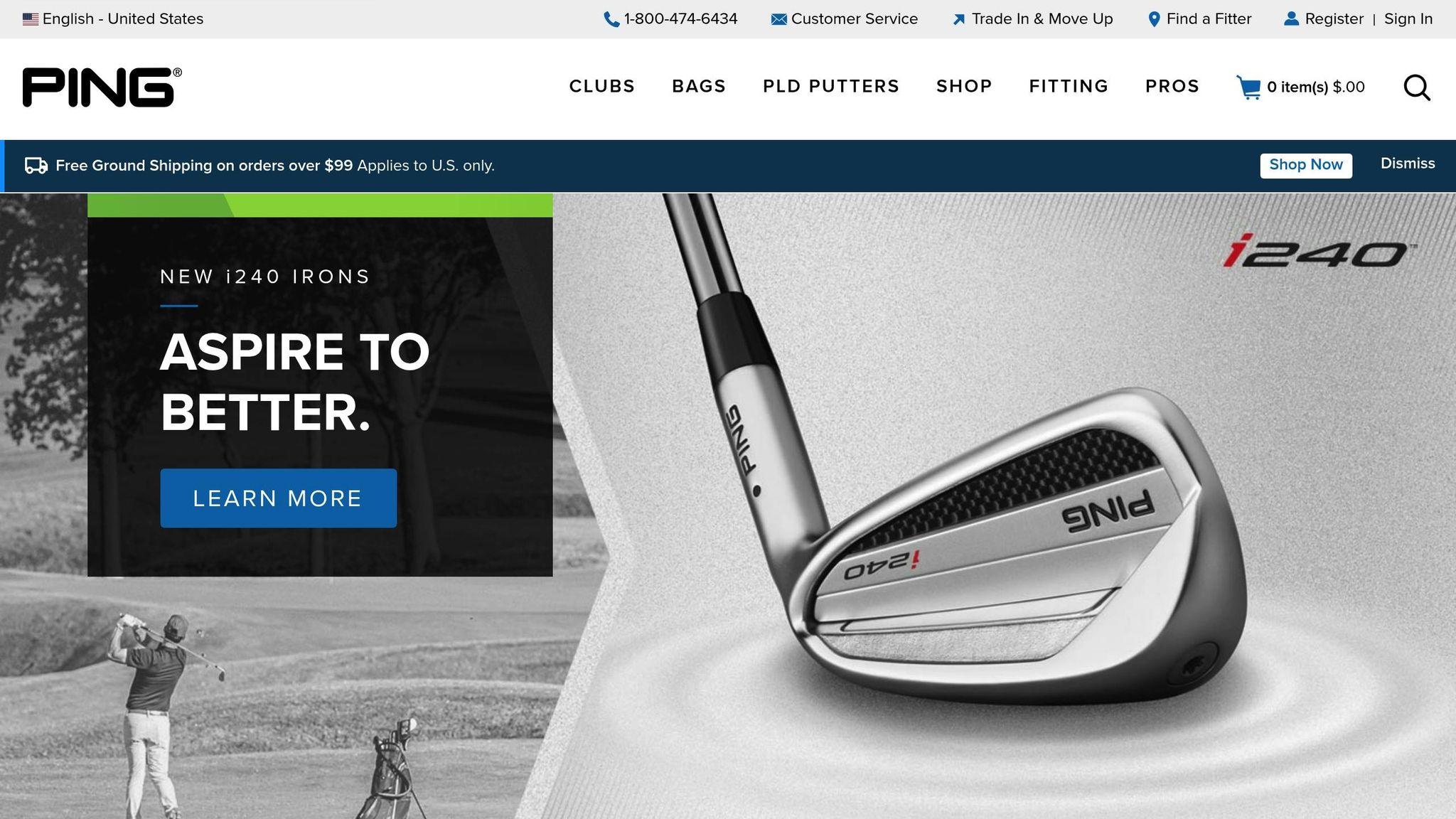
PING WebFit Overview
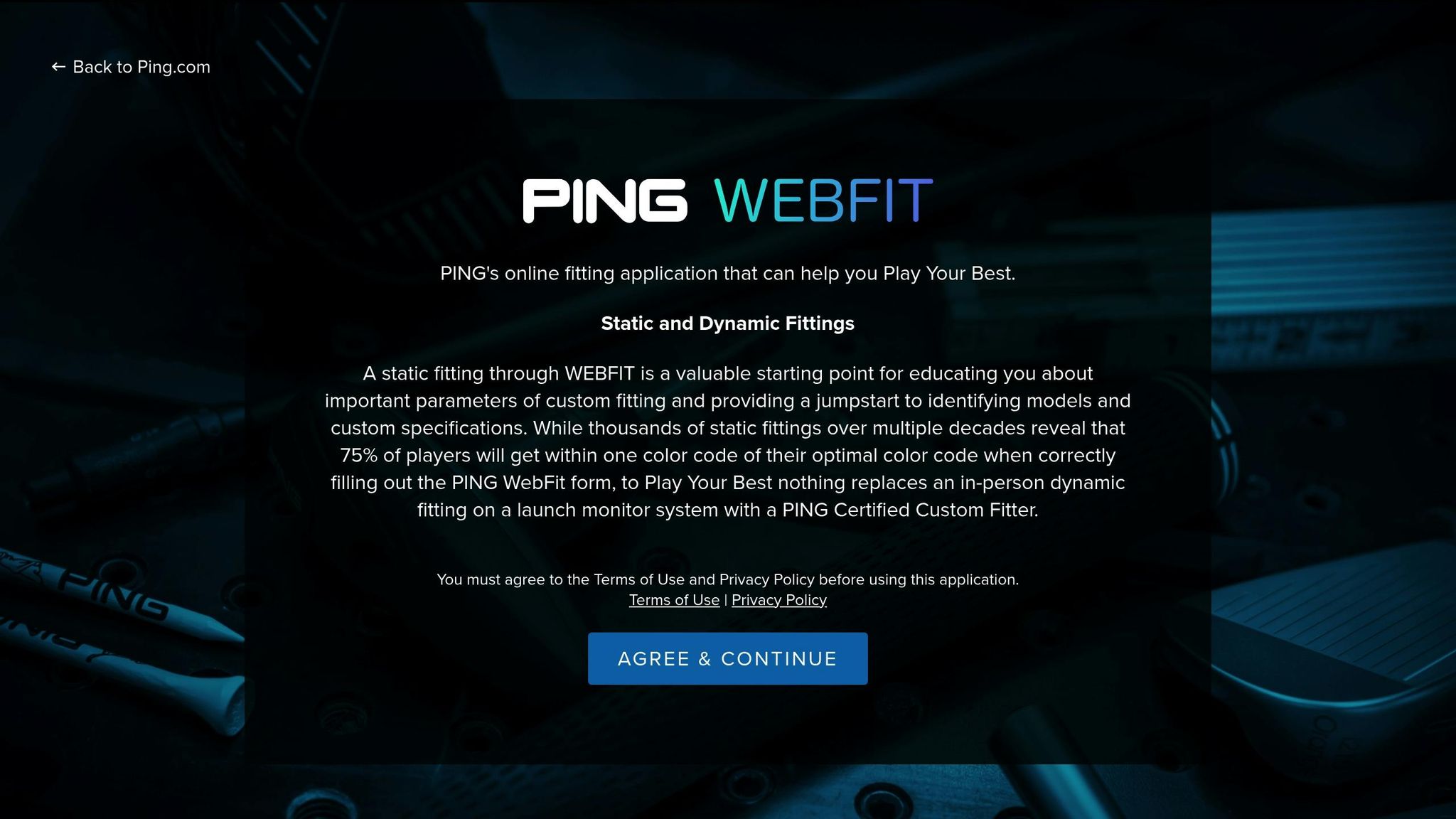
PING WebFit is an online platform designed to offer a professional, data-driven club fitting experience from the comfort of your home. By combining advanced algorithms with a wealth of real-world data from PING-certified fitters, it delivers the same level of precision you’d expect from an in-person fitting session.
This platform reflects PING’s deep commitment to custom fitting, a cornerstone of their reputation in the golf world. Golf professionals and expert fitters frequently recommend PING WebFit as a reliable alternative when in-person fittings aren’t possible.
Let’s break down what makes PING WebFit so effective.
PING WebFit Key Features
PING WebFit gathers essential swing and physical data to tailor its recommendations. It asks for details like height, wrist-to-floor measurement, swing speed, and typical shot shape, feeding this information into PING’s proprietary fitting algorithms to deliver personalized results.
- Club type selection: The platform evaluates your playing style, skill level, and preferences to recommend specific options from PING’s lineup. This ensures guidance that feels tailored, not generic.
- Shaft flex recommendations: Based on your swing speed and tempo, PING WebFit suggests the ideal shaft flex, offering detailed insights into how these choices can impact your game.
- Lie angle adjustments: Precision is key here. The platform can recommend exact adjustments, such as a 1° upright or flat lie angle, based on your measurements and swing characteristics.
With its ability to analyze key metrics like height and swing speed, and its user-friendly design for both desktop and mobile, PING WebFit delivers accurate club recommendations in no time.
PING WebFit Benefits
PING WebFit is all about improving performance without the need for expensive or time-consuming appointments. Here’s what sets it apart:
- Unmatched accuracy: The recommendations align with PING’s in-person fitting standards, thanks to a massive database built from thousands of real golfer fittings.
- Personalized results: The platform processes multiple data points to craft club specifications that match your unique needs.
- Convenience: You can complete the entire fitting process whenever and wherever it suits you. This is especially helpful for golfers who don’t have easy access to professional fitting services.
Another standout feature is its seamless connection to PING’s ordering system. Once you’ve received your results, you can place custom orders directly or consult with a certified fitter for any final tweaks. Plus, the service is completely free, saving both time and money while delivering professional-grade recommendations.
Sub 70 Online Fitting Tool Overview
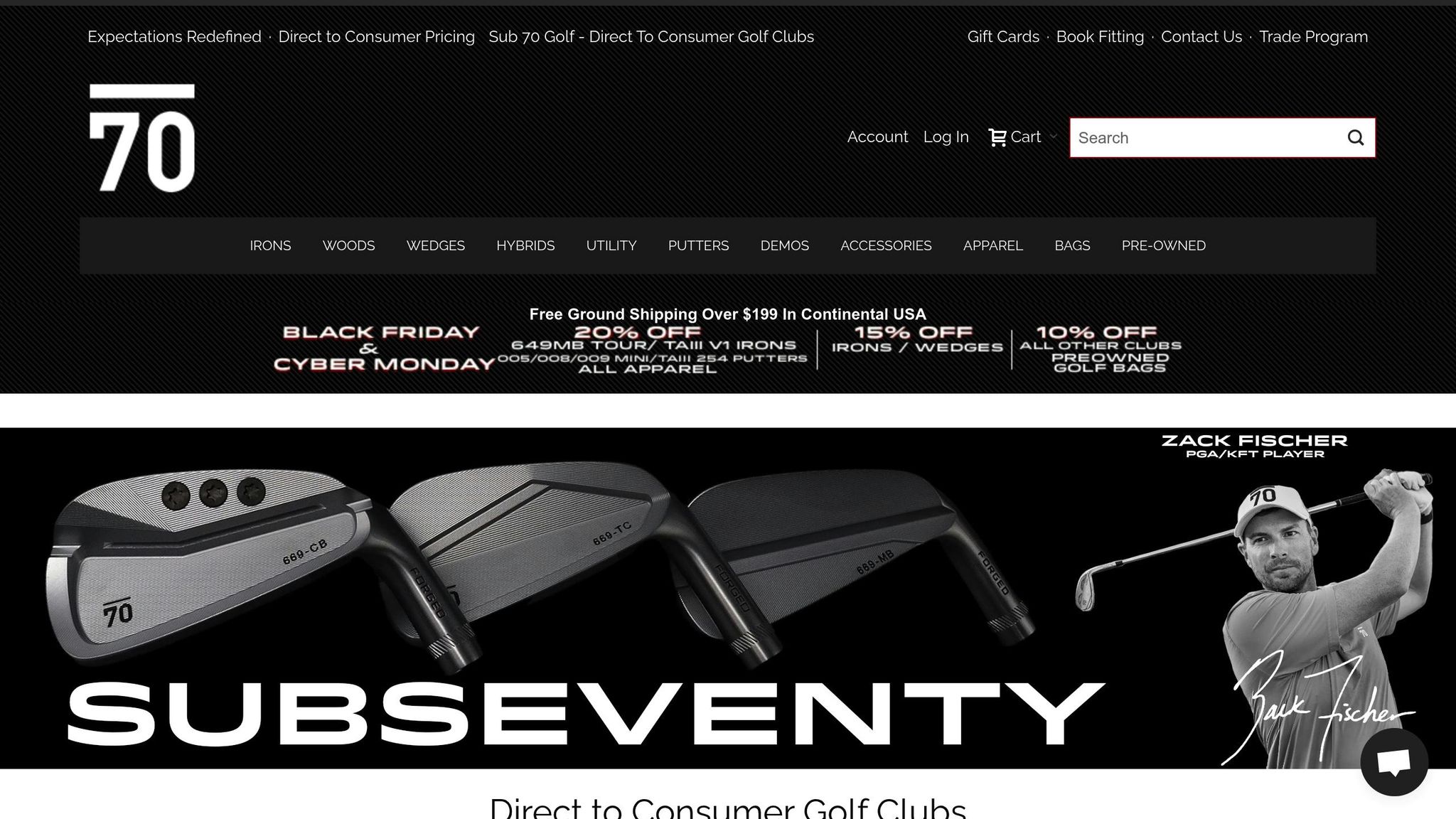
Sub 70’s online fitting system revolves around putting the customer first. As a direct-to-consumer brand, Sub 70 skips the middlemen, which not only cuts costs but also allows them to deliver personalized service. Every club is built in the United States, ensuring quality craftsmanship at a fraction of the price you’d pay for big-name brands.
What sets Sub 70 apart is their unique mix of hands-on expertise and digital convenience. Instead of relying solely on automated algorithms, Sub 70 encourages golfers to share fitting data from previous sessions or work one-on-one with their experienced team. This approach ensures that every set is tailored specifically to the golfer’s needs, with input from skilled club builders who know the art of fine-tuning. Let’s dive into the features and process that make Sub 70 stand out.
By handling everything in-house, Sub 70 eliminates retail markups, offering custom clubs at prices that rival major brands while maintaining the same level of precision and customization.
Sub 70 Core Features
At the heart of Sub 70’s customer-first approach is their user-friendly customization platform. Through an intuitive system with drop-down menus and product images, golfers can fine-tune every detail, including:
- Club length
- Lie angle
- Shaft flex
- Grip preferences
- Head models
For those who already have fitting data, Sub 70 makes the process seamless. If you’ve been fitted at a facility like Club Champion, their team can take those measurements and translate them into exact club specifications. This is a great option for golfers who know their numbers and want to maximize the value of a previous professional fitting.
Their attention to detail is second to none. For example, a customer once requested a 7-iron built to exactly 37.25 inches. Sub 70 delivered a club with perfect lie and loft angles, matching the requested specs precisely. This meticulous approach applies across their entire product line.
Additionally, Sub 70 offers real-time consultations with their experts throughout the process. If you’re unsure about a specific detail – like which shaft to choose – you can connect with their team for personalized advice and guidance.
Sub 70 Advantages
One of Sub 70’s biggest draws is the cost savings. Their direct-to-consumer model allows golfers to save 50–60% compared to major OEM brands, all while maintaining exceptional quality and customization. For instance, a customer who transferred their Club Champion fitting data to Sub 70 ordered a set of 659 CB irons with the same shafts for $800 – half the $1,600 price tag from the OEM.
Sub 70 also excels in customer support. Their team of experienced fitters and club builders are available to answer questions, provide advice, and make adjustments during the entire process. Even after your clubs are delivered, their support continues to ensure you’re happy with your purchase.
Speed is another key advantage. With all operations based in the U.S., Sub 70 has a reputation for quick turnaround. Some customers have even reported receiving photos of their custom-built clubs on the same day they placed the order. Shipping often occurs the next business day, with delivery in as little as three days.

For golfers looking to build a complete set without breaking the bank, Sub 70 offers incredible value. One customer built an entire setup – including a 3 wood, 3 hybrid, 4-PW, and wedge – for around $1,000. That’s a price point that’s hard to match with traditional OEMs.
To further enhance their customer-focused approach, Sub 70 offers a demo program. This allows golfers to try out clubs before committing to a full set, making it easier to find the perfect fit. These features align perfectly with the growing demand for accessible, personalized club customization.
PING WebFit vs Sub 70 Feature Comparison
Here’s a closer look at how the features of PING WebFit and Sub 70’s online fitting tool cater to different golfer needs. While PING leans on automated recommendations, Sub 70 prioritizes a more personalized approach. The table below highlights the main differences between the two.
Key Features and Metrics Comparison Table
| Feature/Metric | PING WebFit | Sub 70 Online Fitting Tool |
|---|---|---|
| Input Requirements | Height, wrist-to-floor measurement, hand size, swing characteristics | Drop-down menus, basic measurements, optional prior fitting data |
| Customization Options | Standard PING shaft/grip selections based on an algorithm | Broad selection of heads, shafts, and custom specs; compatible with prior fittings |
| User Interface | Questionnaire-based with automated recommendations | Visual menus with product images and direct expert support |
| Delivery Process | Order through PING retailers/authorized dealers | Ships directly to the customer |
| Customer Support | Available through the PING network, limited direct interaction | Personalized service with direct access to fitters |
| Price Range | Standard PING pricing via retail partners | Approximately 50–60% lower than major OEMs |
| Turnaround Time | Depends on retailer and demand | Often ships the next business day |
The standout difference here is PING’s reliance on a retail network, while Sub 70’s direct-to-consumer model offers greater flexibility and cost savings.
Strengths and Weaknesses
PING WebFit is a solid choice for golfers new to the world of club fitting. Its algorithm uses detailed measurements to suggest clubs tailored to your profile. However, the options are limited to PING’s preset selections, and purchases must go through their retail partners. While PING’s extensive dealer network ensures availability across the U.S., working through multiple retailers can sometimes result in longer wait times.
Sub 70 shines with its affordability and focus on personalized service. Although its tool doesn’t track advanced metrics like shaft flex at impact, the ability to consult directly with experienced fitters more than makes up for it. Sub 70 is known for delivering custom builds that meet exact specifications.
Their direct-to-consumer approach brings faster shipping and lower costs but requires a bit more effort from the customer. For example, having prior fitting data or reaching out to their team for guidance can enhance the experience. On the cost front, Sub 70 is a game-changer. One golfer managed to build an entire set – including a 3-wood, 3-hybrid, 4-PW, and wedge – for roughly $1,000, a price that’s tough to beat with traditional manufacturers.
For players looking to improve beyond just equipment, tools like How To Break 80 provide helpful resources on swing techniques and drills. These additional resources, paired with properly fitted clubs, can significantly boost your game. Ultimately, choosing the right club fitting tool depends on your specific needs and preferences as a golfer.
sbb-itb-bcd8bdd
Ease of Use and User Experience
Using online club fitting tools can be a straightforward experience for golfers in the U.S., with PING WebFit and Sub 70 offering distinct approaches to simplify the process.
PING WebFit guides users through a questionnaire-based system, making each step clear with prompts and visual aids. The platform requests key details – like height, wrist-to-floor measurements, and swing characteristics – using familiar imperial units. With step-by-step instructions, helpful tooltips, and visual diagrams, it explains why each measurement matters and how they shape the final club recommendations.
On the other hand, Sub 70’s online fitting tool opts for a simpler drop-down menu design. Featuring clear product names and images, it’s easy to navigate, even for beginners. The straightforward format ensures users can quickly make selections without confusion.
Both tools are designed to save time. A typical session with PING WebFit takes about 10–15 minutes, depending on whether users have their measurements ready. Sub 70’s tool, thanks to its minimalist design, often takes less than 10 minutes. Both platforms also work smoothly across devices – PING WebFit’s responsive design adapts well to desktops and mobile, while Sub 70 ensures usability with large buttons and clear visuals for smaller screens.
Customer support varies between the two. Sub 70 offers direct assistance via phone, email, and chat, making it easy to get help when needed. PING, however, directs users to its retail network for additional support.
For golfers aiming to improve beyond just equipment, resources like How To Break 80 provide swing techniques and drills that complement a well-fitted set of clubs. Combining the right gear with solid fundamentals can be a game-changer for lowering scores.
Ultimately, both tools make the club fitting process accessible. PING WebFit focuses on detailed explanations and educational content, while Sub 70 prioritizes a user-friendly, intuitive design. Whichever you choose, these platforms help you make smarter equipment decisions.
Accuracy and Customization Results
PING WebFit and Sub 70 both deliver measurable results, but they differ in how precise and tailored their approaches are.
Sub 70 excels in meeting exact custom specifications. For instance, their 659 Forged CB irons were built to the precise length of 37.25 inches as requested, while a competitor’s clubs fell short at 37 inches. This level of exactness directly impacts performance. One golfer who transferred fitting data from Club Champion to Sub 70 reported excellent results while saving $800 compared to the OEM option – all without sacrificing quality.
Performance testing further highlights these differences. Sub 70’s 7-iron achieved a ball speed four mph faster than a comparable COBRA setup when fitted for the same golfer. While factors like shaft length and loft also played a role, Sub 70’s ability to fine-tune key variables stood out. A professional fitter noted that despite variations in OEMs, shaft options, and assembly techniques, Sub 70’s clubs delivered competitive performance. This underscores the limitations of PING WebFit’s more automated system, which can overlook critical details.
PING WebFit lacks the ability to track important factors like shaft flex or face angle at impact. However, PING’s retail network provides additional resources for golfers who want to validate their fittings in person.
Sub 70 also goes beyond standard customization options. Every club is built to order in Sycamore, Illinois, with some orders completed and shipped in as little as three days. Owner Jason Hiland explains their approach by saying,

"we look at your fitting like doctor’s notes,"
emphasizing how Sub 70 uses detailed data to tailor each club. This flexibility allows adjustments over time. For example, one golfer updated their lie angle from –2 degrees to +1 degree after realizing their swing had evolved over a decade. Sub 70 offers a wide range of personalization options, including custom lie angles, various shaft combinations, and even partial sets. One customer built a full setup – including a 3-wood, 3-hybrid, 4-irons through pitching wedge, and a 56-degree sand wedge – for around $1,000. Additionally, specifications can be transferred across similar iron head designs, which is especially useful for skilled players. One golfer used Club Champion’s fitting data with Sub 70’s 659 CB heads to match shaft specifications (Mitsu OTi 95 S) at nearly half the cost.
Customer feedback aligns with these findings. Many golfers report noticeable improvements in both distance and shot dispersion compared to their previous clubs. Thanks to Sub 70’s precise measurements and build-to-order process, online fitting recommendations translate effectively to real-world performance.
For golfers aiming to get the most out of their equipment, resources like How To Break 80 provide swing fundamentals that pair well with properly fitted clubs. While both PING WebFit and Sub 70 make club fitting accessible, Sub 70’s highly personalized, detail-oriented approach offers a clear edge for players serious about improving their game.
Choosing the Best Online Fitting Tool
Deciding between PING WebFit and Sub 70’s online fitting tool comes down to your budget, desired level of customization, and the type of service you prefer. Here’s a closer look at what each option brings to the table.
Go with PING WebFit if you want a straightforward, data-driven experience with minimal interaction. This tool is perfect for golfers who prefer quick, algorithm-based recommendations tailored to the data they provide, without the need for extensive back-and-forth.
Opt for Sub 70 if you prioritize a more personal touch, direct communication with skilled fitters, and a budget-friendly approach. Sub 70 offers excellent value without cutting corners on quality. Plus, their fast three-day turnaround ensures you’ll have your custom-fitted clubs in hand sooner than most competitors.
When it comes to cost, PING WebFit falls into the premium price range, while Sub 70 offers an affordable alternative, allowing you to assemble a full set for around $1,000. This price gap can make a big difference for golfers planning to upgrade multiple clubs or sets.
For players aiming to break 80, Sub 70’s precise adjustments can be especially helpful, as they’re better suited to evolving swings and provide a higher degree of customization.
To get the most out of any online fitting tool, consider pairing it with data from a simulator or advice from a professional fitter. This can help fine-tune details like shaft flex and face angle, which are often harder to capture online.
Custom-fitted clubs can significantly improve both your distance and shot accuracy. Combined with sound fundamentals, such as those outlined in resources like How To Break 80, well-fitted clubs can become essential tools for lowering your scores and making the game even more enjoyable.
Ultimately, the choice depends on your priorities and timeline. Both PING WebFit and Sub 70 offer accessible, professional-level fitting solutions, but their approaches differ. Pick the one that aligns with your goals and helps you take your game to the next level.
FAQs
What are the key differences between PING WebFit and Sub 70’s online club fitting tools?
When it comes to finding the right golf clubs, PING WebFit and Sub 70’s online fitting tools offer two distinct approaches, each catering to different types of golfers.
PING WebFit takes a data-driven route, diving into specifics like your swing speed, ball flight preferences, and typical shot shape. By analyzing this detailed input, it delivers club recommendations tailored to your unique playing style. It’s a great choice for players who want precise, analytics-backed suggestions.
On the other hand, Sub 70’s tool keeps things simple and accessible. It asks straightforward questions about your playing style and preferences, making it easy to get recommendations for high-quality clubs that won’t break the bank. This approach is perfect for golfers looking for a balance between performance and affordability.
While both tools are user-friendly, PING WebFit is ideal for those who value a highly personalized fit and advanced analytics. Meanwhile, Sub 70 stands out for its simplicity and budget-conscious focus, appealing to golfers who want quality without the complexity.
How does the cost of custom golf clubs from Sub 70 compare to those from PING WebFit?
When comparing the costs of custom golf clubs from Sub 70 and PING WebFit, the price difference largely depends on the club specifications and any extra customization you choose. Sub 70 is often recognized for its affordable pricing, making it a go-to for budget-conscious golfers. On the other hand, PING WebFit leans toward higher-end, performance-focused clubs. To get a clear idea of the costs, it’s a good idea to explore the customization tools each platform offers and review the associated pricing details.
How accurate are the online fitting tools from PING WebFit and Sub 70?
PING WebFit and Sub 70 both offer tailored club fitting solutions using detailed questionnaires and advanced algorithms. These tools evaluate aspects such as your swing speed, ball flight, and shot tendencies to recommend club specifications that suit your game.
PING WebFit leverages decades of research and an extensive database of player profiles, giving it a strong foundation for precise recommendations. On the other hand, Sub 70 emphasizes simplicity and affordability while maintaining accuracy. To get the most out of either option, it’s essential to provide honest and accurate information about your playing style and performance during the fitting process.
Related Blog Posts
- How Online Golf Club Fitting Works for New Golfers
- Top AI Tools for Custom Golf Club Fitting
- Ultimate Guide to Golf Shaft Optimization Software
- Virtual Club Fitting vs. In-Person Fitting
