
Ready golf is a simple way to speed up play and make rounds more enjoyable. Instead of waiting for the farthest player to hit, anyone who’s ready and can do so safely takes their shot. This approach, encouraged by the USGA and R&A since 2019, can save 10–20 minutes per round for a typical foursome. It’s ideal for casual games and stroke-play competitions but less suitable for match play.
Key Points:
- What it is: Players hit when ready, not by strict turn order.
- Time savings: Reduces waiting, cutting 10–20 minutes off a round.
- Where it works: Best for casual rounds and stroke play.
- How to do it:
- Prepare your shot while others play.
- Shorter hitters can play first if safe.
- Use continuous putting when practical.
- Safety and etiquette: Always prioritize safety and respect other players.
By keeping things moving while respecting safety and courtesy, ready golf ensures a smoother, more engaging experience for everyone on the course.
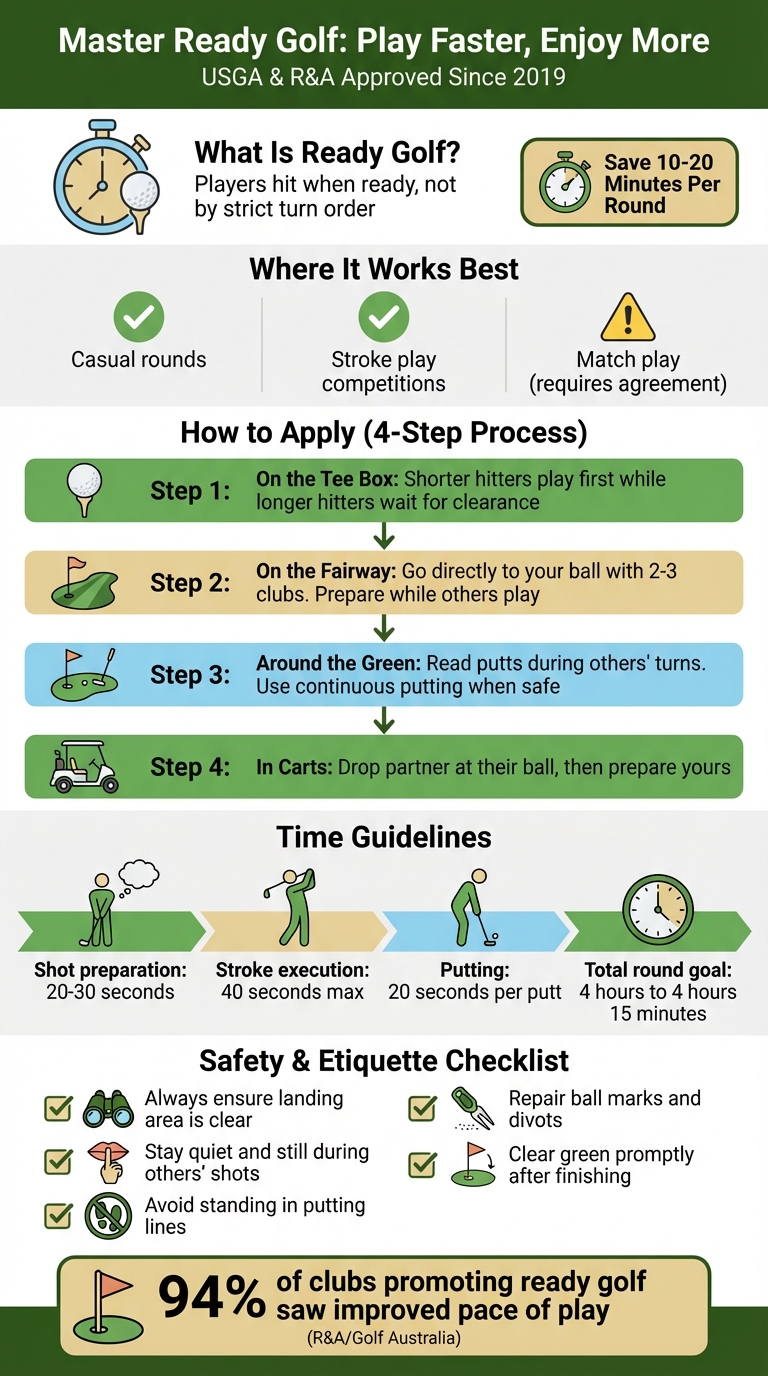
Ready Golf Quick Reference Guide: Rules, Techniques, and Time Savings
Rules and Guidelines for Ready Golf
USGA and R&A Guidelines on Ready Golf
Rule 6.4b lays the foundation for ready golf, aiming to speed up play by introducing a more flexible approach to shot order. Traditionally, the player farthest from the hole takes the next shot, but this rule allows players to step in and play out of turn – provided it’s done safely and without disrupting others. The key is to keep things moving while respecting safety and courtesy.
In 2019, the USGA and R&A updated the Rules of Golf to actively promote ready golf during stroke play. This change was part of a broader effort to address slow play. However, in match play, ready golf requires agreement between players, as the order of play can carry strategic weight.
How to Apply Ready Golf on the Course
Putting ready golf into practice is straightforward and focuses on being prepared and efficient. Before it’s your turn, take the time to plan your shot – consider distance, wind, your lie, and club selection. The idea is to be ready to hit as soon as it’s safe.
- On the tee box: If the player with the honor isn’t ready, someone else who is prepared can tee off first, as long as it’s safe. Shorter hitters can often play while longer hitters wait for the group ahead to clear.
- On the fairway: Instead of moving as a group from ball to ball, head directly to your own ball to prepare for your shot. Carrying a couple of clubs with you can save time and eliminate extra trips to your bag.
- Around the green: Use the time others spend putting to read your own putt and plan your line. Continuous putting – finishing your putts in one go – can also help keep things moving, as long as you’re not interfering with someone else’s play.
- Using carts: If you’re sharing a cart, drop off your partner at their ball with a few clubs they might need, then drive to your own ball to prepare.
While ready golf emphasizes efficiency, safety is the top priority. Always ensure the group ahead is out of range before hitting your shot. Many U.S. clubs recommend timing guidelines to maintain pace: for instance, taking no more than 40 seconds to play a stroke once it’s safe and keeping putts to around 20 seconds. These small adjustments can make a big difference in keeping the game flowing smoothly.
What Is Ready Golf and How Does It Help?
Benefits of Ready Golf
Playing ready golf offers practical advantages that can transform your experience on the course.
Faster Rounds and Less Waiting
One of the biggest perks of ready golf is how it trims down waiting time. Instead of sticking to a strict turn order, players can safely take their shots as soon as they’re ready. For instance, if someone farther from the hole is still deciding on their shot, a player closer to the hole can go ahead and play. This keeps the group moving and avoids those awkward, momentum-killing pauses.
The time savings are real, with many courses reporting that rounds can be shortened by 10–20 minutes for a typical foursome. Picture this: on the tee box, while longer hitters wait for the group ahead to clear, others can tee off immediately. This simple adjustment prevents bottlenecks and keeps the pace smooth, even on crowded days.
Better Focus and Engagement
Long delays can break your concentration, but ready golf helps you stay in the zone. By reducing downtime, you can use those moments to read the wind, measure yardage, or pick your club. This keeps your mind engaged and ready for your next shot.
For casual golfers, shorter waits mean more time to chat, laugh, and enjoy the game. Families benefit, too – kids stay interested, and shorter rounds make it easier to transition to other plans. Competitive players will appreciate how ready golf keeps the rhythm of the game intact, cutting out the frustration of long delays. Plus, this approach works well in almost any setting, from laid-back outings to serious matches.
Fits All Types of Rounds
Ready golf isn’t just for casual games – it works across various formats. In friendly rounds, it speeds up play without adding pressure. Family games benefit from quicker rounds, keeping everyone engaged, especially younger players. Even in formal stroke play tournaments, the USGA encourages ready golf under Rule 6.4b, allowing safe out-of-turn shots to keep things moving smoothly. On busy courses, this approach helps avoid backups, making the game more enjoyable for everyone involved.
sbb-itb-bcd8bdd
How to Use Ready Golf in Your Game
Incorporating ready golf into your rounds helps turn a faster pace and smoother flow into habits you can rely on every hole.
Preparing Before Each Shot
When you approach your ball, use the time wisely. Assess the lie, check the wind, and measure the yardage while others are playing their shots. Select your club and plan your general shot shape in advance. This way, when it’s your turn, you only need a quick final look instead of starting your routine from scratch. Keep your pre-shot routine efficient – aim for about 20–30 seconds from arriving at your ball to taking your shot. A couple of off-line practice swings can help you feel ready without wasting time . These small adjustments ensure you’re ready to handle any on-course challenges smoothly.
Adapting to Different Situations
Ready golf thrives on flexibility. In groups with varying driving distances, shorter hitters can tee off first while longer hitters wait for the green to clear. If someone’s searching for a lost ball (remember, the search is limited to 3 minutes), others should play their shots if it’s safe to do so. Around the green, read your putts while others are playing so you’re ready to step in when it’s your turn. Whenever possible, finish short putts instead of marking and waiting for the full rotation. However, safety always comes first – never hit if there’s any risk of distracting another player, interfering with their line, or creating a safety hazard .
Measuring Your Time Savings
Most U.S. courses aim for an 18-hole round with a foursome to take about 4 to 4 hours 15 minutes, though busy weekends can push this closer to 4½ hours . To see if ready golf is working for you, track your round times. Note your start time, 9-hole split, and finish time on your scorecard, or use your cart’s GPS or a smartphone timer. Surveys from the R&A and Golf Australia reveal that 94% of clubs promoting ready golf saw improved pace of play, with about 25% reporting particularly satisfying results. Over several rounds, calculate your average time per hole by dividing total minutes by 18. Even saving just 5 minutes per nine holes adds up to 10 minutes per round. A good sign that ready golf is making a difference? Consistently staying within about one shot of the group ahead.
Maintaining Proper Etiquette with Ready Golf
While ready golf is a great way to keep the game moving, it’s equally important to balance speed with respect and safety. A smooth, enjoyable round depends on everyone playing responsibly and courteously.
Ready golf encourages quicker play, but it never means cutting corners on etiquette. In stroke play, players can take their shots out of the traditional order as long as it’s done safely and with mutual understanding among the group. The key is to stay efficient without sacrificing safety or respect for others on the course.
Safety First
Speeding up play shouldn’t come at the expense of anyone’s safety. Before hitting, always ensure the landing area is clear of other players. If there’s any uncertainty, it’s better to wait. On par 3 holes, make sure the group ahead has left the green or moved out of range near the tee box. Also, be mindful of maintenance staff or pedestrians who might unknowingly wander into your line of play.
Respecting Other Players
Courtesy is just as important as safety. When another player is preparing to hit, stay quiet and still to avoid distractions. Be mindful of where you stand – never position yourself in someone’s putting line. Take a moment to repair any ball marks or divots you’ve made. After finishing a hole, clear the green promptly and record your score at the next tee to keep things moving. If you’re using a cart, park it in a spot that doesn’t block the green’s approach.

If your group decides to play ready golf, make sure everyone is on the same page before the round begins. Shots can be taken out of the usual order, but only when it’s safe and agreed upon by all players. Respect and communication are key to making ready golf both efficient and enjoyable.
Conclusion: Making Ready Golf Part of Your Game
Ready golf is a simple way to make your rounds quicker and more enjoyable. By hitting your shot when you’re ready and it’s safe – rather than always waiting for the player farthest from the hole – you cut down on unnecessary delays and keep the game moving. This approach reduces downtime and helps create a more relaxed and engaging experience for everyone in your group.
Incorporating ready golf into your routine doesn’t require a major overhaul. Start small. On your next round, commit to a few easy adjustments: prepare for your shot while others are playing, and minimize delays between strokes. These small changes can add up – shaving 20 to 30 seconds per shot over 18 holes can save a significant amount of time.
This approach works for all types of players – whether you’re out with friends, competing in a league, or playing a casual family round. Pairing ready golf with focused practice, like the drills and course-management strategies from How To Break 80 (https://break80.guide), can also sharpen your skills, improve your scores, and make your time on the course even more rewarding.
The secret to ready golf is striking a balance. Play efficiently, but always prioritize safety and respect for others. Stay prepared, remain aware, and help keep the round moving smoothly for everyone. Give it a try during your next tee time – you might discover that faster play not only saves time but also helps you stay focused and enjoy the game more. Ready golf isn’t just about speed – it’s about making every round better for you and your group.
FAQs
What is ready golf, and how does it help speed up play?
Ready golf is a style of play where golfers hit their shots as soon as they’re ready, instead of sticking to the usual turn-based order. The idea is simple: less waiting around and more action.
This approach keeps the game moving smoothly by cutting down on delays. It encourages players to stay prepared and take their shots promptly, which often leads to quicker rounds and a more enjoyable experience for everyone on the course.
Can ready golf be used in competitive tournaments?
Ready golf isn’t usually permitted in competitive tournaments because it can clash with the official rules and the structured, turn-based nature of play designed to uphold fairness. Tournaments prioritize consistency and strict adherence to the rules of golf, which is why players are expected to follow the traditional order of play.
That said, ready golf is a great approach during casual rounds or informal events. It helps keep the pace brisk and ensures the game remains fun for everyone involved. Just make sure to review the specific tournament guidelines beforehand to understand the rules in place.
What are the key safety tips for playing ready golf?
To play ready golf safely, it’s crucial to stay mindful of your surroundings and keep track of where others are on the course. Clear communication with your group is key to avoiding misunderstandings, especially when you’re taking a shot out of turn. While ready golf encourages quicker play, don’t let that pressure you into rushing your shots – take your time to stay in control and ensure everyone’s safety.
Related Blog Posts
- 8 Tips to Improve Golf Pace of Play
- What Is Ready Golf? Rules and Tips
- How to Master Speed Control on the Greens
- Golf Etiquette: Do’s and Don’ts for Group Play
