
Golf stamina is about staying strong, focused, and consistent throughout an 18-hole round. It requires a mix of cardiovascular fitness, muscular endurance, and mental sharpness to walk 4–6 miles, make 70–100 swings, and maintain performance for 4–5 hours. Fatigue, especially in the last 4–6 holes, can lead to poor shots and mental mistakes, but proper training can help you avoid this.
Key takeaways from this guide:
- Improve stamina with cardiovascular exercises (e.g., brisk walking, interval training) and strength workouts (e.g., squats, lunges, planks).
- Pre-round preparation includes dynamic stretches, light swings, and hydration.
- On-course strategies: Stay hydrated (16–20 oz every 3–4 holes), eat energy-boosting snacks, and maintain good posture while walking.
- Recovery: Cool down with walking, stretching, and refueling with protein and carbs within 2 hours.
With consistent training, you can build the endurance needed to maintain swing quality and focus from the first tee to the final putt.
Cardio and Endurance for Golfers
Physical Demands of Golf
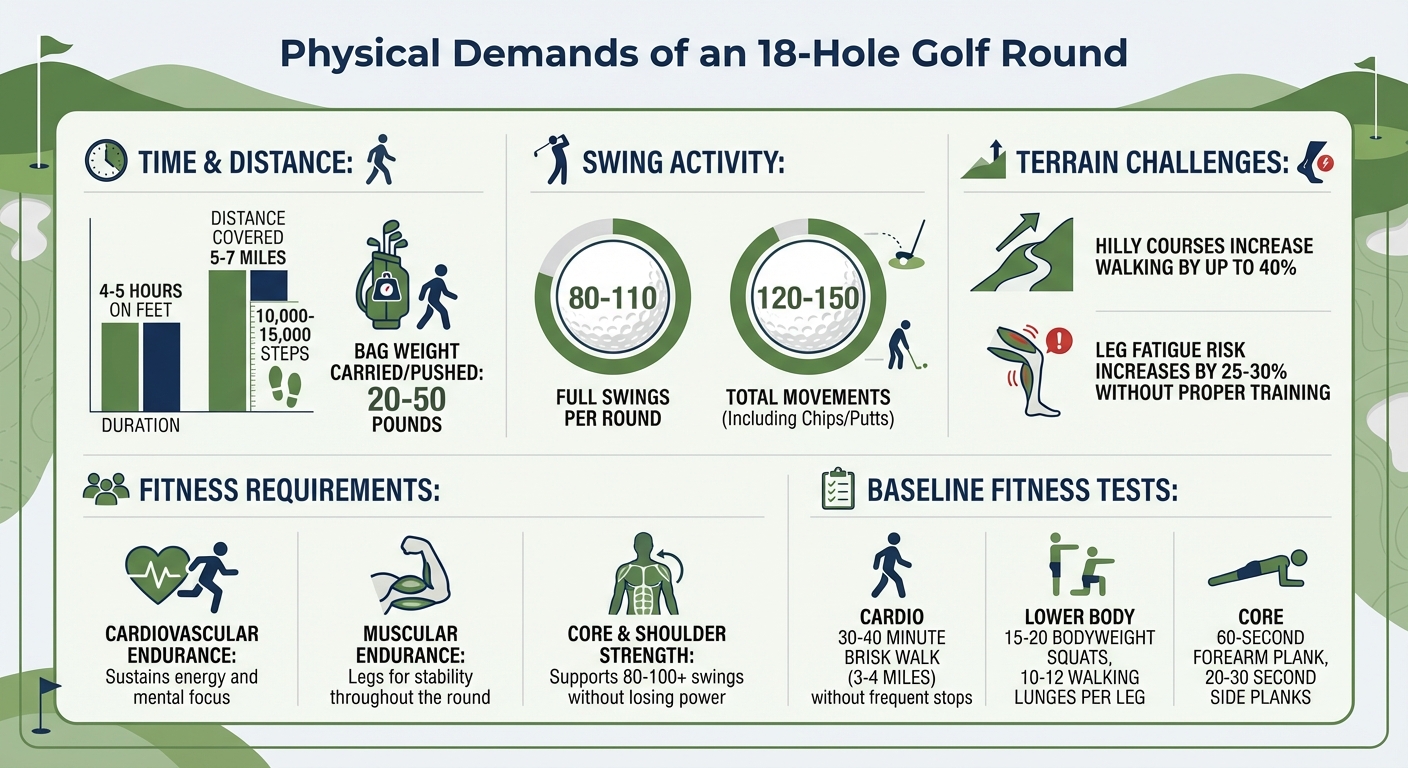
Physical Demands of an 18-Hole Golf Round: Key Statistics and Requirements
What an 18-Hole Round Requires
Playing an 18-hole round of golf is no casual stroll. It keeps you on your feet for 4–5 hours, covering 5–7 miles of uneven terrain – that’s roughly 10,000–15,000 steps. If you’re carrying or pushing a golf bag weighing 20–50 pounds, your body is constantly working to manage that load. During a round, golfers typically take about 80–110 full swings, plus additional chips and putts, adding up to 120–150 movements that require balance, rotation, and proper form. Using a golf cart might save your legs some of the walking, but it doesn’t change the physical demands of swinging. On courses with hills or cart restrictions, you could end up walking up to 40% more, which increases the risk of leg fatigue by 25–30% if you’re not prepared with proper endurance training. Carrying a bag also raises your heart rate into a light-to-moderate aerobic zone, especially when navigating slopes. These physical challenges highlight the need for specific fitness preparation, which we’ll explore in the next section.
Key Fitness Components for Golf
To handle the demands of a full round, it’s important to focus on three major fitness areas: cardiovascular endurance, muscular endurance, and postural stamina.
- Cardiovascular endurance keeps your energy levels and mental focus steady during long rounds that mix walking with bursts of activity.
- Muscular endurance in your legs – targeting muscles like the quads, glutes, hamstrings, and calves – helps you navigate uneven surfaces while maintaining a stable stance for your swings.
- Core and shoulder strength are equally critical, as these areas support the repeated swing mechanics (80–100+ swings per round) without losing speed or control.
Golf is a sport that relies on power generated from the ground up. A strong lower body transfers energy through a stable core, creating the whip-like speed needed for an effective swing. If your core endurance falters, your swing mechanics can break down as fatigue sets in. Additionally, maintaining proper postural stamina – like holding an athletic stance with slightly bent knees, a hip hinge, and a neutral spine – ensures your swing stays consistent, even as your energy wanes.
Testing Your Baseline Fitness
Before diving into a stamina training program, it’s helpful to assess your current fitness level with some simple tests.
- Cardiovascular fitness: Take a brisk 30–40 minute walk (covering 3–4 miles) on flat or gently rolling terrain. If you can complete it without needing frequent stops or experiencing significant shortness of breath, you likely have the aerobic capacity for a walking round of golf. Alternatively, try walking on a treadmill at 3.0–3.5 mph with a 1–3% incline for 30 minutes. If your heart rate stays below 80% of its maximum and you recover quickly, you’re in good shape for golf’s stop-and-start activity.
- Lower-body endurance: Perform 15–20 controlled bodyweight squats and 10–12 walking lunges per leg, focusing on maintaining proper form and balance. If you struggle to complete 10–12 squats or feel unstable during lunges, it’s a sign that your leg and hip strength could use some work.
- Core stability: Test your core by holding a forearm plank for at least 60 seconds with a neutral spine and minimal sagging. Add side planks, holding each side for 20–30 seconds. If these feel challenging, improving your core endurance will directly benefit your swing consistency and overall performance on the course.
These benchmarks provide a solid starting point for tracking your progress as you train, helping you build the strength and stamina needed to handle the physical challenges of an 18-hole round.
Exercises and Training Plans for Golf Stamina
Cardiovascular Training
To build the stamina needed for walking 18 holes, start with 30–45 minutes of brisk walking, cycling, or swimming 2–4 times a week. These steady-state activities lay the groundwork for your endurance. Since golf involves short bursts of activity followed by recovery, adding interval training is a smart move.
Once you’ve built a solid aerobic base, try high-intensity interval training (HIIT). Start with a 5-minute warm-up, then alternate 1 minute of sprinting with 2 minutes of walking for 6–8 cycles. Wrap it up with a 5-minute cool-down for a complete session.
Muscular Endurance Exercises
Golf demands repeated movements and stability from your legs, core, and shoulders. For lower-body endurance, focus on exercises like bodyweight or goblet squats. Perform 3–4 sets of 15–20 reps, keeping your feet shoulder-width apart and your hips pushed back. Add walking lunges to your routine by stepping forward into a lunge, aiming for 10–12 steps per leg over 3 sets.
To improve core stability, incorporate forearm planks (hold for 30–60 seconds, 3 sets) and side planks (20–30 seconds per side). For rotational strength, try medicine ball rotational throws. Stand sideways to a wall, twist your torso, and throw the ball, catching the rebound. Aim for 10 reps per side over 3 sets.
Physical therapist Shane Thoreson notes that golf is a "ground-up sport", where lower-body strength transfers power through a stable core for both acceleration and deceleration.
These exercises form the foundation for a well-rounded training routine.
Sample Training Plans
Here’s how to structure your week to combine aerobic and muscular endurance work:
Beginners: Train 2–3 days per week.
- Day 1: Focus on strength and mobility with exercises like goblet squats (3×8–10), planks (30–60 seconds), and bodyweight squats (3×15–20).
- Day 2 or 3: Add HIIT intervals (6–8 cycles).
Keep sessions around 20–30 minutes to avoid overdoing it.
Intermediate golfers: Step it up with 3 strength days and 2 cardio sessions per week.
- Day 1: Combine goblet squats, deadlifts, rows (3×8–10), and planks.
- Day 2: Focus on power and mobility with medicine ball slams (2–3×5–8), lunges with rotation, and an optional 20-minute cardio session.
- Day 3: Work on balance and core with single-leg balance exercises and Pallof presses (10 reps per side).
To progress, increase intensity by about 10% every two weeks. This could mean adding reps, weight, or an extra set – but always prioritize proper form to avoid injury.
sbb-itb-bcd8bdd
Maintaining Stamina During a Round
Sticking to your training routines is essential, but these strategies can help you keep your energy levels steady throughout the round.
Pre-Round Warm-Up Routines
A good warm-up sets the stage for a successful round. Start with dynamic stretches targeting your hips and thoracic spine. For example, try T-spine rotations (also called "open books") with 10 reps per side, 90/90 hip stretches held for 30 seconds on each side, and standing hip CARs (controlled articular rotations) for 5 slow reps per side. Follow this with 5–10 light swings, focusing on maintaining a smooth tempo, and finish with a brisk 5-minute walk to get your muscles ready for the course. This combination not only prepares your body for the physical demands of walking but also helps reduce the risk of stiffness or injury during play. Once you’re warmed up, it’s time to focus on managing your energy and hydration as you progress through the round.
Managing Energy During Play
Keeping your energy levels up is just as important as your swing. Start with hydration – drink 16–20 ounces of water or an electrolyte drink every 3–4 holes, and don’t forget to hydrate before you tee off with 8–16 ounces of fluids. For a golfer weighing 180 pounds, that adds up to about 90–180 ounces of fluid over the course of the day. If the weather is hot, adjust accordingly to avoid dehydration.

Snacks are also a game-changer. Small, energy-packed options like nuts, bananas, or energy gels every 6 holes can provide 100–200 calories to keep your muscles fueled.
Posture matters too – keep your core engaged and your shoulders back as you walk between shots. Moving at a steady pace of 3–4 mph can help you conserve energy and maintain a stable heart rate, which aligns with endurance principles for lasting performance across 18 holes.
Habits That Prevent Fatigue
Simple habits can make a big difference in keeping fatigue at bay. Practice deep, controlled breathing between shots to help reset your focus and lower your heart rate. Try inhaling through your nose for 4 counts, holding for 4 counts, and exhaling for 4 counts. Just 1–2 minutes of this can aid recovery and keep you mentally sharp.
To avoid stiffness, take brief breaks every 4–5 holes. Use these moments to do quick hip circles or shoulder rolls during your walk. These small movements, combined with steady hydration and mindful breathing, will keep your legs feeling fresh and your focus intact throughout the round.
Recovery and Long-Term Maintenance
Taking care of your body after a round is just as important as preparing for one. Recovery should begin within 15–30 minutes of finishing your game or training session. The main focus? Bring your heart rate down, ease muscle soreness, restore joint mobility, and refuel with fluids and nutrients to keep fatigue at bay.
Post-Round Recovery
Once the round is over, a proper recovery routine locks in your progress and gets you ready for the next challenge. A quick 10–20 minute session can work wonders. Start with a slow walk to help your heart rate return to normal. Then, focus on mobility exercises for your spine and hips – try moves like open books for thoracic rotation, 90/90 hip stretches, and lunges with rotation (5–10 reps per side). Wrap things up with static stretches for major muscle groups, such as your quads, hamstrings, calves, hip flexors, and shoulders, holding each stretch for 20–30 seconds.
In the hours after your session, hydration is key. Pair that with a quick snack containing 20–30 grams of protein alongside carbs like rice, potatoes, whole-grain bread, or fruit, ideally within 2 hours of finishing. And don’t skimp on sleep – aim for 7–9 hours of quality rest to help your muscles recover and support endurance gains.
Preventing Golf-Related Injuries
Golf’s repetitive motions can lead to overuse injuries like lower back strain, knee pain, rotator cuff issues, and golfer’s elbow. These often stem from sudden spikes in practice volume or limited mobility in areas like the hips and thoracic spine. To stay injury-free, stick to a gradual progression rule: increase your total weekly workload – whether it’s rounds, practice balls, or off-course training – by just 5–10% per week. For instance, if you’re playing one 18-hole round and one 9-hole round a week, add either another 9 holes or a short 30–45 minute practice session, but not both in the same week.
Make room for 1–2 light days each week focused on mobility and short game practice to let your body recover. Pay attention to your soreness levels in the morning on a 1–10 scale. If you’re at a 4–6 (mild discomfort in areas like your back, knees, or shoulders), ease up on intensity or volume. But if you’re at a 7–10 (sharp or localized pain lasting more than 48 hours), step back entirely from intense training and focus on gentle recovery activities like walking and stretching. These small adjustments can help you avoid setbacks and build lasting stamina.
Maintaining Stamina Over Time
To keep your stamina up for the long haul, consistency is key. Plan for 2–3 weekly training sessions that combine cardio, strength, and mobility work. This mix not only boosts your cardiovascular fitness but also strengthens your muscles, making those 18-hole rounds feel easier over time. Pair your training with balanced meals that include lean protein, complex carbs, and healthy fats to fuel muscle repair and maintain steady energy levels.
Hydration and sleep also play a huge role. Drink water throughout the day and aim for 7–9 hours of sleep each night to support your body’s recovery and training adaptations. Track your progress by noting your perceived effort during 18 holes on a 1–10 scale, your walking stats (typically 8,000–10,000+ steps per round), and whether your swing speed and accuracy hold steady or improve toward the back nine. Reviewing these metrics over 4–8 week periods can confirm if your training and recovery routines are working – or if they’re adding unnecessary stress.
For extra guidance, resources like How To Break 80 (https://break80.guide) offer practice plans, drills, and strategy tips to help translate your stamina gains into lower scores.
Conclusion
Key Takeaways
Improving stamina for golf boils down to three main aspects: cardiovascular fitness, muscular endurance, and effective recovery. Incorporating HIIT workouts – like 1‑minute sprints followed by 2‑minute walks for 6–8 cycles – can enhance your oxygen efficiency and help you recover faster between swings. Equally important is muscular endurance. Focus on exercises that strengthen your core and legs to maintain stability throughout the 4–7 miles you typically walk during a round. Don’t overlook recovery routines – cooling down, staying hydrated, eating well, and working on flexibility after each game are crucial for avoiding fatigue and injuries. These strategies lay the groundwork for tracking your progress and improving your game.
Resources from How To Break 80

While building stamina strengthens your physical foundation, How To Break 80 (https://break80.guide) offers tools to refine your technical skills. Their eBooks, video courses, and free guides provide practical drills for putting, driving, and perfecting your swing mechanics. One standout resource is their Ultimate Distance Master Class video course, which is free and focuses on unlocking extra power in your swing. This is an excellent way to turn your improved stamina into more consistent and powerful shots. Combining endurance training with skill development creates a balanced and effective approach to the game.
Tracking Your Progress
Keeping track of your progress ensures your training efforts are paying off. Look at your performance on the back nine – holes 14–18 – to see if you’re maintaining swing quality and energy levels compared to the earlier part of the round. Monitor metrics like club head speed, walking comfort, and overall consistency. Before starting your routine, test your baseline fitness – such as how long you can hold a plank or how quickly you can complete an 18‑hole walk. Retest every 4–6 weeks to measure improvement. These simple benchmarks will show whether your 2–3 weekly training sessions are keeping you sharp from the first tee to the final putt.
FAQs
What are the best exercises to build stamina for golf?
To build better golf stamina, it’s essential to combine cardio, strength training, and flexibility exercises into your routine. Cardio workouts – like brisk walking, jogging, cycling, or swimming – can boost your endurance, helping you handle those long days on the course without wearing out. Strength training, with a focus on your core and legs, is key to keeping your swings powerful and your balance steady. Don’t skip flexibility exercises like yoga or stretching, as they can improve your range of motion and help fend off fatigue. Stick with these exercises consistently, and you’ll notice more energy and better performance during your game.
What’s the best way to physically prepare for an 18-hole round of golf?
Before hitting the course, spend some time on light stretching to ease tension in your shoulders, back, and legs. This helps prepare your muscles for movement. After that, add a few minutes of light cardio – a brisk walk or an easy jog works great – to get your blood circulating. Wrap up with mobility exercises like arm circles or torso twists to enhance your range of motion and lower the chance of injuries. Devoting just 10–15 minutes to this routine can set you up to perform at your peak.
What are the best ways to recover after playing a round of golf?
After finishing a round of golf, proper recovery is key to feeling your best and staying ready for your next game. Start with some stretching to ease tight muscles and boost flexibility. Don’t forget to stay hydrated – drinking plenty of water helps replenish what you’ve lost during play. Pair that with a nutritious snack or meal packed with protein and healthy carbs to kickstart muscle recovery.
Using a foam roller or treating yourself to a massage can work wonders in relieving muscle tension. If you’re feeling stiff, a light activity like a short walk can help improve circulation and loosen things up. And most importantly, prioritize rest and sleep – your body needs time to recover and recharge for the next round.
Related Blog Posts
- 10 Pre-Round Warm-Up Exercises for Better Golf Performance
- Golf Practice Checklist: 8 Drills for Weekend Warriors
- Ultimate Guide to Golf Cool-Down Techniques
- How to Prepare for Golf in Extreme Heat
