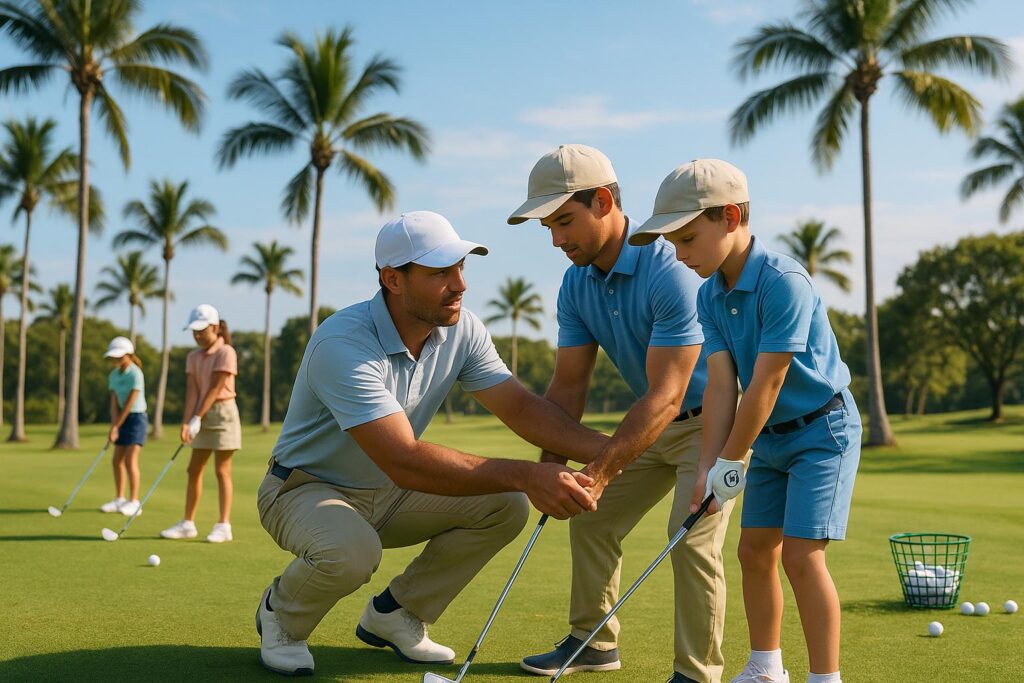
Florida is a top spot for junior golf, offering year-round training thanks to its warm weather and excellent facilities. Clinics cater to kids aged 4–18, from beginners to competitive players, with programs focusing on swing mechanics, putting, driving, rules, and etiquette. Many also teach life skills like sportsmanship and character. Programs like First Tee – Tampa Bay and Gator Junior Golf provide affordable options, scholarships, and even equipment for participants. Advanced academies like IMG Academy or IJGA prepare serious players for tournaments and college-level play. Whether your child is starting out or aiming for competition, Florida has a program to match their goals.
Leadbetter Junior Golf Academy
What Are Junior Golf Clinics in Florida?
Junior golf clinics are group sessions designed to teach young players the basics of golf, including its rules, etiquette, and on-course play. These sessions are led by PGA-certified or qualified coaches in a supportive and fun environment. Unlike private lessons, which center on one-on-one instruction, clinics bring together small groups of students – typically with a 6:1 to 8:1 student-to-instructor ratio – to encourage peer interaction, friendly competition, and teamwork through games and group activities. This format balances professional instruction with opportunities for kids to learn from and compete with their peers.
Clinics differ from school golf teams, which focus on competitive play and often require tryouts or prior experience. Instead, clinics emphasize skill-building and an introduction to the game, welcoming beginners and even providing equipment for those without their own clubs. These programs are ideal for kids who want to learn golf from the ground up without the pressure of competition.
Most clinics follow a structured curriculum over several weeks, typically meeting once a week for seven to ten weeks. Sessions usually last anywhere from 60 minutes to three hours, depending on the program level. For example, First Tee – Tampa Bay offers Group Lessons that run weekly for seven weeks with 60-minute sessions (8:1 ratio), while their Short Course Club includes three-hour sessions that combine instruction with on-course play.
Age Ranges and Skill Levels
Junior golf clinics usually group participants by age to ensure instruction and activities are age-appropriate. Common age brackets include:
- Ages 4–6: Introductory play
- Ages 6–8: Beginner fundamentals
- Ages 9–11: Intermediate skill development
- Ages 12–14: Advanced techniques
- Ages 15–18: Competitive preparation
For instance, Miami Beach Golf Club runs separate programs for ages 6–8 and 9–11, with sessions held twice a week from 4:00 p.m. to 6:00 p.m. at $350 per month. Gator Junior Golf offers a 7-level progression system for kids aged 4 to 17, allowing participants to advance as their skills improve. Similarly, Sailfish Sands Junior Academy starts at age 6 (or age 4 with a parent present).
Skill levels are typically divided into three tiers: beginner, intermediate, and advanced. Beginner programs focus on teaching the fundamentals, such as grip, stance, and swing mechanics. Intermediate sessions introduce on-course play and aim to build consistency. Advanced programs prepare students for competitive play and tournaments. At First Tee – Tampa Bay, students must achieve "Club Certification" through Group Lessons before moving on to the Short Course Club. To join the Advanced Team, participants must average scores of 55 or under on regulation courses measuring 2,500+ yards.
Main Training Areas
Junior golf clinics focus on developing well-rounded skills. Key training areas include:
- Full swing mechanics and analysis
- Short game instruction (chipping and pitching)
- Putting techniques
- Driving range practice
- Golf rules and etiquette
- Course strategy and management
- Pace of play and mental preparation
For example, First Tee – Tampa Bay’s Group Lessons emphasize driving range and short game practice, while their Advanced Team program incorporates golf rules, etiquette, and life skill lessons. Miami Beach Golf Club’s clinics, part of the Jim McLean Golf School, focus on developing athletic movements, full swing analysis, on-course instruction, and competitive games. Many clinics also include regular on-course play, allowing kids to apply their skills in real playing conditions, which aligns with modern coaching methods.
Sailfish Sands Junior Academy takes a structured approach with three levels – Player, Sport, and Champion – to guide juniors based on their goals. Whether a child wants to play casually with family or compete in tournaments, this system ensures they receive the right level of instruction and opportunities to grow.
Best Junior Golf Clinics in Florida
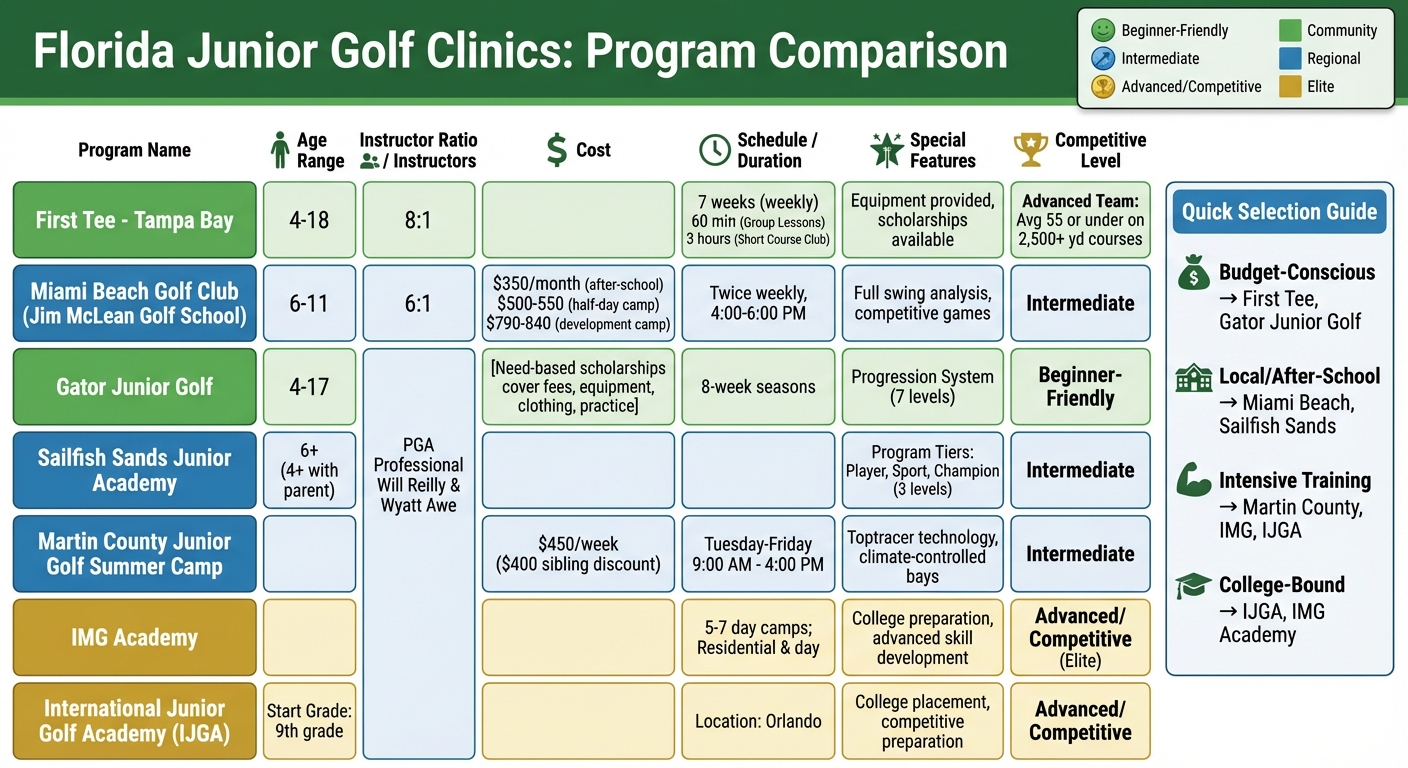
Florida Junior Golf Clinics Cost and Program Comparison Guide
Florida is home to a variety of junior golf clinics, offering everything from community-based programs to elite training academies. Here’s a closer look at some of the most notable options in Central Florida, South Florida, and advanced training centers.
Central Florida Programs
Gator Junior Golf hosts weekly classes for kids aged 4 to 17, organized into 8-week seasons. Their program includes a 7-level progression system, making it suitable for beginners and more advanced players. They also provide need-based scholarships that cover class fees, golf equipment, clothing, and practice access. Since its inception, Gator Junior Golf has introduced thousands of young players to the sport and awarded hundreds of scholarships to support their development.
The International Junior Golf Academy (IJGA) in Orlando focuses on preparing competitive junior golfers for college-level play. Their College Planning and Placement team starts working with students as early as 9th grade, helping many secure college placements before they even graduate high school.
For a fun and unique experience, Walt Disney World Golf in Orlando runs junior golf camps. For registration details, call (407) 454‑5096.
South Florida and Coastal Programs
In Palm Beach Gardens, the Sandhill Crane Golf Club offers programs tailored to players of all skill levels, from beginners to advanced golfers. To register, visit tenfore.golf/sandhillcrane or call (561) 630‑1164.
The Jim McLean Golf School at Miami Beach Golf Club provides after-school clinics and summer camps. Their summer camps, running from June 2 to August 8, 2025, include half-day all-level camps priced at $550 for non-residents and $500 for residents. For those seeking more advanced training, half-day development camps cost $840 for non-residents and $790 for residents. After-school clinics for ages 6 to 11 are also available at $350 per month.
The Sailfish Sands Junior Academy in Martin County offers a structured, three-tiered program (Player, Sport, Champion) for kids aged 6 and up – or as young as 4 if accompanied by a parent. The program is led by PGA Professional Will Reilly and instructor Wyatt Awe, ensuring quality coaching for young golfers.
Advanced Training Centers
IMG Academy is a top choice for juniors aiming to elevate their game. They offer 5–7 day residential and day camps that focus on college preparation and advanced skill development. As a premier sports academy, IMG attracts young golfers from across the U.S. and around the world.
For those looking for an intensive winter program, IJGA’s Winter Camp 2025 provides expert coaching and personalized training. While pricing details aren’t listed, this camp is designed for serious golfers who want to fast-track their development during the winter months.
From beginner-friendly community programs to elite training centers, Florida offers a wealth of opportunities for young golfers to grow their skills and compete at higher levels.

How to Choose the Right Clinic
Once you understand the different clinic formats and training options, the next step is finding the best fit for your child.
What to Look For
Start by identifying your child’s goals: Are they looking for recreational fun or aiming for competitive play? Also, consider location. A nearby clinic makes it easier to attend regularly, but don’t dismiss regional programs that might require a longer drive if they offer a better experience.
Pick a program format that works for your schedule and your child’s needs – whether it’s weekly sessions, half-day camps, or full-day academies. Look for clinics with a low student-to-instructor ratio, ideally between 6:1 and 8:1. For example, Miami Beach Golf Club’s Jim McLean program offers a 6:1 ratio, ensuring each student gets personalized attention.
Check the credentials of the instructors. Are they certified by the PGA or LPGA, or do they come from well-regarded programs? For instance, Sailfish Sands Junior Academy is led by PGA Golf Professional Will Reilly and instructor Wyatt Awe. Don’t hesitate to ask direct questions like, “What is your student-to-coach ratio for my child’s age group?” or “How much on-course time versus range time will my child have?”
Be mindful of all associated costs, including tuition, equipment, travel, and additional fees. If you’re working within a budget, look into community or nonprofit programs that offer financial assistance. For example, Gator Junior Golf provides need-based scholarships that cover class fees, equipment, and practice access.
Matching Programs to Your Goals
If your child is just starting out, look for programs that emphasize fun and the basics. Sailfish Sands Junior Academy is a good example. These programs are ideal for younger kids or beginners (around ages 4 to 10). They often feature shorter sessions, small group sizes, and provide equipment so you can gauge your child’s interest before committing to a full set of clubs.
For kids with competitive aspirations, focus on programs with clear scoring goals and performance standards. First Tee Tampa Bay, for instance, requires juniors to record three 9-hole scores averaging 55 or better on a regulation course (2,500+ yards) to qualify for their Advanced Team. These programs are best for older or more experienced juniors (ages 11 to 17) who are ready to compete. They often include weekly on-course play. If your child dreams of playing college golf, consider elite academies like IJGA, which help with college planning and tournament preparation, starting as early as 9th grade.
Next, we’ll dive into what a typical day at a junior golf clinic looks like.
sbb-itb-bcd8bdd
What Happens at a Junior Golf Clinic
Daily Schedule and Activities
Florida junior golf clinics typically follow a well-organized schedule, blending skill-building exercises with on-course play. Morning sessions, usually running from 8:00 or 9:00 AM to 12:00 PM, emphasize the basics – like driving range drills, swing mechanics, and short game techniques. For example, the Martin County Junior Golf Summer Camp offers full-day programs from 9:00 AM to 4:00 PM, Tuesday through Friday, and even features Toptracer technology in climate-controlled hitting bays for added precision and comfort.
Afternoons shift the focus to applying those skills in real play scenarios. Programs such as First Tee – Tampa Bay’s Short Course Club dedicate about an hour to lessons, followed by two hours of play on a short course with holes ranging between 60 and 120 yards. Beyond golf techniques, many clinics include lessons on fitness, rules, etiquette, and sportsmanship, helping young players develop both on and off the course. Weekly programs, like First Tee – Tampa Bay’s Group Lessons, meet once a week for seven weeks, offering 60-minute sessions with a student-to-instructor ratio of 8:1 for personalized attention.
These thoughtfully planned sessions lay a strong foundation, preparing juniors to tackle more advanced skills as they progress.
Training Methods and Equipment
Clinics take training to the next level with modern methods designed to sharpen each player’s abilities. Many Florida programs use tools like video swing analysis and launch monitors to identify areas for improvement and tailor drills accordingly. For instance, the Jim McLean Golf School at Miami Beach Golf Club combines full swing analysis with engaging activities to keep learning fun and effective. At the Junior Golf Performance Academy, students are grouped by age, gender, and skill level, maintaining a 5:1 ratio to ensure focused, individualized coaching.
To reinforce learning, clinics often incorporate competitive drills and games. Beginners who don’t own their own gear are covered too – organizations like First Tee – Tampa Bay and Gator Junior Golf provide equipment for participants. As players advance, instructors usually recommend investing in personal clubs to encourage consistent practice and growth.
Registration, Costs, and What to Bring
How to Register
Most junior golf programs in Florida make registration simple with online portals. Parents typically need to create an account, add their child as a participant, and choose preferred dates and locations before completing payment. Some academies, however, might require a phone call or submission of a request form. During registration, you’ll likely need to fill out liability waivers, provide medical details, and list emergency contacts.
Summer camps tend to fill up quickly, especially for June and July sessions, so it’s best to register 4–8 weeks in advance. Many programs keep waitlists and will notify you if spots open, so make sure your contact information is up to date. Payment policies vary – some require full tuition upfront, while others allow deposits or monthly payments for longer-term programs. Be mindful of registration deadlines, potential late fees, and the refund policy. Cancellations close to the start date often result in a credit for future sessions rather than a cash refund.
Cost Information and Budgeting
The cost of junior golf programs can vary based on location, program length, and skill level. For example, during the 2024–2025 season, Martin County’s Junior Golf Summer Camp charged $450 per week for full-day sessions (Tuesday–Friday, 9:00 AM–4:00 PM), with a sibling discount lowering the rate to $400 for additional children. Miami Beach Golf Club offered half-day summer camps at $500 per week for residents and $550 for non-residents. Community-based programs like First Tee – Tampa Bay are often more affordable, maintaining small class sizes (usually an 8:1 student-to-instructor ratio) and sometimes providing equipment for juniors without clubs.
When budgeting, keep in mind additional costs for equipment, such as clubs, shoes, and apparel, if not included in the program. Full-day camps often require participants to bring their own lunch and snacks unless meals are provided. If you’re traveling from out of town for a camp, factor in lodging and transportation expenses, especially for multi-week or residential programs. For juniors planning to compete, don’t forget to budget for tournament entry fees and related travel costs.
Some programs offer financial assistance. For instance, Gator Junior Golf provides need-based scholarships, donated clubs and clothing, and free practice opportunities. Many facilities also offer discounts for siblings, early registration, or residents, and some allow payment plans to spread out costs. For extra practice at home, resources like How To Break 80 provide free drills and guides to help juniors sharpen their skills.
Once you’ve handled registration and budgeting, it’s time to prepare for the clinic experience.
What to Pack and Prepare
Every junior golfer should bring a properly sized set of clubs, including a driver or fairway wood, a few irons, a wedge, and a putter, all in a lightweight bag. Additionally, pack golf balls, tees, at least one glove, and a small towel. If your child doesn’t own clubs yet, check if the program offers loaner sets – many entry-level or nonprofit programs do. Coaches can also help recommend the right club length and flexibility to suit your junior’s needs.

Florida’s heat calls for the right attire. Dress your junior in collared shirts or golf-specific tops, paired with golf shorts or slacks, and nonmetal-spiked golf shoes. Moisture-wicking fabrics are ideal to keep them cool, and don’t forget essentials like a hat, sunscreen, sunglasses, and light rain gear. Pack extra socks for comfort and a refillable water bottle to keep them hydrated throughout the day. If your child takes any medications, make sure they’re packed, and ensure the program has updated emergency contact information on file.
With these preparations, your junior golfer will be ready to hit the greens with confidence!
Conclusion
Florida is home to junior golf clinics designed to meet a wide range of skill levels and aspirations. Finding the right one starts with understanding your child’s abilities and goals, then matching them with a program that provides personalized guidance and a clear path for growth.
Take time to evaluate your child’s needs and compare three to five local programs. Look at factors like age group suitability, student-to-coach ratios (ideally 8:1 or better), development opportunities, and overall costs – including equipment, travel, and tournament fees. For beginners focused on fun and learning the basics, a community-based program like First Tee or a local municipal clinic might be a great fit. On the other hand, a young golfer with competitive ambitions may thrive in an advanced academy that emphasizes tournament preparation. Don’t hesitate to reach out to program directors with questions about progression and competition, and if possible, arrange a trial session or visit the facility to get a feel for the environment.
The best clinic isn’t necessarily the most expensive or well-known – it’s the one that aligns with your child’s personality and level of commitment. Quality programs adapt their teaching to each junior’s unique journey. For additional support, resources like How To Break 80 provide free advice on key skills like putting, driving, and swing mechanics, which can enhance formal training.
With careful selection and ongoing encouragement, Florida’s junior golf clinics can help your child develop their skills, build confidence, and form lasting friendships – all while nurturing a lifelong love for the game. Thanks to Florida’s year-round sunshine and variety of programs, there’s no better place to start their golfing journey.
FAQs
What should I look for when selecting a junior golf clinic in Florida?
When selecting a junior golf clinic in Florida, it’s important to weigh a few key factors. Start by looking into the instructors’ experience and qualifications – you want your child to learn from skilled professionals who know how to teach young golfers effectively. Next, consider whether the clinic is designed for your child’s age group and skill level, ensuring the program matches their needs and abilities.
A well-rounded clinic should strike a balance between developing golf skills, offering fun activities, and providing chances to compete in tournaments. Also, take into account the location and schedule to see if it works for your family’s routine. Don’t forget to evaluate the cost to make sure it fits your budget. Lastly, reading reviews or testimonials from other parents can give you valuable insights to make a confident choice.
Are there scholarships or financial aid options for junior golf clinics in Florida?
Yes, plenty of junior golf clinics in Florida provide scholarships or financial assistance to ensure more kids can join in. These options might come from the clinics themselves, local golf groups, or even community sponsors.
To learn more, reach out to the clinic organizers or look into programs run by state or regional golf associations. Make sure to ask about deadlines and eligibility rules, as they often differ depending on the program.
How do junior golf clinics in Florida help kids get ready for competitive play?
Junior golf clinics in Florida aim to help young golfers develop key skills and prepare for competitive play. These programs focus on the basics – like swing mechanics, putting, and driving – while also covering strategy, course management, and maintaining mental focus.
Many clinics also offer kids the chance to join practice tournaments or scrimmages, giving them hands-on experience in competitive environments. Instructors place a strong emphasis on building confidence and promoting sportsmanship, ensuring that participants are ready both technically and mentally to succeed in tournaments.
Related Blog Posts
- Top 5 Regional Junior Golf Clinics
- 10 Signs Your Junior Golfer Needs Advanced Training
- Ultimate Guide to Junior Golf Plans
- Ultimate Guide to Elite Junior Golf Training
