
Improving your putting can lower your golf scores faster than any other skill. Portable putting stroke trainers are compact tools designed to help you practice anywhere, providing instant feedback on stroke path, face angle, alignment, and accuracy. These tools work for all skill levels and can make a noticeable difference with just a few minutes of daily practice. Here’s a quick look at seven of the best options:
- The Putting Thing by WhyGolf: Combines alignment rails and adjustable gates for precise feedback. Works indoors and outdoors. Price: $69.99–$79.99.
- Putting Arc T or MSIII: Guides your putter along a natural arc. Compact and easy to carry. Price: $49.99–$89.99.
- Eyeline Golf Tour Roll Mirror Trainer: Uses dual mirrors to improve alignment and stroke path. Lightweight and portable. Price: $79.95.
- PUTTR AI Powered Putting Mat: Tracks metrics like ball path and speed using high-tech sensors. Best for indoor use. Price: $599.00 (+$19.99/month subscription).
- HackMotion Plus Wrist Sensor: Tracks wrist angles and provides real-time feedback. Works indoors and outdoors. Price: $495.00.
- Pure Truth Trainer: Combines rails, strings, and gates for detailed feedback. Foldable for portability. Price: $299.00.
- Simple Gate-Style Trainer: Affordable and effective for alignment and start-line accuracy. Price: $20.00–$35.00.
These tools cater to different needs and budgets, from basic alignment aids to advanced AI-powered systems. Choose one that fits your practice routine and skill level to start sinking more putts today.
Quick Comparison
| Trainer | Feedback Type | Price (USD) | Portability | Use Environment |
|---|---|---|---|---|
| The Putting Thing by WhyGolf | Adjustable gates, alignment rail | $69.99–$79.99 | High | Indoor/Outdoor |
| Putting Arc T or MSIII | Arc guide, alignment lines | $49.99–$89.99 | High | Indoor/Outdoor |
| Eyeline Golf Tour Roll Mirror | Dual mirrors, alignment lines | $79.95 | High | Indoor/Outdoor |
| PUTTR AI Powered Putting Mat | High-tech sensors, ball tracking | $599.00 (+$19.99/mo) | Moderate | Indoor |
| HackMotion Plus Wrist Sensor | Wrist angle tracking | $495.00 | High | Indoor/Outdoor |
| Pure Truth Trainer | Rails, strings, gates | $299.00 | Moderate | Indoor/Outdoor |
| Simple Gate-Style Trainer | Dual gates | $20.00–$35.00 | High | Indoor/Outdoor |
Focus on consistent practice with the right tool to see real improvement in your putting game.
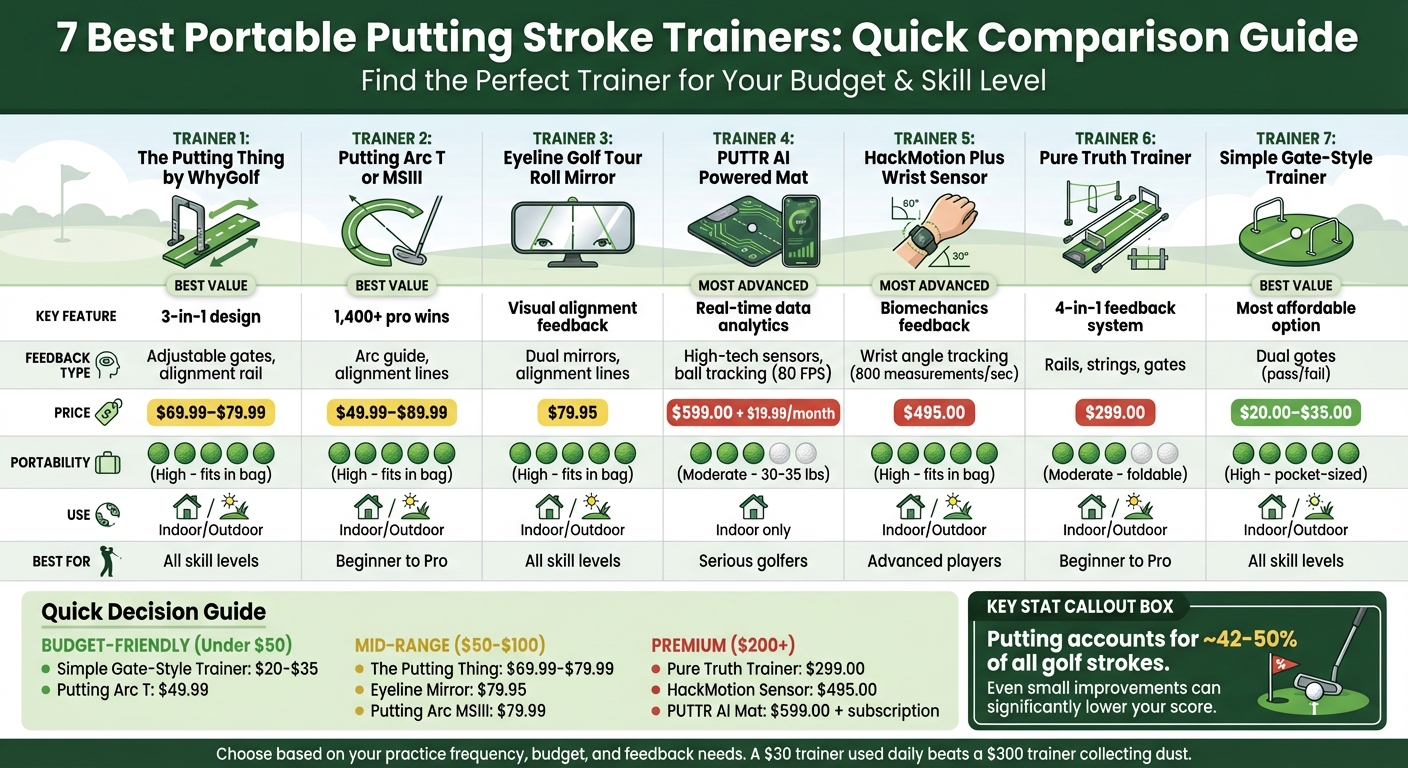
Portable Putting Stroke Trainers Comparison: Features, Prices & Best Use Cases
5 BEST Putting Aids Reviewed by a +2 Handicap & Golf Writer
What To Look For In A Portable Stroke Trainer
Pick a trainer that delivers clear feedback and fits easily into your routine. As The Golf Sensei wisely says:
The best putting aid is the one you’ll actually use regularly. A simple string line system used daily will improve your putting more than an expensive high-tech system used occasionally.
Figure out the type of feedback you need. For visual alignment, mirrors are a great choice. If you’re working on consistency, arc and rail trainers provide tactile guidance. Gate-style trainers help you check your start line, while tools like the Devil Ball highlight face misalignment by physically reacting to errors. Since face angle influences up to 90% of your putt’s start direction, the feedback you choose makes a big difference.
Make sure the trainer encourages regular use with a simple, practical design. Compact options with quick setups – taking just seconds – are more likely to become part of your routine than larger, cumbersome systems. Look for tools that easily fit in your golf bag, such as mirrors, gates, or small sensors, so you can use them during warm-ups on the practice green.
For American golfers, versatility is key – your trainer should work both indoors on carpets and outdoors on greens. Features like weighted feet and tee slots ensure you can practice all year, even during harsh winters.
Prices vary based on complexity. Basic mirrors and gates cost around $15 to $40, mid-range options like arcs and laser trainers fall between $50 and $150, and premium electronic sensors start at $170 or more. But remember, a $30 trainer you use every day will help you far more than a $300 one that gathers dust. Match your investment to how often you plan to practice.
1. The Putting Thing by WhyGolf

The Putting Thing combines three training tools into a sleek 1/16" aluminum device. It serves as a stroke path trainer with an alignment rail, a dual-gate system for face angle feedback, and alignment aids for setup – all in one compact unit.
Stroke Feedback Type
The dual-gate system provides immediate feedback on your putter path and ball start. It features six putter gate settings and four ball gate difficulty levels. As your skills improve, you can adjust the gates to make practice more challenging. The alignment rail snaps on for precise setup and can be removed once you’ve perfected your line. This design focuses on correcting pushes and pulls by encouraging a square face at impact. Whether you’re practicing indoors or outdoors, this tool is designed to refine your stroke.
In October 2025, golfer Matthew Keyr shared how the Putting Thing transformed his game, helping him go from losing 1.5 strokes on the greens to gaining nearly 1.0 stroke per round compared to a scratch player. Another user, Robert Warren, shared:
When I first started using the Putting Thing, I could barely get the putter head and ball through gate setting 1, now I can consistently do it on setting 3 or 4.
Portability
Weighing next to nothing, the device comes with a nylon carry bag that easily fits into any golf bag. At just 1/16" thick, it takes up minimal space and is even compact enough for travel. Despite its slim profile, the aluminum alloy construction makes it durable and long-lasting.
Indoor Versus Outdoor Use and Minimum Space Needed
The Putting Thing’s low-profile design works perfectly on indoor carpets or putting mats without creating any awkward edges for the ball to roll over. For outdoor use, it includes four tee holes around the edges so you can anchor it securely to the green, preventing it from shifting if struck accidentally. All you need is enough room for a standard putting stroke and a few feet of ball roll – no large practice area required.
Price Range in USD
The Putting Thing is priced at $99.99 but often sells for $69.99 to $79.99. This places it in the midrange price category. With an impressive 4.74/5 rating from 414 reviews, users frequently highlight its value as a versatile training tool. Matt Saternus, Editor In Chief at Plugged In Golf, describes it as:
an intuitive, easy to use trainer that can help you… dial in your start line and putter path.
2. Putting Arc T or MSIII
The Putting Arc uses the time-tested Apollonius formulas to help guide your putter along an inside-to-square-to-inside path. Since its debut in 2002, it has been credited with over 1,400 professional tournament wins. Even Tommy Armour III shared his success story:
I used the Putting Arc for a short period of time and made a million dollars because of it.
Stroke Feedback Type
The Putting Arc is designed to provide clear and precise feedback for improving your stroke. It features guiding lines to help adjust your clubface and a center line to confirm proper alignment. For those seeking additional feedback, the MS-3D model includes an adjustable mirror to monitor head, shoulder, and eye alignment. Practicing for just 5–10 minutes daily, with a slight half-inch offset, can fine-tune your stroke path.
Portability
Portability is a key feature of the Putting Arc models. The T3 Travel model is compact, measuring 21 inches and weighing only 9 ounces, making it easy to slip into your golf bag. The MSIII is larger at 33 inches and weighs 2 pounds, offering stability during practice while remaining travel-friendly. Meanwhile, the MS-3D weighs 2.2 pounds and combines portability with the added functionality of a mirror. All models are ready to use right out of the box, with no assembly required.
Indoor Versus Outdoor Use and Minimum Space Needed
The MSIII and MS-3D models are versatile and can be used on hard floors or carpets, thanks to their non-slip pads. They also come with tee holes for outdoor anchoring. On the other hand, the T3 and T4 models are specifically designed for outdoor use and need to be secured with tees. In terms of space, the T3 is ideal for putts ranging from 5 to 10 feet, while the MSIII and MS-3D accommodate a full putting stroke.
Price Range in USD
The Putting Arc offers options for various budgets. The T3 and T4 models are priced at $49.99 each, the MSIII at $79.99, and the MS-3D at $89.99. Recognized for its effectiveness, Golf Digest named it the top putting trainer in August 2004, and it boasts a perfect 5.0/5 rating. With proven results and thoughtful design, the Putting Arc remains a leading choice for portable putting practice.
3. Eyeline Golf Tour Roll Putting Mirror Trainer
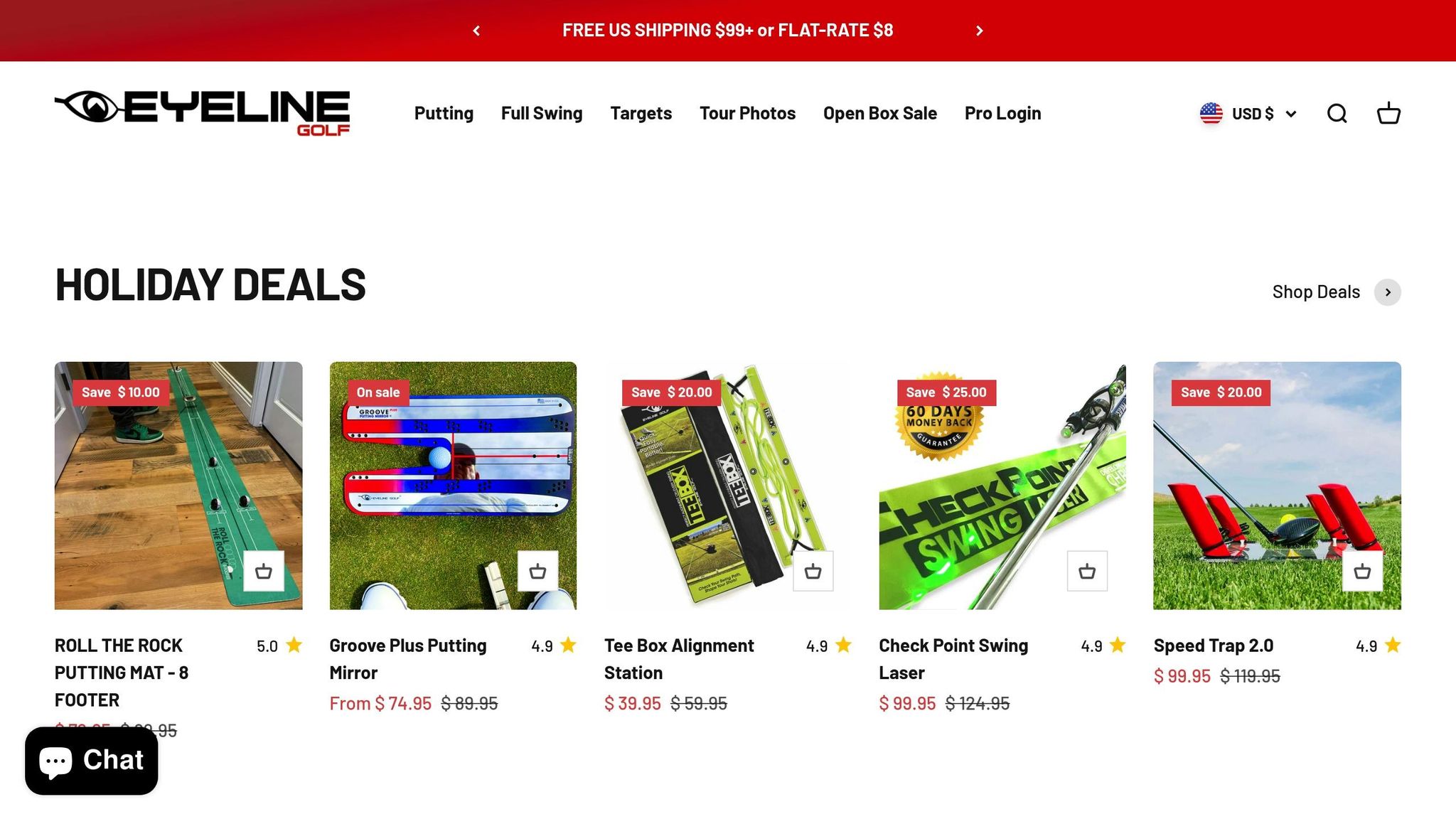
The Eyeline Golf Tour Roll is a putting trainer designed with two acrylic mirrors to provide instant feedback on both your stroke mechanics and setup. It combines essential elements of putting improvement into one device, helping golfers refine their technique. One mirror is positioned at the ball to ensure your eyes are directly over it, while the second mirror, located behind the template, helps you check if your shoulders are aligned squarely to the target. This dual-mirror system is a practical tool for improving alignment and stroke path accuracy.

Stroke Feedback Features
The Tour Roll stands out with its thoughtfully designed template, which guides your putter along a natural arc. This arc corresponds to a standard 70-degree lie angle, ensuring your putter face stays square at impact. Unlike straight-line trainers, this design mirrors the natural motion of a putting stroke. For golfers looking to challenge themselves further, the trainer includes putting posts that can be set up to create gates. With three adjustable gate widths, you can practice precision and consistency in your stroke.
Easy to Carry
At 24 x 7 inches, the Tour Roll is compact enough to fit into most standard golf bag side pockets. Made from lightweight acrylic, it’s easy to transport and comes with a protective carry bag. However, some users have mentioned that the bag feels a bit snug when storing all 12 included putting posts.
Versatility and Space Requirements
This trainer works well on a variety of surfaces, including hardwood floors, carpet, turf, or outdoor greens. It only requires a 24 x 7-inch area, making it ideal for practicing at home or on the go without needing a full-size putting green. The 12 white putting posts included in the kit are primarily designed for indoor use, making it a convenient option for year-round practice.
Price and Availability
The Eyeline Golf Tour Roll is priced at $99.95, though it’s often available at a discounted price of $79.95. The package includes the mirror trainer, 12 putting posts, a carry bag, and a 60-day improvement guarantee. It also boasts a perfect 5.0/5 star rating from users. Currently, the trainer is made for right-handed golfers, but a left-handed version is reportedly in the works.
4. PUTTR AI Powered Putting Mat

The PUTTR AI Powered Putting Mat combines high-speed cameras with computer vision to provide detailed insights into your putting performance. It tracks metrics like ball path, face angle, launch angle, and ball speed in real time. Operating at an impressive 80 frames per second, the system delivers a live ball trace, helping golfers identify stroke errors instantly. Additionally, the app calculates a "putting handicap" based on your last 200 putts, comparing your performance to PGA Tour averages.
Stroke Feedback Type
This system offers detailed feedback through various modes. In "The Lab" mode, each putt is scored for accuracy and speed, highlighting metrics such as whether the ball exceeded 122% of the ideal speed or landed perfectly centered. Matt Saternus, Editor In Chief at Plugged In Golf, shared his thoughts:
The PUTTR Smart Putting Green is the most fun putting trainer I’ve ever tested. It takes gamification to another level.
The wealth of data provided makes this trainer a standout option for golfers looking for portable, high-level analysis.
Portability
Despite its advanced features, the PUTTR system is designed for easy transport. It comes in a compact 24" x 12" x 18" aluminum box with built-in handles and weighs between 30 and 35 pounds. The mat, ball return, and power cord fit neatly inside the box, and setup is quick, taking just 1–2 minutes. However, it’s worth noting that the unit is too large to fit in a standard golf bag or as an airline carry-on.
Indoor Use and Space Requirements
This trainer is tailored for indoor use and offers precise feedback in controlled lighting conditions. Bright spotlights or direct sunlight can disrupt the computer vision tracking system. To set it up, you’ll need a flat space measuring 12 feet by 2 feet. The mat replicates tour-level green speeds with a Stimpmeter rating of 11 to 11.5 and provides 27 tee positions ranging from 3 to 11 feet.
Price Range
The PUTTR system is priced at $599.00 and has received an average rating of 4.63/5 stars from 30 reviews. To unlock its advanced features, users need a subscription to Puttr Club, which costs $19.99 per month or $199.99 annually. While the system is praised for its data-driven insights, some reviewers have highlighted its high price, the necessity of a subscription for full functionality, and the loud noise of the ball return mechanism. These factors position the PUTTR as a premium option for serious golfers seeking a cutting-edge training tool.
5. HackMotion Plus Wrist Sensor (Putting Mode)
The HackMotion Plus Wrist Sensor takes putting practice to a new level by delivering precise wrist angle tracking at an impressive 800 measurements per second. Unlike traditional tools that focus on alignment or ball roll, this lightweight sensor attaches to your lead wrist and dives deep into the biomechanics of your stroke. It tracks flexion/extension (affecting putter loft), radial/ulnar deviation (impacting the putter path and plane), and rotation (maintaining face angle stability). This makes it a valuable addition to other portable training aids, offering detailed data to refine your technique.
Stroke Feedback Type
This sensor provides immediate feedback through both audio and visual cues. Vibration alerts signal when your wrist angles stray outside a pre-set "green zone". Plus, its built-in metronome helps you maintain a consistent 2:1 backstroke-to-downstroke rhythm. One user encapsulated its impact perfectly:
For the first time in my 82 years I feel like I am learning how to use my left wrist in the golf swing… HackMotion gives drills on how to get the right feel and how to monitor it.
- Tedeno, Verified User
The accompanying app sets specific targets, such as keeping flexion/extension within 2°, helping you achieve a more consistent stroke.
Portability
The HackMotion Plus is built for convenience. It takes less than 60 seconds to set up, making it ideal for quick practice sessions. Its lightweight design fits seamlessly into any golf bag or carry-on, and it comes with a carry case, glove clip, strap, and USB-C charging cable for added portability.
Indoor Versus Outdoor Use and Space Requirements
This device works just as well on a home carpet as it does on the green. Drills like the Lag Putting Towel Drill may require anywhere from 6 to 15 feet of space. You can also practice "no-ball" reps to focus solely on your motion patterns, without worrying about ball flight or green speed. Compatibility with both iOS and Android devices ensures flexibility wherever you practice.
Price Range
At $495, the HackMotion Plus falls into the midrange-to-premium category. With a 4.4/5 star rating from over 3,500 reviews, users frequently highlight its ease of use and the way it turns coaching advice into actionable, physical feedback. The device also comes with a 2-year warranty and a 30-day risk-free trial, giving you peace of mind with your purchase.
sbb-itb-bcd8bdd
6. Pure Truth Trainer (String or Rail Based Portable Stroke Station)
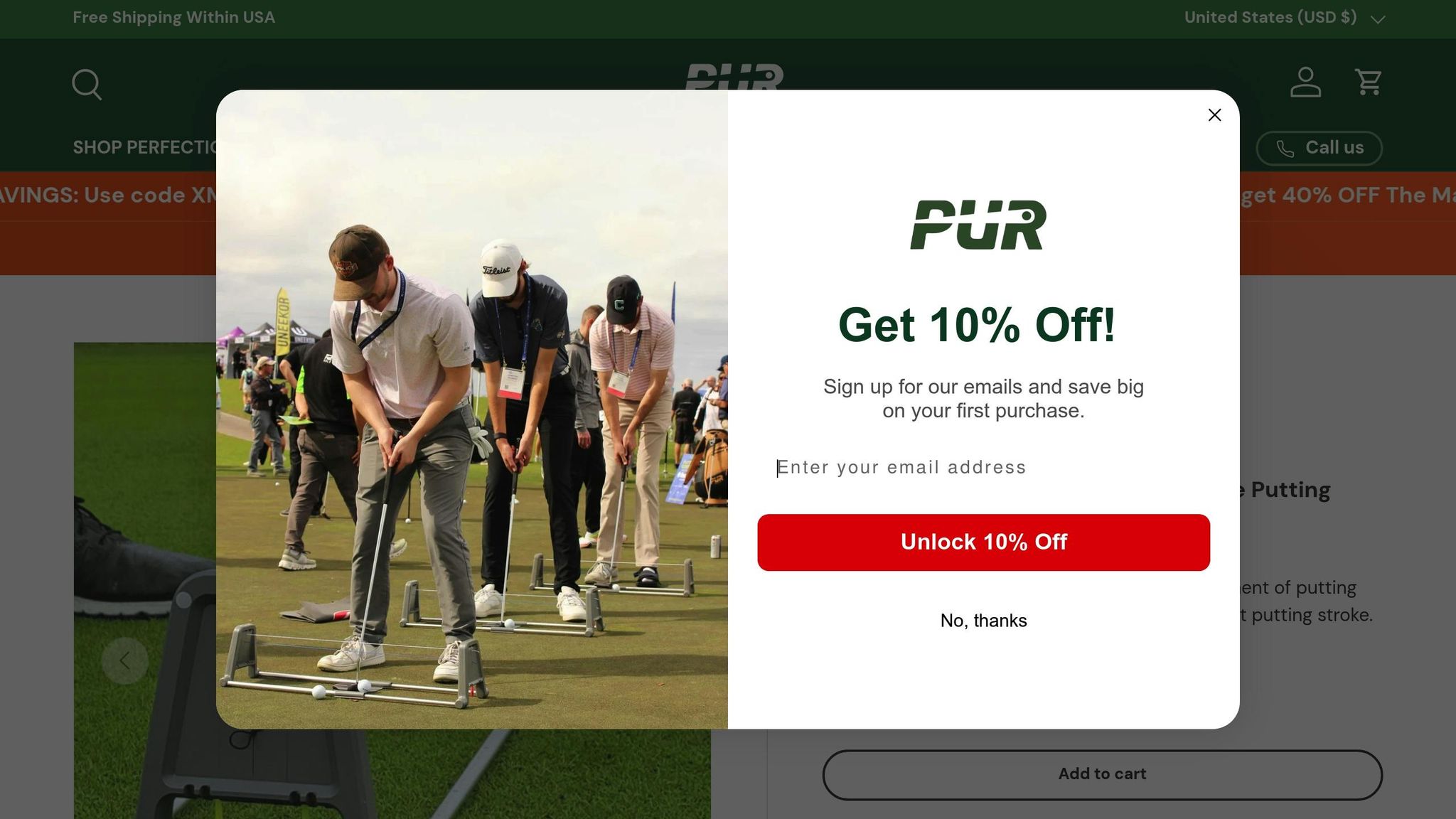
The Pure Truth Trainer is a versatile stroke station that combines adjustable rails, dual strings, and customizable gates. Unlike tools that focus on just one aspect of putting, this trainer tackles stroke path, face angle, eye alignment, and tempo simultaneously. Recognized as a "must-have" by PGA.com, it’s designed to provide precise feedback, helping golfers refine their putting technique.
Stroke Feedback Type
This trainer offers feedback across four critical areas of putting. The adjustable rails allow you to set up for a straight-back, straight-through stroke or experiment with different arcs. The track is aligned perpendicular at address to ensure a square putter face. Adjustable gates provide immediate feedback on your impact, signaling if your putter face isn’t square.
It also features adjustable stakes to define the limits of your backstroke and follow-through, encouraging a compact, consistent tempo. The dual-string system (with white and blue strings) helps with eye alignment – when the white string fully covers the blue one, your eyes are perfectly positioned over the ball. Impressively, alignment precision is measured within 1 millimeter.
Joe Hallett, the 2024 PGA National Teacher and Coach of the Year, praised the trainer, saying:

No matter your style, you WILL putt better; that’s PUR Genius!
Together, these features aim to enhance consistency and alignment, two key factors for better putting.
Portability
The Pure Truth Trainer is designed with convenience in mind. Its telescopic track folds down, cutting its storage size in half. It comes with a dedicated carrying case and unfolds in just two seconds. However, it’s too large to fit in a standard golf bag. For golfers looking for a more compact option, the manufacturer offers the Pure Truth Prepare for $149.00, which is small enough to fit in a golf bag and ideal for pre-round warm-ups.
Indoor Versus Outdoor Use and Space Requirements
This trainer works seamlessly on various surfaces, including carpet, putting mats, and outdoor practice greens. Built-in bubble levels on both ends ensure it stays level, even on uneven ground. While no specific minimum space is required, it’s designed to fit standard indoor putting mats (usually 6–11 feet long) and outdoor greens, making it adaptable to most practice setups.
Price Range
Priced at $299.00, the Pure Truth Trainer is in the premium range. It boasts a 4.83/5 rating based on 35 reviews on the manufacturer’s website. The adjustable gates offer four levels of difficulty, making it suitable for golfers of varying skill levels. One verified buyer, T. Leary, shared their experience:
The feedback I got from using this tool was a little overwhelming, and oh so helpful.
This trainer is built for golfers who are serious about improving their putting game.
7. Simple Gate-Style Portable Stroke Trainer
Gate-style putting trainers are an affordable option, typically costing between $20.00 and $35.00. Popular models like Perfect Putting Gates ($29.99), GoSports Putting Gates ($29.99), and the SKLZ Putt Gate ($31.99) provide instant feedback through a dual-gate system without straining your budget.
Stroke Feedback Type
The dual-gate design is all about immediate, clear feedback. The back gate helps align your takeaway and ensures square contact at impact, while the front gate checks the ball’s start line. If your putter face isn’t square at impact, the ball will clip the sides of the gate instead of rolling smoothly through the center. This pass/fail system makes it easy to spot issues with your stroke path or face angle. Some versions also narrow the space for your putter head, helping you refine your stroke by targeting the sweet spot.
Portability
One of the standout features of these trainers is their portability. Made from lightweight plastic, most models fold flat or fit neatly into the side pocket of a golf bag, making them easy to carry around – even for travel practice. SKLZ describes its Putt Gate as "small, lightweight, and compact", making it ideal for both on-course and indoor practice sessions.
Indoor Versus Outdoor Use and Space Requirements
These trainers are versatile enough to work on nearly any surface. For indoor use, look for models with weighted feet or attachable legs to keep them steady on carpets or office floors without stakes. Outdoors, many gates come with tee slots for securing them into the turf. You only need a flat space of 3 to 6 feet to practice effectively, making them perfect for small areas like apartments or hotel rooms.
Price Range
Ranging from $20.00 to $35.00, these trainers offer great value for golfers looking to improve their stroke fundamentals. Many sets include multiple gate widths (small, medium, and large), allowing you to increase the challenge as your accuracy improves. For anyone wanting to focus on putting practice without spending a fortune, gate-style trainers are a smart and affordable choice.
Comparison Table
Here’s a quick breakdown of each trainer’s feedback type, skill level, price, portability, and usage environment:
| Trainer | Feedback Type | Skill Level | Price (USD) | Portability Rating | Environment |
|---|---|---|---|---|---|
| The Putting Thing by WhyGolf | Adjustable Gates | Suitable for All Levels | Reasonable | High (Fits in a Bag) | Indoor/Outdoor |
| Putting Arc T or MSIII | Physical Rail (Arc) | Beginner to Pro | ~$75.00 | High (Fits in a Bag) | Indoor/Outdoor |
| Eyeline Golf Tour Roll Putting Mirror Trainer | Visual (Mirror/Lines) | Suitable for All Levels | ~$39.99 | High (Fits in a Bag) | Indoor/Outdoor |
| Pure Truth Trainer (String or Rail-Based Portable Stroke Station) | Rails, Strings, Gates | Beginner to Pro | $299.00 | Moderate (Several Components) | Indoor/Outdoor |
| Simple Gate-Style Portable Stroke Trainer | Physical Gates (Pass/Fail) | Suitable for All Levels | $20.00-$35.00 | High (Pocket-Sized) | Indoor/Outdoor |
Prices range from $20.00 for simple gate trainers to $299.00 for more advanced, multi-component systems. Most options are designed to be portable and versatile, making them ideal for both indoor and outdoor practice. Up next, discover how to effectively incorporate these tools into your training routine.
How To Use These Trainers In Your Practice Routine
When it comes to practice, consistency and focus always win over aimless repetition. Dedicate 10 minutes a day to alignment drills, and add a 30–60 minute session each week to work on distance control and breaking putts. Considering putting makes up about 42% of all shots during a round, even short, focused practice sessions can lead to noticeable improvements over time. These small steps build the foundation for a routine that delivers results.
Focus on four essential putting skills to get the most out of your training:
- Use mirrors to check your eye position and ensure proper alignment and setup.
- Employ tools like the Putting Arc to guide your putter along a consistent stroke path.
- Incorporate gate-style trainers to gain immediate feedback on your start line.
- Try the "Manila Folder" drill for distance control – place an object 18 inches behind the hole and aim to have your putts stop within that zone.
Track your progress as you practice. On average, a 14-handicap golfer takes about 35 putts per round, while scratch golfers average 31.5. To improve, start close to the hole – make five putts in a row from three feet before moving back, and work up to making ten in a row. For lag putting (40–60 feet), count how many of your ten attempts finish within a 34-inch zone around the cup. As your accuracy improves, challenge yourself by narrowing the gates on adjustable trainers.
Adapt your practice to your environment. Indoors, use portable tools like string lines or small mirrors that fit in compact spaces, such as simulator bays. Practice one-handed putting with your dominant hand for 12 reps to refine feel and impact before adding your second hand. Outdoors, create an "Around the World" setup with putts from 4–5 feet at varying angles to simulate pressure situations. If you’re practicing on a flat indoor mat, use foam "break pads" to mimic slopes and practice breaking putts.
Now that you’ve got the drills down, let’s explore how to integrate them into a broader improvement plan.
Where How To Break 80 Fits Into Your Putting Improvement Plan
Portable trainers are great for giving you physical feedback, but they don’t always explain why you’re missing putts. That’s where How To Break 80 steps in with its Precision Putting Video Course. Led by Coach Bobby, this 60-minute course ($49.00) introduces the Precision Putting System, a structured method that’s been used by pros at elite clubs around the world. The focus is on turning instruction into real, measurable improvements on the green.
The course breaks things down into 7 simple Putting Tricks that take only 20 minutes a week to practice. These techniques could help you shave an average of 9 strokes off your game. For example, the "George Washington" quarter drill helps you align your putter, making it a perfect pairing with rail-based trainers. Another standout drill is the "Three-footer Streak", where you sink 5, then 10, then as many consecutive three-foot putts as possible. When paired with gate-style trainers, this drill helps simulate tournament pressure, giving you a solid mental edge. By combining these drills with your portable trainers, you can create a seamless plan for improving your putting.
The course also ties in perfectly with the tools mentioned earlier, like the HackMotion sensor and putting mirrors. It introduces 10 Truths About Putting, which reinforce core principles while complementing the feedback from those tools. One key technique is the "metronome" rhythm – tick-tock, back-forward – which helps you develop a consistent stroke. This method works especially well with tools like the Putting Arc. For lag putting, there’s a "safe-zone" game where you aim to land putts inside a 34-inch circle from distances of 40, 50, and 60 feet. It’s an ideal match for AI-powered mats like PUTTR, which provide instant feedback on pace and distance control.

Considering that putting accounts for about 40% of all golf shots, combining this structured course with regular use of portable trainers offers a complete system for improvement. The course is available in both streaming and DVD formats, making it easy to revisit lessons and integrate them into your practice sessions.
Conclusion
Portable putting stroke trainers provide an effective way to sharpen your skills on the green. Considering that putting makes up nearly 50% of all strokes in a round of golf, even minor improvements can have a noticeable impact on your score. The key is to select a tool that aligns with your specific needs. For beginners, alignment mirrors and basic gate trainers are excellent for building solid fundamentals. More experienced players can benefit from advanced tools like narrow gates or wrist sensors, which offer detailed feedback to refine technique. This focused approach can lead to quicker improvements in your game.
Another advantage? These tools are portable, so you can practice virtually anywhere – whether you’re at home, on the green, or even at the office. Nick Heidelberger, Senior Editor at GolfLink, captures this perfectly:
If the full swing is a house of cards that can crumble when any one of a hundred movements falls out of sync, the putting stroke is a simple movement that can be engrained and maintained.
Because of this simplicity, consistent and structured practice with the right trainer can yield faster results compared to other areas of your game.
To maximize the benefits, pair your trainer with a clear improvement plan. Start by identifying your biggest putting challenge – whether it’s setup, stroke path, face angle, or pace control – and choose a tool that addresses that specific issue. Then, commit to focused practice sessions to build muscle memory and correct weaknesses. Whether you go for an affordable gate trainer or a high-tech AI-powered putting mat, the true progress comes from consistent use. Incorporate these tools into your overall practice routine, and you’ll be on your way to lasting improvements.
FAQs
What should I look for in a portable putting stroke trainer?
When picking a portable putting stroke trainer, there are a few important things to keep in mind to make sure it suits your needs. Start with size and portability – the trainer should be lightweight and compact enough to slide into your golf bag or suitcase, so you can practice wherever you go. Next, think about the type of feedback it offers. Tools like lasers or mirrors can help you with alignment and stroke path, while tactile or auditory cues are great for refining your feel and technique.
You’ll also want to check for adjustability and durability. Trainers that let you tweak settings – like gate widths or angles – can grow with you as your skills improve. A solid build and a reliable, long-lasting battery are crucial if you plan to practice often. Lastly, don’t overlook the price-to-value ratio. Make sure the trainer offers the features you need at a price that fits your budget. For more insights and guides to sharpen your putting game, check out the resources on How To Break 80.
What are the main differences in feedback and functionality among portable putting stroke trainers?
Portable putting stroke trainers come in different styles, each designed to improve your stroke by offering specific types of feedback. These can generally be grouped into three main categories: visual aids, tactile/mechanical guides, and digital/sensor-based tools.
- Visual aids: These rely on tools like laser lines to highlight alignment and stroke path, giving you immediate visual feedback. They’re lightweight and quick to set up, making them perfect for use almost anywhere.
- Tactile/mechanical guides: These provide physical feedback through features like rails or resistance mechanisms. They’re designed to help you feel the proper stroke arc or maintain the right tempo during your swing.
- Digital/sensor-based tools: Using motion-capture technology and apps, these tools analyze metrics such as club path and face angle. They deliver detailed insights and often include personalized drills to refine your technique.
The best trainer for you depends on whether you prefer visual feedback, hands-on guidance, or detailed performance data. Whichever you choose, all of these options are portable and tailored to make your putting practice more effective, wherever you are.
Can portable putting stroke trainers be used indoors and outdoors effectively?
Yes, most portable putting stroke trainers are made to work effortlessly both indoors and outdoors. Whether you’re honing your skills on a carpet, an indoor putting mat, or an actual grass green, these tools are built to adapt. Many are lightweight and easy to carry, making them ideal for practice anytime, anywhere – rain or shine.
These trainers usually just need a flat surface and a small amount of space, giving golfers the flexibility to work on their stroke wherever they are. Combine a portable trainer with drills and tips from resources like How To Break 80, and you’ll be on your way to developing a consistent putting stroke and sharpening your game.
Related Blog Posts
- Top 7 Laser Putting Aids for 2025
- Do Stroke Speed Trainers Improve Distance Control?
- Top 5 Real-Time Putting Stroke Analyzers 2025
- Ultimate Guide to Choosing Putting Alignment Tools
