
Elite junior golf camps are designed for competitive golfers aged 10–18 aiming for collegiate or professional success. These camps provide more than just swing mechanics – they focus on technical skills, mental preparation, fitness, nutrition, and course strategy. Here’s what you can expect:
- Personalized Coaching: Low student-to-coach ratios (as low as 6:1) and tailored training plans using advanced tools like Trackman and V1 Video Analysis.
- Skills Development: Comprehensive training in full swings, short game, and putting, alongside on-course decision-making and strategy.
- Fitness & Mental Training: Programs include golf-specific fitness assessments and drills to build strength, flexibility, and mental toughness.
- Tournament Prep: Simulated pressure scenarios, practice tournaments, and exposure to college recruiting processes.
- Costs: Weekly prices range from $1,750 to $4,400, depending on boarding options and location.
These camps combine intensive training with fun activities, fostering growth both on and off the course.
A Weekend at one of the BEST Jr Golf Camps in the Country
sbb-itb-bcd8bdd
Expert Coaching and Customized Instruction
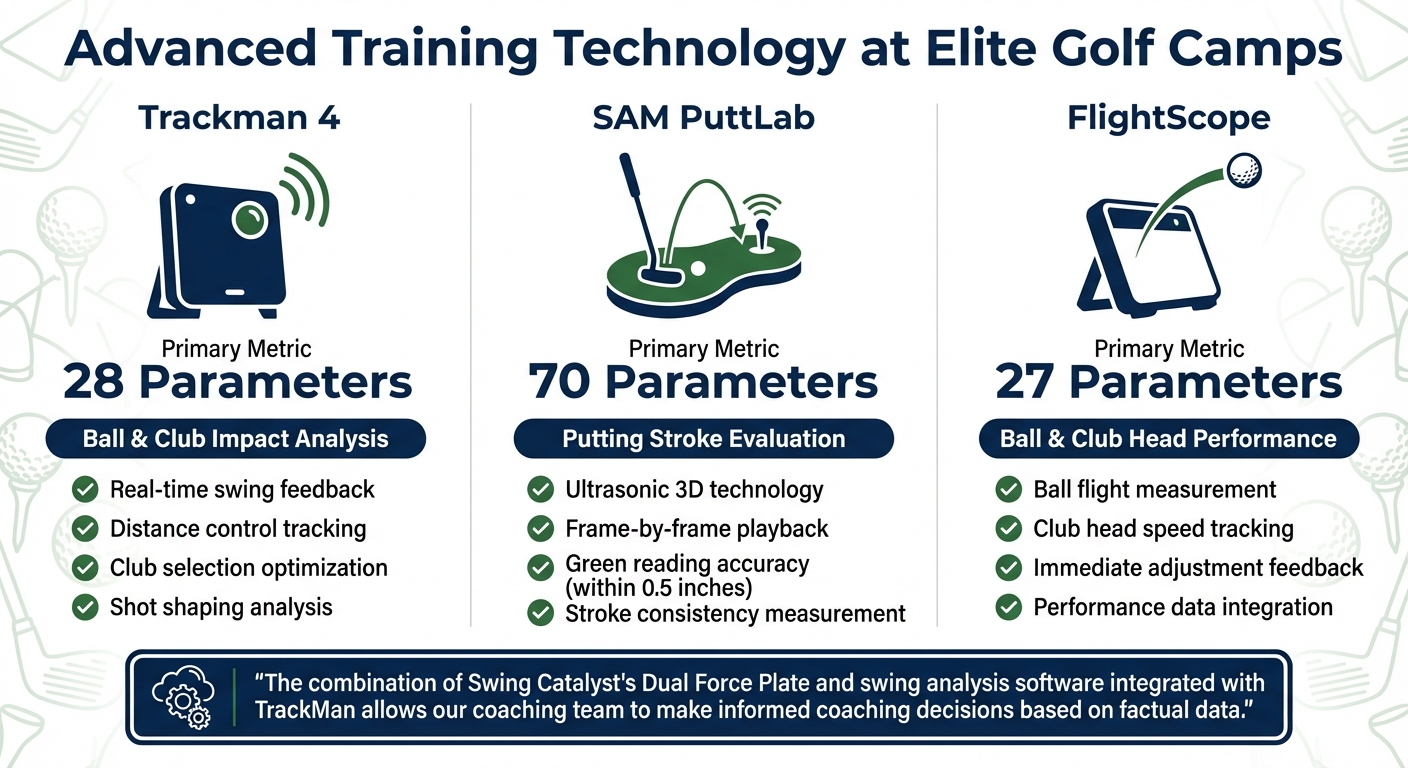
Elite Junior Golf Camp Training Technology Comparison
Individual Skill Evaluations
Coaching begins with a detailed look at each player’s unique strengths and challenges, focusing on areas like posture, swing mechanics, and putting strokes. This process aligns with the Titleist Performance Institute’s philosophy of "assess and not guess".
From these evaluations, coaches develop a personalized "Blueprint" or "Road Map" – a tailored plan designed to guide the player’s growth both during camp and long after. Many programs use digital tools such as CoachNow and V1 to document these assessments, providing weekly video lessons and updates for parents to monitor their child’s progress. These customized plans combine seamlessly with cutting-edge training tools to enhance the learning experience.
Training Technology and Video Analysis
Elite training programs leverage advanced technology to turn swing mechanics into actionable insights. Tools like Trackman 4 analyze 28 different parameters of ball and club impact, SAM PuttLab evaluates putting strokes with 70 parameters using Ultrasonic 3D technology, and FlightScope launch monitors measure 27 different aspects of ball and club head performance.
The International Junior Golf Academy describes their method as follows:
"The combination of Swing Catalyst’s Dual Force Plate and swing analysis software integrated with TrackMan allows our coaching team to make informed coaching decisions based on factual data for the most effective and efficient improvements."
This technology provides real-time feedback, enabling players to make immediate adjustments. Frame-by-frame video playback highlights subtle details in their swings that are otherwise difficult to detect.
PGA-Certified Instructors
Armed with data from these sophisticated tools, experienced instructors focus on refining every aspect of a player’s game. The coaching team at the International Junior Golf Academy, for instance, brings together over 100 years of combined experience. These PGA-certified professionals break down complex data from tools like Trackman and Swing Catalyst into clear, actionable plans covering fundamentals, swing techniques, and short game strategies.
But the coaching doesn’t stop at swing mechanics. These experts also address areas like nutrition, mental preparation, physical conditioning, and course management. Some academies group students into "Pods", where specialized coaches collaborate to provide well-rounded support, equipping players with the skills needed to excel in competitive golf.
Core Golf Skills Training
Building a strong foundation in golf starts with the basics: mastering grip, stance, and posture. These elements set the stage for developing consistent movement patterns that hold up under competitive pressure. These dependable patterns become the cornerstone of reliable tournament performance.
Training sessions focus on technical execution with all types of clubs – drivers, fairway woods, hybrids, and irons. Players work on shot shaping to control ball flight, enabling them to adapt to different course conditions. The ultimate goal? A repeatable swing that delivers consistent results, whether you’re driving off the tee or aiming a 7-iron at the green. Once the full swing is solid, the focus shifts to close-range precision.
Short Game Practice
After refining full-swing skills, players move on to sharpening their short game. Many elite programs organize small groups that rotate through stations dedicated to putting, chipping, pitching, and bunker play. For instance, Nike Golf Camps allocate 3 hours every morning to honing these critical scoring skills. With low student-to-instructor ratios – sometimes as low as 3:1 – players receive plenty of individual attention during these sessions.
The U.S. National Junior Team employs green-reading drills where players estimate the break of a putt and verify their accuracy to within half an inch. These exercises sharpen visual skills and build confidence on the greens. Morning instruction often transitions to afternoon course play, giving juniors the chance to apply their lessons in real-game settings. Programs keep things engaging with putting competitions and short game challenges, simulating tournament pressure while making practice fun.
Course Management Skills
Beyond technical skills, strategy is a key focus. Camps integrate on-course decision-making to teach players how to make smarter shot selections and handle specific situations under pressure. Chris Zambri, Head Coach of the U.S. National Junior Team, highlights the importance of strategy:
"Instructors are, a lot of times, on a range. So we’re able to dig into stuff like course management."
Players practice distance control using Trackman technology, matching clubs to specific yardages to improve accuracy in club selection. They also play from different tees to simulate various competitive scenarios, forcing them to adapt their strategies to varying hole lengths. Programs like Sea Island take it a step further by using "Key Indicators of Success" and statistical tracking to identify weaknesses and create tailored strategy plans. This data-driven approach helps players focus on the areas that will most effectively lower their scores.
Fitness and Mental Training Programs
After refining their technical skills on the course, athletes at these camps dive into fitness and mental training to elevate their performance. The best programs treat physical conditioning and mental preparation as equally critical, aiming to shape well-rounded, resilient athletes capable of thriving under competitive pressure.
Golf-Specific Fitness Training
Top-tier camps kick off fitness programs with detailed assessments to pinpoint each player’s physical strengths and weaknesses. From there, trainers craft customized plans focusing on mobility, stability, core strength, and flexibility – all essential for improving swing mechanics and avoiding injuries. At Mike Bender Elite, students participate in one-hour golf-specific fitness sessions twice a week, guided by Titleist Performance Institute (TPI) certified trainers. The International Junior Golf Academy (IJGA) underscores the importance of this approach:
"A junior golfer’s functional strength and conditioning are vital to their success, on and off the course. Strength and conditioning work improves endurance, prevents injuries, and promotes peak performance."
These programs also incorporate activation routines before practice to prepare players for peak performance. The results speak for themselves – 100% of IJGA graduates secured college golf placements over the past three years.
Mental Toughness Development
Mental training is just as crucial as physical preparation. Camps focus on techniques like visualization, pre-shot routines, and pressure drills to help players stay composed during competition. At Mike Bender Elite, students attend weekly one-hour mental training sessions, which sometimes include personality assessments to tailor strategies to their unique competitive styles.
Pressure drills are a standout feature, designed to simulate the intensity of tournament play. These scenarios might include contests for the straightest drive or high-stakes putting challenges, teaching players how to manage nerves and maintain focus. Athletes also learn how to bounce back from setbacks by reframing mistakes as opportunities to grow. Beth Brown, USGA Senior Athlete Development Specialist, highlights the importance of this comprehensive approach:

"We want them to be healthy human beings. We know it helps them perform better, and it gives them the best probability of winning championships."
Additionally, camps emphasize setting process goals – specific, measurable objectives centered on actions within the player’s control. This focus helps athletes build grit and perseverance, equipping them to navigate the highs and lows of tournament play with resilience.
Tournament Preparation and Competitive Experience
Strength – both physical and mental – only matters if players can bring their best when it counts. Elite camps bridge the gap between practice and performance by simulating tournament scenarios that prepare juniors for the pressures of competition.
Practice Tournaments and Pressure Situations
The top programs don’t just teach skills – they test them under real-world conditions. Camps often include 18-hole practice rounds where college coaches provide immediate feedback on club selection, course strategy, and decision-making. These rounds mimic actual tournaments, with players noting crucial factors like wind conditions and green undulations.
To heighten the competitive atmosphere, instructors use pressure drills that mirror the intensity of a tournament. Contests centered around driving accuracy or putting drills force players to perform under stress. Drew Dickens, a TJGT Tournament Champion, shared how these drills shaped his game:
"CGX has taught me so much – from short game work to pressure drills. It’s helped me feel confident under pressure, hit my shots when it matters, and even bring new drills back to help my team."
Scarlett Schremmer, a U.S. National Junior Team Member, echoed similar sentiments:
"We have contests with the challenges, whether it’s how straight you hit your driver or how many putts you can make, and I want to win… I get nervous sometimes, which this experience has helped me manage better."
Many camps wrap up with formal competitions, complete with awards ceremonies. These events give players a chance to experience the emotional highs and lows of tournament play. Some programs even go a step further, offering Tournament Preview Camps at the actual venues of upcoming junior events. This allows players to familiarize themselves with the course layout and green speeds before competition day. The results speak for themselves: 95% of CGX participants report feeling more confident and better equipped with course strategy knowledge.
Beyond tournament preparation, these camps also guide juniors through the often-complex collegiate recruitment process.
College Golf Planning and Recruiting Support
For juniors with aspirations of playing college golf, elite camps offer a unique advantage: the opportunity to communicate directly with college coaches before the NCAA-mandated June 15 deadline following their sophomore year. With an 8:1 player-to-coach ratio, these camps provide tailored feedback to help players refine their game. Some programs even offer monthly video evaluations using tools like V1 Video Analysis, which players can share with recruiters to showcase their progress.
Different camps cater to various recruiting needs. Geographic Showcase Camps allow players to explore regional preferences and meet coaches from specific conferences. Meanwhile, Elite Single-Institution Camps provide an in-depth look at a particular program’s culture and coaching philosophy. Considering that only 2% of the approximately 144,000 high school golfers make it to Division 1 programs, this targeted exposure can be a game-changer.
In addition to recruitment support, these camps use data-driven tools to track player progress consistently.
Progress Tracking and Feedback
Advanced technology like TrackMan, Swing Catalyst, and SAM Putt Lab provides precise insights into swing mechanics and ball flight. Coaches also monitor distance and alignment during drills to ensure players are on track.
Building on tournament experiences, programs such as the International Junior Golf Academy create personalized improvement plans. These "blueprints" outline clear, measurable goals based on an initial assessment. The process follows a structured cycle: Assess, Train, Compete, Evaluate. After each tournament, players review their performance using statistics and self-reflection to fine-tune their training.
Monthly video evaluations and seminars at Tournament Preview Camps help players address specific weaknesses. This comprehensive system ensures that juniors have a clear understanding of their progress and know exactly what to work on before their next competition.
Additional Benefits and Camp Experience
While improving technical skills is often the main reason juniors enroll in golf camps, the experiences they gain off the course can leave an even deeper impression. These camps aren’t just about refining swings and lowering scores – they’re about forming friendships, learning life skills, and discovering how golf can be a lifelong journey. The camaraderie and balance of hard work with fun create an environment where young players thrive, both on and off the course.
Meeting Players from Different Countries
International camps bring junior players together from around the world, creating a vibrant social atmosphere that’s hard to replicate in local programs. For example, the U.S. National Junior Team spring training camp, held in February 2025 at Desert Mountain Club in Scottsdale, Arizona, brought together 17 team members for shared meals and team challenges that strengthened their bonds. Ronin Banerjee, a team member, summed it up perfectly:
"My favorite part is spending time with these guys and having a blast. This just strengthens our already strong relationships."
Similarly, MyPro Golf’s Masters Camp at St Andrews hosts "International" sessions specifically designed to unite players from various countries. With residential formats, juniors share housing, meals, and team-building activities, creating an immersive experience. Sabrina N., a junior golfer from Malaysia, reflected on her time at MyPro Golf:
"I left the camp with a new tournament personal best as well as friends from all over the world. I definitely would recommend to anyone!"
These friendships don’t stop at camp – they often continue at tournaments throughout the year. The U.S. National Junior Team program, which emphasizes team bonding and peer support, plans to expand its squad to 30 boys and 30 girls by 2027. Beyond forming international connections, these camps also find ways to keep the experience enjoyable and motivating.
Combining Training with Enjoyment
Elite camps understand the importance of balancing intensive training with activities that keep players motivated and prevent burnout. Most programs structure their days with technical training sessions in the morning – focusing on full swing, short game, and putting – followed by on-course practice in the afternoon. After 4:30 p.m., boarding students shift to recreational activities designed to help them unwind.
At MyPro Golf’s Masters Camp, for instance, the daily schedule runs from a 7:00 a.m. wake-up to 10:00 p.m. lights out, with the final 90 minutes reserved for group activities like football or beach volleyball. Similarly, Mike Bender Elite Golf Academy offers evening outings for boarding students, which is one reason the weekly fee for boarding sessions ($2,200) is higher than non-boarding options ($1,750). Junior Players Golf Academy on Hilton Head Island mixes tournament preparation with fun outings like beach trips, movie nights, and team-building exercises.
Camps also use competitive drills to keep the energy high. Driving accuracy contests or putting challenges create a fun, engaging atmosphere where juniors can learn without feeling overwhelmed. Beth Brown, Senior Athlete Development Specialist at the USGA, explained the philosophy behind this approach:

"We want them to be healthy human beings. We know it helps them perform better… we’re doing it because we care about the kids."
This well-rounded approach includes workshops on nutrition, sports psychology, and character development – preparing juniors for success beyond the golf course. At MyPro Golf Masters Camp, a low coach-to-player ratio (one coach for every six juniors) ensures that each participant gets personalized attention during both training and recreational activities. By blending serious instruction with plenty of enjoyment, these camps create lasting memories and keep young players passionate about the game for years to come.
Conclusion
Elite junior golf camps focus on developing well-rounded athletes by combining technical training, fitness, mental resilience, and tournament preparation. These programs leverage cutting-edge technology alongside tailored mental conditioning to prepare young golfers for high-pressure situations and help them recover from setbacks.
Chris Zambri, head coach of the U.S. National Junior Team, highlighted the all-encompassing nature of these camps:
"We’re here to just fill in some gaps that they’re not already getting from their instructors… we’re able to dig into stuff like course management".
The results speak for themselves. For instance, Drew Dickens used pressure drills and short-game techniques from College Golf Experience camps to clinch 1st place at the TJGT San Antonio Summer Blast tournament. Likewise, Scarlett Schremmer benefited from the competitive training provided by the U.S. National Junior Team, which helped her improve her World Amateur Golf Ranking and secure a spot at Texas A&M for collegiate golf. Notably, 95% of CGX camp participants report enhanced confidence and a better understanding of course strategy.
These camps go beyond improving scores – they teach discipline, time management, and sportsmanship, qualities that extend far beyond the golf course. Beth Brown, Senior Athlete Development Specialist at the USGA, emphasized this broader mission:
"We want them to be healthy human beings… it gives them the best probability of winning championships and putting gold medals around their neck".
Additionally, the focus on tournament readiness often leads to college recruiting opportunities. With personalized guidance and connections to collegiate programs, these camps provide juniors with a platform to showcase their skills. Whether aiming for a college scholarship or a professional career, these programs equip young golfers with the tools and experience to succeed in the long run.
FAQs
How do I know if an elite junior golf camp is right for my child?
When choosing an elite junior golf camp for your child, it’s important to think about their goals and current skill level. Are they just starting out, or are they gearing up for competitive play? Take a close look at the camp’s curriculum – does it offer personalized coaching? Are there advanced tools like video analysis to refine their technique? Does the camp provide opportunities to participate in tournaments?
You’ll also want to consider practical details like the camp’s location and duration. Beyond that, think about the environment – does the camp balance fun with discipline and encourage teamwork and camaraderie? Aligning the camp’s features with your child’s aspirations can make all the difference in creating a rewarding and enjoyable experience.
What should my child bring to camp (clubs, fitness gear, tech)?
Young golfers should pack their personal golf clubs tailored to their skill level, along with athletic clothing and proper footwear for comfort and performance. Bringing tech devices like phones or tablets can be helpful for entertainment or recording practice sessions – just don’t forget chargers and adapters. Check if the camp suggests any specific items to bring. You might also consider optional extras like golf accessories or a notebook for jotting down tips and techniques.
How can parents track progress after camp ends?
Parents can stay updated on their child’s progress after attending elite junior golf camps by using tools and feedback provided by the programs. Many camps offer structured assessments, skill evaluations, and tournament reviews to track development. These often come in the form of detailed progress reports and feedback sessions, giving parents a clear picture of their child’s improvement.
Additionally, parents can observe their child’s growth firsthand during practice sessions or competitions. Regular communication with coaches is another key way to stay informed, as coaches often share insights on areas like skill advancement, course strategy, and mental resilience. This combination of tools and involvement ensures parents remain actively engaged in their child’s journey.
Related Blog Posts
- Top 5 Regional Junior Golf Clinics
- 10 Signs Your Junior Golfer Needs Advanced Training
- Ultimate Guide to Elite Junior Golf Training
- Best Junior Golf Programs in New York, Connecticut, and New Jersey
